
Main Courses
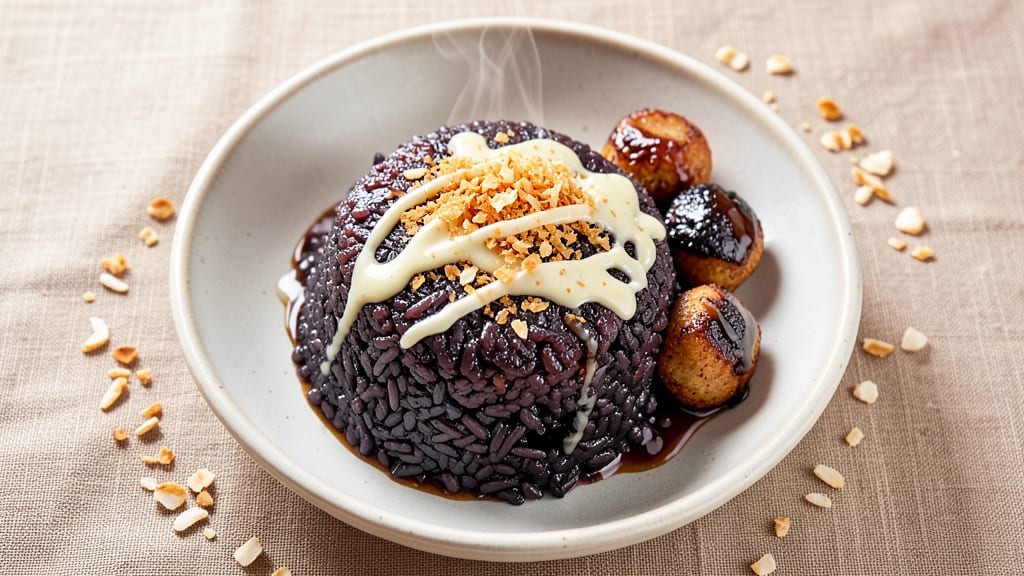
This black glutinous rice biko recipe delivers the perfect balance of creamy coconut and caramelized sweetness, a beloved Filipino dessert that's easier to make than you'd think.
The key to achieving that signature sticky texture lies in soaking the rice properly and cooking it slowly with coconut milk until it transforms into a luscious, golden dessert.
What starts as simple ingredients—black glutinous rice, coconut milk, and sugar—becomes a rich, velvety treat that's perfect for special occasions or satisfying sweet cravings.
The process is straightforward but requires patience: soaking the rice overnight ensures it absorbs enough liquid to create that signature creamy consistency. As it cooks, the coconut milk caramelizes beautifully, creating a glossy, golden top that's impossible to resist.
Serve it chilled with a drizzle of latik or ube jam for an extra layer of flavor, and you'll have a dessert that tastes like a taste of home.
Ready in about 1.5 hours, this recipe is the perfect way to bring a touch of Filipino tradition to your table.
Ingredients for black glutinous rice biko
Simple ingredients transform into a luxurious Filipino coconut-caramel dessert—just black rice, coconut milk, and patience.
| Ingredient | Amount | Notes |
|---|---|---|
| Black Glutinous Rice 🍚 | 1 ½ cups | Uncooked, soaked overnight |
| Coconut Milk 🥥 | 2 cups | Full-fat for creaminess |
| Granulated Sugar 🍬 | 1 cup | White or brown preferred |
| Water 💧 | 1 ½ cups | Room temperature |
| Salt 🧂 | ½ tsp | Fine sea salt preferred |
| Vanilla Extract 🌿 | 1 tsp | Pure vanilla preferred |
| Unsalted Butter 🧈 | 2 tbsp | For finishing caramelization |
| Latik (Coconut Caramel) 🍯 | ¼ cup | Store-bought or homemade |
| Ube Jam 🍠 | ¼ cup | For serving, optional |
The black glutinous rice is the star—look for it in Asian markets or well-stocked grocery stores like H-Mart or 99 Ranch. If you can't find it, sweet glutinous rice works in a pinch (though color will differ). Soaking it overnight is non-negotiable—this is what creates that signature creamy texture. Coconut milk should be full-fat (none of that skim nonsense) for that rich, velvety finish. I always grab Aroy-D brand when I can—it's the gold standard for Filipino desserts.
No coconut milk? Heavy coconut cream works in a bind (use half the amount). Running low on latik? Brown sugar caramel is a decent swap—just reduce the sugar slightly to avoid over-sweetness. The vanilla extract can be omitted if you're out, but trust me, it elevates the flavor. For the butter, unsalted is key—you're already adding salt separately. If you're feeling fancy, toast the butter in the pan before adding it to the rice for a nutty depth of flavor.
This dessert is all about patience—let it cool completely before chilling, or it'll turn out gummy. Stores beautifully in the fridge for up to 5 days, though it's best enjoyed fresh. For serving, ube jam adds that signature Filipino touch, but condensed milk drizzled on top works too. Double the recipe if you're feeding a crowd—it disappears fast!
Why You'll Love This Recipe
- Here’s what sold me: that perfect balance of creamy coconut milk and just enough caramelized sugar to make every bite taste like a little dessert. The black rice adds this earthy richness, but it’s the sweetness that makes you go back for seconds—no guilt, just pure satisfaction.
- I’ll be real: this tastes like a fancy dessert, but the ingredients won’t break the bank. Black glutinous rice is affordable, coconut milk is a pantry staple, and sugar? Well, you probably have that too. It’s the kind of treat that feels special without the restaurant price tag.
Step-by-step instructions for black glutinous rice biko
This sticky, sweet coconut-caramel delight comes together beautifully when you follow these precise steps.
Soak the Black Glutinous Rice Overnight
Place the 1.5 cups black glutinous rice in a large bowl and cover completely with cold water. Let it soak for at least 12 hours (or overnight) at room temperature. This extended soaking is crucial—it ensures the rice absorbs enough moisture to develop that signature creamy, chewy texture when cooked.
After soaking, drain the rice thoroughly using a fine-mesh strainer, pressing gently to remove excess water. The rice should feel soft and pliable between your fingers, not dry or crumbly. If you skip this step or rush the soaking time, your biko will turn out dry and gritty instead of delightfully sticky.
Cook the Rice with Coconut Milk and Sugar
In a heavy-bottomed pot with a tight-fitting lid, combine the soaked rice, 2 cups coconut milk, 1 cup granulated sugar, 1.5 cups water, and 0.5 tsp salt. Stir gently to distribute the ingredients evenly, then bring to a boil over medium-high heat. Once boiling, reduce the heat to low and let it simmer uncovered for 45-50 minutes.
You'll notice the mixture thickens dramatically as it cooks—this is normal! Stir occasionally to prevent sticking, but avoid over-mixing. The rice is ready when it forms a thick, pudding-like consistency that coats the back of a spoon. If it's not thick enough after 50 minutes, continue simmering for another 5-10 minutes until it reaches the perfect texture.
Finish with Vanilla and Butter
Once the rice mixture reaches the desired thickness, remove it from heat and stir in the 1 tsp vanilla extract and 2 tbsp unsalted butter. The vanilla adds depth, while the butter creates a silky finish. Let the mixture cool slightly for 5 minutes—this prevents the coconut milk from curdling when you add the caramel.
While the rice cools, gently melt the 0.25 cup latik (coconut caramel) in a small saucepan over low heat. You want it just warm enough to spread smoothly, not so hot that it burns. The caramel should maintain its rich, golden color and glossy sheen—this is what gives biko its signature sticky, caramelized top layer.
Assemble and Set the Biko
Transfer the warm rice mixture to a greased 8-inch round cake pan or similar-sized dish. Spread it evenly into the pan, creating a smooth, level surface. Using a spatula, gently swirl the melted latik over the top of the rice, creating a marbled effect. The caramel should cover about 75% of the surface, leaving some rice exposed for contrast.
Cover the pan tightly with plastic wrap and let the biko set at room temperature for 2 hours. This resting period allows the flavors to meld and the caramel to fully absorb into the rice. For best results, place the pan in the refrigerator during the final 30 minutes of setting—this helps the caramel firm up slightly for easier slicing.
Serve with Ube Jam
Once fully set, run a warm knife around the edges of the pan to loosen the biko. Invert it onto a serving plate and let it sit for 2 minutes before slicing into 4 equal wedges. The contrast of the warm, caramelized top with the cool, creamy rice creates an irresistible texture.
Serve each portion with a dollop of 0.25 cup ube jam on the side. The vibrant purple jam adds a fruity contrast to the rich coconut and caramel flavors. For an extra touch, garnish with toasted coconut flakes or a sprinkle of crushed macadamia nuts. This dessert is best enjoyed at room temperature, where the textures truly shine—creamy rice, gooey caramel, and jammy sweetness in every bite.
Pro Tips For Making Black Glutinous Rice Biko
- SOAK THE RICE LONGER: Black glutinous rice needs a proper soak—at least 4 hours, ideally overnight. I learned this the hard way when my first batch turned out gummy instead of creamy. The longer it soaks, the better it absorbs the coconut milk and sugar later.
- USE FULL-FAT COCONUT MILK: Skip the light version—full-fat coconut milk gives that rich, velvety texture biko is famous for. If you’re in a pinch, mix 1 part evaporated milk with 2 parts light coconut milk for a closer substitute, but it won’t be the same.
- STIR CONSTANTLY AT FIRST: The first 10 minutes are critical—stir every 30 seconds to prevent sticking. I used to walk away, and the bottom would burn while the top stayed raw. A wooden spoon works best; metal can scratch the pot.
- END WITH A LOW SIMMER: Once the mixture thickens, drop the heat to the lowest setting and let it cook uncovered for 15-20 minutes. This lets excess moisture evaporate without burning, giving you that perfect, glossy finish. (Yes, it’ll look weirdly liquidy at first—that’s normal.)
Creative variations of black glutinous rice biko
Coconut-Coffee Fusion
Swap half the coconut milk for cold brew coffee (about 1 cup) to create a mocha-inspired twist. The coffee deepens the caramel notes while adding a subtle bitterness that balances the sweetness. I like using Starbucks Cold Brew Concentrate for consistency.
Add ½ tsp cinnamon and ¼ tsp espresso powder to enhance the coffee flavor. Top with whipped cream and a sprinkle of cocoa powder for a dessert that feels like a cross between biko and tiramisu. ☕
Ube-Inspired Purple Biko
Replace ½ cup of the granulated sugar with ube halaya (purple yam jam) for a vibrant, naturally sweet variation. The ube adds a floral, vanilla-like aroma that complements the coconut beautifully. For extra richness, fold in 2 tbsp ube halaya into the rice mixture before setting.
Garnish with toasted coconut flakes and a drizzle of ube jam for a dessert that looks as stunning as it tastes. 🍠
Mango-Sticky Version
Add 1 cup fresh mango purée (or canned mango pulp) to the rice mixture during cooking. The mango's natural sweetness reduces the need for added sugar—cut the granulated sugar to ¾ cup instead.
For texture, fold in ½ cup diced fresh mango just before setting. Serve with a side of mango sorbet for a tropical twist that transports you to the Philippines' summer tables. 🥭
Cheesecake Biko
Blend 8 oz cream cheese and ¼ cup powdered sugar into the coconut milk before cooking. The cream cheese adds a tangy richness that pairs perfectly with the caramelized top.
For extra decadence, fold in ½ cup crushed graham crackers into the latik before spreading. This variation tastes like a cross between biko and cheesecake—trust me, it’s a crowd-pleaser. 🧀
Spiced Chai Biko
Infuse the coconut milk with chai spices by simmering 1 cinnamon stick, 2 cardamom pods, 3 cloves, and 1 star anise pod in the milk for 10 minutes before adding to the rice.
Strain out the spices and proceed as usual. The warm spices add depth, making this version perfect for cooler evenings. Garnish with a sprinkle of ground cinnamon for a cozy finish. 🌶️
No-Cook Latik Swap
If you’re short on time, replace the latik with a brown sugar caramel. Mix ½ cup brown sugar and 2 tbsp water in a saucepan, heating until it turns golden amber.
Brush this over the set rice instead of using latik—it’s a quick fix that still delivers that sticky, caramelized top. For extra flavor, add 1 tbsp coconut oil to the caramel mixture. 🔥
Nutrition facts
Frequently asked questions
Why does my black glutinous rice biko turn out dry instead of creamy?
Overcooking or insufficient soaking time are the most common culprits. The rice must soak for at least 12 hours to absorb enough moisture—never skip this step! Also, simmer uncovered for only 45-50 minutes on low heat. If it still seems dry, stir in 1-2 tablespoons of warm coconut milk while cooling to restore creaminess.
Can I make biko without latik (coconut caramel)?
For a quick swap, use brown sugar caramel (mix ½ cup brown sugar + 2 tbsp water, heat until golden). Or try condensed milk drizzle—simmer ½ cup condensed milk until slightly thickened, then spread over the set rice. Both options add sweetness without the caramelized texture, but still delicious!
How long can I store biko in the refrigerator?
Biko stays fresh for 5 days in an airtight container, but texture softens after 3 days. For best results, serve within 24 hours of making. Reheat gently in the microwave (30-second bursts) if you prefer it warm—though it's traditionally enjoyed at room temperature for that perfect creamy contrast.
What's the secret to that glossy caramelized top?
The magic happens with warm latik—never hot! Spread it over the still-warm rice (not cold) to create the marbled effect. Cover immediately with plastic wrap to trap moisture, then chill for 30 minutes before slicing. Pro tip: Use a light hand with the latik—too much makes it soggy!
Can I use regular white rice instead of black glutinous rice?
Not recommended—white rice lacks the natural stickiness and chewy texture that makes biko special. If you must substitute, try sweet glutinous rice (like mochi rice), but expect a lighter color and slightly firmer bite. The flavor will still be delicious, just not the same authentic experience!