
Main Courses
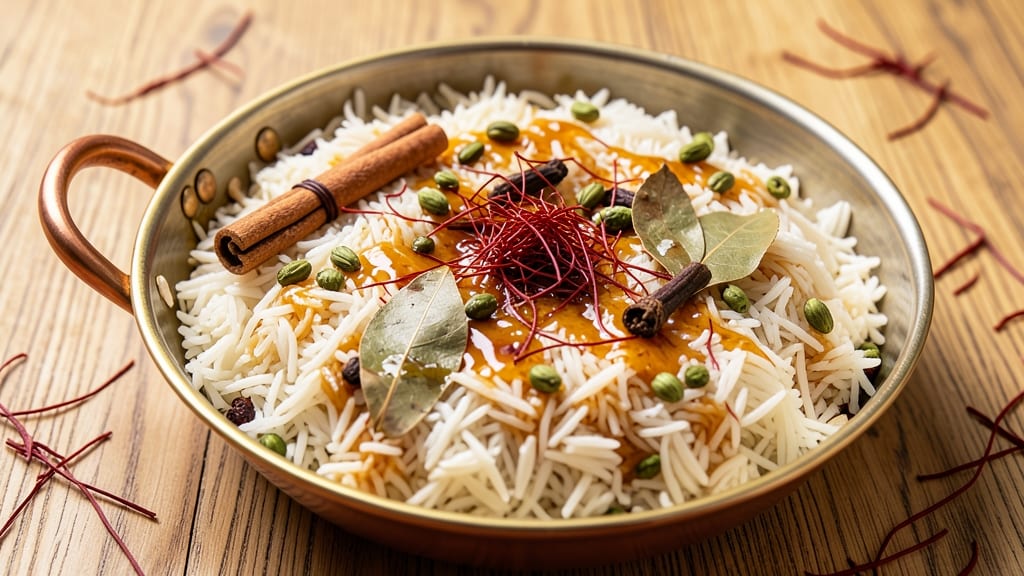
This Bukhari rice recipe captures the heart of Saudi cuisine, where fragrant saffron and cardamom transform simple rice into a luxurious centerpiece. Traditionally served at celebrations, it pairs perfectly with tender lamb or chicken, creating a dish that feels like a warm embrace for the senses.
The secret lies in slow-cooking the rice with whole spices until each grain absorbs their aromatic essence, resulting in a dish that's both comforting and elegant. This method preserves authenticity while making it achievable at home, ensuring every bite delivers the rich traditions of Saudi hospitality.
Ingredients for bukhari rice recipe saudi
Authentic Saudi spices and premium basmati rice create this luxurious centerpiece dish.
| Ingredient | Amount | Notes |
|---|---|---|
| Basmati Rice 🍚 | 2 cups | Long-grain, uncooked, rinsed thoroughly |
| Saffron Threads 🌼 | ¼ tsp | High-quality, organic preferred |
| Green Cardamom Pods 🌿 | 8 whole | Lightly crushed, aromatic |
| Bay Leaves 🍃 | 2 whole | Fresh or dried, light aroma |
| Cinnamon Sticks 🌳 | 2 whole | 1-inch pieces, aromatic |
| Cloves 🌶️ | 4 whole | Whole, aromatic |
| Black Cardamom Pods 🌿 | 2 whole | Optional, for depth |
| Ghee 🧈 | ½ cup | Clarified butter, high smoke point |
| Chicken or Lamb Broth 🍲 | 4 cups | Homemade preferred, low-sodium |
| Water 💧 | 3 cups | Room temperature |
| Salt 🧂 | 1 ½ tsp | Diamond Crystal kosher preferred |
| Fresh Lemon Juice 🍋 | 1 tbsp | Bright, freshly squeezed |
| Fresh Cilantro 🌿 | ¼ cup | Chopped, for garnish |
| Toasted Almond Slices 🥜 | ¼ cup | For garnish, optional |
The spices are the soul of Bukhari rice. Saffron must be the finest you can find—Kashmiri or Iranian threads work best, as they release their golden hue and floral notes more generously. Cardamom pods should be plump and aromatic; spice markets like Penzeys or specialty Middle Eastern grocers carry the highest quality. For the ghee, Gujarat brand is ideal, but any high-quality clarified butter will work. If using lamb broth, opt for bone-in for richer flavor. The rice itself—Pakistani basmati—holds its shape better than Indian varieties for this dish.
No saffron? Turmeric at half the amount adds color but lacks the floral depth, so use sparingly. Fresh cardamom pods can be substituted with one-third the amount in ground form, but whole pods infuse flavor more beautifully. For the broth, chicken stock with a splash of lemon juice works in a pinch, though lamb is traditional. The water should be room temperature to avoid shocking the rice. If you can't find black cardamom, skip it—it's purely for depth, not essential. For the garnish, toasted slivered almonds are traditional, but pistachios or candied pecans add a modern twist.
Rice keeps beautifully for 4 days in the fridge, though flavor peaks within the first two. Reheat gently with a splash of water to restore moisture. For longer storage, freeze portions in airtight containers for up to 3 months. The spices can be toasted and stored in a dark glass jar for 6 months—just crush them lightly before use. For serving, keep the almonds and cilantro separate until ready to plate, as their freshness fades quickly.
Why You'll Love This Recipe
- Golden Hour Magic: I swear by the saffron here—just a few threads steeped in warm water, and suddenly your rice smells like a Saudi home kitchen. That golden hue? Pure satisfaction, and it takes zero effort beyond soaking.
- Spice Cabinet Staples: No fancy ingredients needed—just what’s likely already in your cupboard. Cardamom and cinnamon infuse the rice so gently you won’t even notice they’re there, but they make every bite feel like a little celebration.
- Leftover Luxury: This rice keeps perfectly for days, reheating like it was just made. Honestly, I often cook a big batch on Sundays—it’s my go-to for lazy weeknights or unexpected guests. The grains stay separate, so it’s always restaurant-quality.
- Weeknight Workhorse: Between us, this is the only rice I bother with when I’m exhausted. Toss everything in one pot, let it simmer, and walk away. By the time you’re done with whatever else, the rice is done—and it’s never dry or mushy.
Step-by-step instructions for Bukhari rice with Saudi spice blend
This traditional Saudi preparation transforms simple basmati rice into a fragrant, aromatic masterpiece through precise layering of spices and ghee.
Infuse the Ghee with Whole Spices
Heat the 0.5 cup ghee in a heavy-bottomed pot over medium-low heat until it melts completely and begins to shimmer. Add the 8 whole green cardamom pods, 2 whole bay leaves, 2 whole cinnamon sticks, 4 whole cloves, and 2 whole black cardamom pods if using. Let the spices infuse for 3-4 minutes until the ghee releases its nutty aroma and the spices begin to sizzle gently.
This step is where the magic begins—the spices should be lightly toasted but not burned. You'll notice the air filling with warm, earthy fragrance as the cardamom and cinnamon release their essential oils. Remove the pot from heat and let the spice-infused ghee cool slightly for 2 minutes before proceeding. This prevents the saffron from cooking off its delicate flavor.
Bloom the Saffron and Toast the Rice
While the ghee cools, steep the 0.25 teaspoon saffron threads in 2 tablespoons warm water for 10 minutes to extract maximum color and flavor. Add the saffron infusion to the spice-infused ghee and stir gently to combine. Return the pot to medium heat and add the 2 cups basmati rice, stirring constantly for 2-3 minutes until each grain is fully coated and begins to turn translucent at the edges.
The rice should develop a delicate golden hue from the saffron and ghee. You're essentially creating a flavor base where every grain will absorb the aromatic oils. If the rice begins to stick, reduce heat slightly and continue stirring until you hear a faint popping sound—this indicates the rice is properly toasted and ready for the liquid phase.
Layer Liquid and Salt for Perfect Texture
Pour in the 4 cups chicken or lamb broth and 3 cups water in a slow stream while stirring gently to distribute the rice evenly. Add the 1.5 teaspoons salt and bring the mixture to a gentle boil. Once boiling, reduce heat to low and cover the pot with a tight-fitting lid. Let the rice simmer undisturbed for 15 minutes.
This initial cooking phase allows the rice to absorb the maximum amount of liquid before the final resting period. The key here is patience—resist the urge to peek or stir. The rice should cook gently in its own steam, developing a fragrant aroma that permeates your kitchen. After 15 minutes, check for doneness by pressing a grain between your fingers; it should be tender but still hold its shape.
Rest and Finish with Acidic Brightness
Remove the pot from heat and let the rice rest covered for 10 minutes. This crucial resting period allows the grains to fully hydrate and develop their characteristic fluffiness. After resting, gently fluff the rice with a fork, then stir in the 1 tablespoon fresh lemon juice. The acidity cuts through the richness of the ghee and spices, creating that signature Saudi brightness.
For presentation, scatter the 0.25 cup chopped fresh cilantro and 0.25 cup toasted almond slices over the top. The almonds add a satisfying crunch while the cilantro provides fresh contrast to the warm spices. Serve immediately while the rice is still steaming hot, as the texture will begin to firm up within 10 minutes of coming off the heat.
Pro Tips For Making Bukhari Rice Recipe Saudi
- TOAST THE SPICES FIRST: Crack open those cardamom pods and bay leaves, then dry-toast them in the pot with a splash of oil for 30 seconds—just until you smell that warm, earthy aroma. I used to skip this, and the flavor was always half-hearted; now my rice carries that deep, spiced backbone from the start.
- SOAK THE SAFFRON RIGHT: Crush those saffron threads with the flat of your knife (yes, it’s messy) and steep them in 2 tablespoons warm water for 10 minutes before adding to the rice. Cold water? The threads won’t release their color or punch. I learned this after making rice that looked pale and tasted bland—don’t repeat my mistake.
- DON’T STIR THE RICE: Once you add the water, stir once to distribute the rice, then walk away. No poking, no checking—let it sit undisturbed for 10 minutes before turning the heat down. I was guilty of stirring every 2 minutes, and my rice turned out gummy. Trust the process; the steam does the work.
- USE LESS WATER THAN YOU THINK: For 1 cup of basmati, measure out 1.25 cups water—not the usual 1.5 or 2. This rice absorbs fast and releases starch aggressively. I now keep a separate measuring cup just for this ratio, and my grains stay separate and fragrant. Overdoing it means soggy, gluey rice.
Flavor customization for bukhari rice recipe saudi
Spice Intensity
Adjust the heat level by controlling the whole spices—add 1 extra black cardamom pod for deeper warmth or ½ tsp ground cinnamon for a subtle sweetness. For a milder profile, reduce the cinnamon sticks to just 1 and skip black cardamom entirely.
I find 2-3 cloves provide perfect balance, but you can halve them if your guests prefer gentler flavors. 🌿
Sweet-Tart Balance
Enhance the dish’s complexity by adding 1 teaspoon honey to the ghee infusion or ½ teaspoon rose water (available at Middle Eastern markets) for floral notes. For tartness, increase lemon juice to 2 tablespoons or add 1 teaspoon pomegranate molasses—a staple in Saudi cuisine—drizzled over the finished rice.
The molasses adds a fruity depth that pairs beautifully with the spices.
Herb Variations
Swap cilantro for fresh mint leaves (chopped) for a refreshing twist, or combine both for a balanced herb profile. For a smoky touch, sprinkle ½ teaspoon smoked paprika—lightly toasted in the ghee—before serving.
I’ve also seen traditional versions garnished with chopped parsley, which adds a bright, earthy contrast to the rich spices.
Protein Pairings
Serve with slow-cooked lamb shoulder—marinated in yogurt, garlic, and cumin—for a classic Saudi spread. For a lighter option, pair with grilled chicken thighs marinated in a mix of lemon, olive oil, and turmeric.
The rice’s aromatic spices complement both proteins beautifully, while the lemon juice in the rice brightens the dish against the richness of the meat.
Vegetarian Adaptations
Transform this into a vegetarian dish by replacing the meat broth with mushroom or vegetable broth—enhanced with 1 teaspoon soy sauce—and adding ½ cup sautéed onions and carrots to the rice during the final resting phase.
Garnish with toasted pine nuts instead of almonds for a nutty crunch. The spices still shine, but the dish becomes more approachable for plant-based diets.
Nutrition facts
Frequently asked questions
What makes Bukhari rice different from other Saudi rice dishes?
Bukhari rice stands out for its luxurious spice blend—whole cardamom, cinnamon, and cloves are toasted in ghee before cooking, creating deep aromatic layers. Unlike simpler rice dishes, it uses saffron for color and lemon juice for brightness, resulting in a fragrant, golden rice with a perfect balance of warmth and acidity.
Can I substitute ghee with butter or oil?
While you can use butter, it burns more easily than ghee, risking a bitter flavor. For oil, choose a high-smoke-point option like avocado or grapeseed oil, but you'll lose the rich, nutty depth ghee provides. If using butter, reduce heat to low and watch closely to avoid browning.
Why does the recipe call for resting the rice?
The 10-minute rest is critical—it allows steam to redistribute, preventing mushy grains and ensuring each one absorbs the spice-infused liquid perfectly. Skipping this step results in uneven texture, where some grains may be undercooked while others are overdone. Patience here makes all the difference!
How do I adjust this for a larger gathering?
Double the recipe but use a larger pot with a 2:1 liquid-to-rice ratio (e.g., 4 cups broth + 3 cups water per 2 cups rice). For even cooking, spread rice in a single layer before adding liquid. Increase resting time to 15 minutes for bigger batches. A slow cooker on low also works—just add everything at once and cook for 1 hour.