
Main Courses
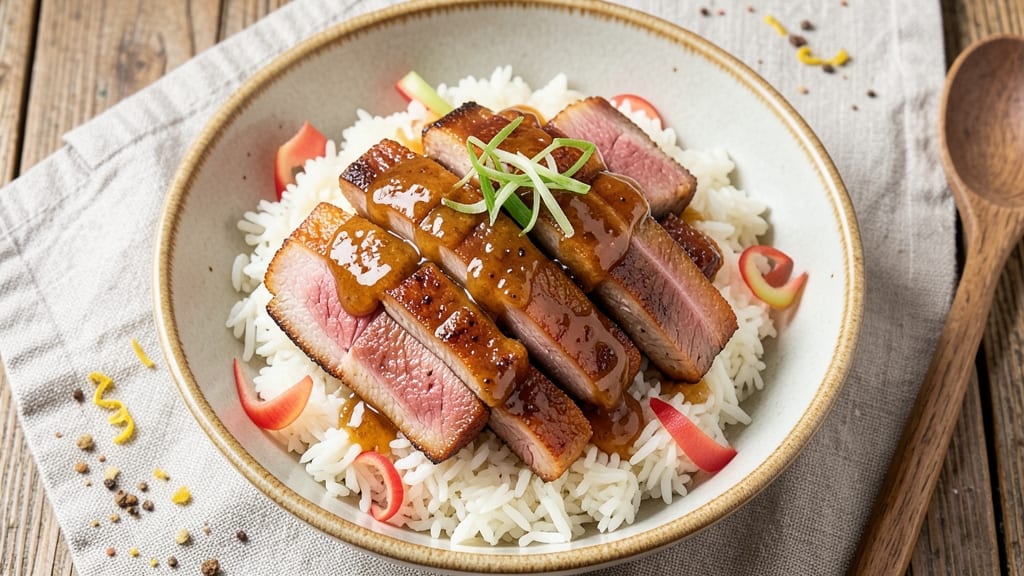
This chashu rice bowl recipe transforms tender, smoky braised pork into a hearty meal over fragrant jasmine rice. The secret lies in low-and-slow braising, where pork shoulder becomes irresistibly tender while absorbing rich, savory flavors—no fancy equipment needed.
What starts as a simple cut of meat emerges as melt-in-your-mouth perfection, ready to be piled over perfectly seasoned rice.
Pair the chashu with quick-pickled onions for brightness, a dollop of miso soup for depth, and a soft-boiled egg for creaminess. The dish balances authenticity with adaptability, letting you customize sides while keeping the star—the braised pork—front and center.
Every bite delivers that signature umami-rich, caramelized crust, making this bowl a weeknight favorite that still feels special.
Ingredients for chashu rice bowl
Here's what you need to create melt-in-your-mouth chashu pork and fragrant jasmine rice bowls.
| Ingredient | Amount | Notes |
|---|---|---|
| Boneless Pork Shoulder 🥩 | 2 ½ lb | Cut into 2-inch chunks for even cooking |
| Jasmine Rice 🍚 | 2 cups | Uncooked, long-grain preferred |
| Soy Sauce 🍶 | ½ cup | High-quality, low-sodium preferred |
| Mirin 🍶 | ¼ cup | Sweet rice wine, essential for balance |
| Sake 🍶 | ¼ cup | Dry variety for authentic flavor |
| Sugar 🍚 | 2 tbsp | Granulated or brown sugar |
| Fresh Ginger 🧄 | 2 tbsp | Grated, peel removed, fresh preferred |
| Garlic Cloves 🧄 | 6 cloves | Peeled, smashed for maximum flavor |
| Yellow Onion 🧅 | 1 whole | Cut into 1-inch chunks |
| Red Miso Paste 🧈 | 2 tbsp | Fermented soybean paste for umami |
| Sesame Oil 🫒 | 1 tbsp | Toasted, for finishing |
| Neutral Oil 🫒 | 2 tbsp | Vegetable or canola oil |
| Red Chili Flakes 🌶️ | 1 tsp | Optional, for heat preference |
| Kosher Salt 🧂 | 1 ½ tsp | Diamond Crystal preferred |
| Black Peppercorns 🌶️ | ½ tsp | Freshly ground for best flavor |
The pork shoulder is non-negotiable—it's what gives chashu its signature melt-in-your-mouth texture. Look for well-marbled cuts at your local butcher or the meat department at Whole Foods or Trader Joe's. If you can't find boneless, trim it yourself—it's worth the effort. The jasmine rice should be freshly milled for that signature aroma; Lotus Foods is my go-to brand, but any high-quality long-grain will work. For the braising liquids, don't skimp on the soy sauce—Kikkoman or Hoyu are standards for a reason. The mirin and sake can be found in the Asian foods aisle at most grocery stores, but if you're short on time, Trader Joe's sells pre-mixed chashu seasoning that works in a pinch.
No mirin? Substitute equal parts sugar and water—it won't be identical, but it'll work. Running out of sake? Dry white wine or extra-dry sherry are decent swaps. The ginger and garlic can be adjusted to taste—more ginger if you love heat, less if you prefer subtlety. For the miso, red miso gives the deepest umami, but white miso at half the amount works if that's what you have. The sesame oil is for finishing—don't cook with it, just drizzle it over the top at the end. And if you're worried about the pork being too fatty, pat it dry with paper towels before searing to render out excess fat.
The braised pork keeps beautifully—3-4 days in the fridge, 3 months frozen. I like to make a big batch and portion it out so I always have chashu on hand for quick meals. The cooked rice stays fresh for 2 days in the fridge, but it's best eaten within 1 day for that perfect sticky texture. For leftovers, reheat the pork in a skillet with a splash of water or broth to keep it moist. The braising liquid? It's even better the next day—use it for soups or sauces. And if you're making this ahead, braise the pork first, then cook the rice fresh when serving for the best experience.
Why You'll Love This Recipe
- One-Pot Magic: I swear by this when I’m too tired to chop—just toss the pork shoulder in a pot with soy, mirin, and sake, let it braise while I prep the rice. No extra pans, no stress, and the pork practically falls apart on its own.
- Umami Bomb: That combo of soy, mirin, and sake? It’s like a flavor explosion in your mouth. The pork gets this glossy, caramelized crust while staying tender inside—honestly, I’ll take this over takeout any day.
- Meal Prep MVP: Make a big batch of chashu on Sunday, and you’ve got lunch or dinner covered for days. The rice stays fresh, the pork reheats beautifully, and I’ve even packed it for work—no sad desk lunches here.
- Budget Stretch: Pork shoulder is cheap, and a few cups of rice feed the whole family. Between us, this recipe turns $10 into four hearty bowls that’ll have everyone asking for seconds. (Yes, even my picky kid.)
Step-by-step instructions for chashu rice bowl
Here's how to transform simple ingredients into restaurant-quality chashu pork with tender, smoky meat and perfectly sticky rice.
Prepare the Pork Shoulder for Braising
Cut the 2.5 lb boneless pork shoulder into 2-inch chunks, working against the grain for maximum tenderness. Pat each piece dry with paper towels—this ensures a better sear and prevents excess moisture in the braise. In a small bowl, combine the 0.5 cup soy sauce, 0.25 cup mirin, 0.25 cup sake, 2 tbsp sugar, 1.5 tsp kosher salt, and 0.5 tsp freshly ground black peppercorns. Whisk until the sugar dissolves completely, creating a balanced marinade that will penetrate the meat.
Place the pork chunks in a large resealable bag and pour the marinade over them. Seal the bag and massage the marinade into the meat, coating every surface. Let it sit at room temperature for 30 minutes—this jumpstarts the flavor infusion and helps the pork cook more evenly. If you prefer, you can refrigerate it overnight for deeper flavor development, but 30 minutes works perfectly for a quick preparation.
Sear and Braise the Pork Until Tender
Heat a large Dutch oven over medium-high heat and add 2 tbsp neutral oil. Once the oil shimmers, add the pork in a single layer, leaving space between pieces. Let them sear undisturbed for 3-4 minutes until a deep golden-brown crust forms—this is your flavor foundation. Flip the pork and repeat on the second side. Remove the pork and set it aside.
In the same Dutch oven, add 2 tbsp neutral oil, then the 1 whole yellow onion cut into 1-inch chunks, 6 smashed garlic cloves, and 2 tbsp grated fresh ginger. Sauté for 2-3 minutes until the onions soften and the aromatics release their fragrance. Pour in the reserved marinade from the pork and scrape up any browned bits from the bottom of the pot—this step captures all the caramelized flavor. Return the pork to the pot, along with 1 cup of water, and bring to a simmer.
Braise Until Fork-Tender and Glossy
Cover the Dutch oven and reduce heat to low. Let the pork braise for 2 to 2.5 hours, maintaining a gentle simmer. You'll know it's ready when the meat is fork-tender and pulls apart easily—this usually happens around the 2-hour mark, but timing varies based on your stove. If the liquid reduces too quickly, add a splash of water to keep the pork submerged.
About 30 minutes before the pork is done, stir in the 2 tbsp red miso paste. This adds a deep umami richness that balances the sweetness of the braising liquid. Once the pork is tender, remove it from the pot and set it aside, leaving the braising liquid in the pot. Skim off any excess fat from the surface of the liquid, but leave about 1 tbsp for flavor. The pork should have a glossy, mahogany-brown exterior with a rich, smoky aroma that fills your kitchen.
Cook the Jasmine Rice to Perfection
While the pork rests, rinse the 2 cups jasmine rice under cold water until the water runs clear—this removes excess starch and prevents gummy rice. In a medium saucepan, combine the rice with 2.5 cups water and bring to a boil. Once boiling, reduce heat to low, cover with a tight-fitting lid, and let it simmer for 15 minutes. Turn off the heat and let the rice steam, undisturbed, for an additional 10 minutes. The rice should be tender and slightly sticky, with a delicate floral aroma.
Fluff the rice gently with a fork, then stir in the 1 tbsp toasted sesame oil and 1 tsp red chili flakes. This step adds a nutty depth and a subtle heat that complements the rich pork. If the rice feels dry, sprinkle in a splash of hot water from the pot and fold it in. The rice should be moist but not soupy, with each grain distinct yet clinging together slightly.
Assemble and Serve the Chashu Rice Bowl
Slice the braised pork into ½-inch thick slices, cutting against the grain for the most tender texture. Arrange the jasmine rice in a wide bowl, creating a base for the pork. Spoon the pork slices over the rice, allowing them to rest on top. Ladle the braising liquid from the Dutch oven over the pork and rice, coating everything evenly. The liquid should be rich, slightly thickened, and infused with the pork's deep flavor.
Garnish each bowl with a drizzle of the remaining braising liquid and a sprinkle of sesame seeds for texture. Serve immediately while the rice is warm and the pork is still juicy. Each bite should deliver a perfect balance of tender, smoky pork, sticky jasmine rice, and a glossy, umami-rich sauce. For extra depth, serve with quick-pickled vegetables or a simple miso soup on the side.
Pro Tips For Making Chashu Rice Bowl
- Sear the Pork First: I learned this the hard way—skipping the sear means flavor hiding in the sauce instead of the meat. Hit that pork shoulder with a hot pan (no oil needed) until it’s deep brown on all sides before braising. That crust locks in moisture and carries the soy-mirin-sake punch every bite.
- Use Cold Rice: Your rice bowl game changes when the rice is cold. Spread freshly cooked jasmine rice on a tray and let it chill for 10 minutes before assembling. Warm rice turns mushy under chashu juices—cold rice stays firm and soaks up the sauce just right.
- Don’t Boil the Sauce Dry: After burning three batches, I finally figured out: the sauce should simmer until it’s reduced by half, not evaporated. Keep it moving and add a splash of water if it gets too thick—you want sticky, glossy, not burnt.
- Slice Against the Grain: Thin slices? Great. But if you cut with the grain, you’re fighting the texture. Angle your knife perpendicular to the muscle fibers—this makes each bite tender, not chewy. (Yes, even if you’re impatient like me.)
Essential equipment for perfect results
Dutch Oven Essentials
A heavy-duty Dutch oven like the Lodge 5.5-Quart is my go-to for chashu—it distributes heat evenly and locks in moisture during the long braise. Look for one with a tight-fitting lid to maintain consistent temperature.
If you don’t have one, a 6-quart stainless steel pot with a lid works in a pinch. Just avoid nonstick—it can’t handle the high heat needed for proper browning. 🔥
Instant-Read Thermometer
Skip the guesswork with a ThermoWorks Smoke or Meater thermometer to check the pork’s internal temperature. Aim for 195-203°F—this ensures fork-tender perfection without drying out the meat. I place the probe in the thickest piece and monitor it during the final hour of braising.
A digital thermometer also helps gauge when the rice is done (aim for 212°F at the base of the pot).
Rice Cooker Shortcut
For foolproof rice every time, use a Zojirushi NS-ZCC10 rice cooker—it handles jasmine rice perfectly with minimal effort. If you’re cooking rice on the stovetop, a fine-mesh strainer helps rinse the grains thoroughly, and a wooden rice paddle prevents crushing during fluffing.
For extra aroma, add a bay leaf to the cooking water. 🍚
Braising Tools
Keep a slotted spoon and tongs nearby to handle the pork without piercing it (which releases juices). A whisk comes in handy for combining the marinade, and a ladle helps skim excess fat from the braising liquid.
For garnishes, sesame seeds (toasted in a dry skillet) and thinly sliced scallions elevate the dish instantly. Store these tools in a magnetic knife strip to keep your workspace organized.
Storage Containers
Transfer leftovers to glass airtight containers like Pyrex or Cambro for fridge storage. The braised pork keeps for 3-4 days and freezes beautifully for 3 months—portion it into quart-sized freezer bags for easy reheating.
For rice, use a wide, shallow container to cool it quickly and prevent sogginess. Label everything with dates to track freshness. ✨
Nutrition facts
Frequently asked questions
Can I use a different cut of pork for chashu?
While pork shoulder is ideal for its fat content and tenderness, you can use pork butt or even pork belly in a pinch. Avoid lean cuts like tenderloin—they lack the fat needed for that signature melt-in-your-mouth texture. If using pork belly, trim excess fat before braising to prevent greasiness in the sauce.
How do I make the rice extra sticky like in Japanese restaurants?
Rinse the rice 3-4 times until the water runs clear, then use a 1:1.25 rice-to-water ratio (2 cups rice to 2.5 cups water). After cooking, let it steam 10 minutes off the heat, then gently fold in 1 tbsp sesame oil and a pinch of salt. For restaurant-style stickiness, press the rice into the bowl with a spoon before adding toppings.
What can I substitute if I don't have mirin or sake?
For mirin, mix 1 tbsp sugar + 1 tbsp water per 0.25 cup needed. For sake, use dry white wine or dry sherry—both work but lack the delicate sweetness. If you're missing both, add 1 extra tbsp sugar to compensate for the lost sweetness in the braising liquid.
Can I make chashu in a slow cooker?
Yes! Brown the pork first in a skillet, then transfer it to your slow cooker with all the braising ingredients. Cook on low for 6-8 hours or high for 4-5 hours. The texture will be slightly softer than stovetop, but still delicious. Just check for doneness with a fork—it should shred easily.
How do I reheat chashu without drying it out?
Reheat in a skillet over medium-low heat with 1-2 tbsp water or broth to keep it moist. Cover and warm for 3-5 minutes, stirring occasionally. For microwave reheating, place pork in a bowl with a splash of water, cover with a damp paper towel, and heat in 30-second intervals until warmed through. Never reheat dry—always add moisture.