
Main Courses
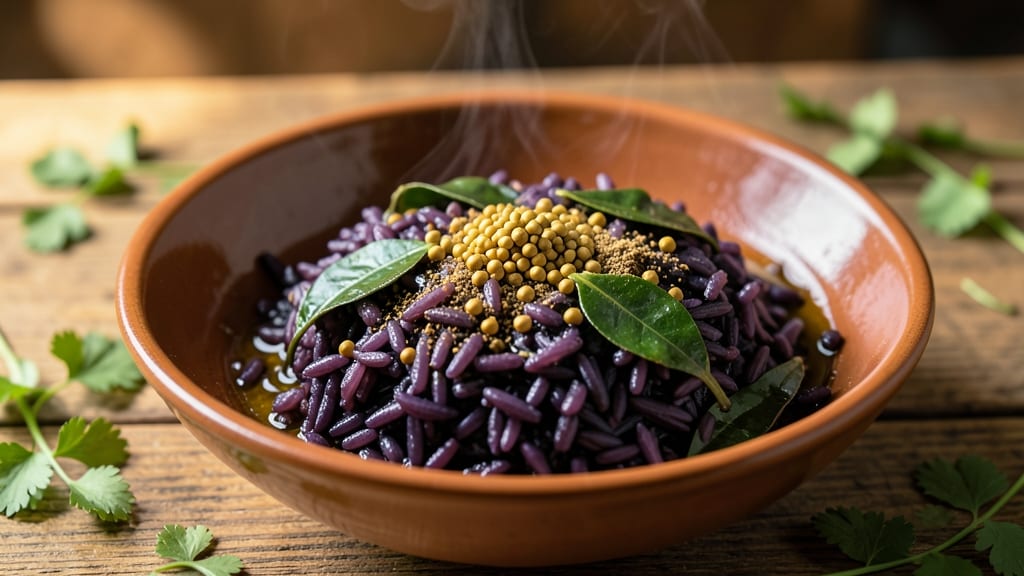
This one-pot black rice South Indian recipe transforms humble grains into a fragrant, nutrient-packed dish that captures the essence of temple cuisine. The deep purple-black rice—rich in antioxidants and protein—absorbs spices beautifully while cooking, creating a dish with both visual appeal and complex flavor.
Unlike white rice, this variety requires soaking to soften its hard exterior, a step that unlocks its full potential.
What sets this recipe apart is the toasted spice tempering that infuses every grain with aromatic depth. Traditional South Indian techniques—like blooming mustard seeds and curry leaves in hot oil—create a symphony of flavors that elevate simple rice into something extraordinary.
The result is a dish that’s equally satisfying as a breakfast staple or a comforting weekday meal, all achieved in a single pot for minimal cleanup.
Ingredients for black rice south indian
Transform humble grains into a fragrant, antioxidant-rich South Indian masterpiece with these carefully selected ingredients.
| Ingredient | Amount | Notes |
|---|---|---|
| Black Rice (Forbidden Rice) 🌾 | 1 ½ cups | Uncooked, rinsed thoroughly |
| Water 💧 | 3 cups | Filtered preferred for clarity |
| Mustard Seeds 🌿 | 1 tbsp | Whole, yellow variety |
| Dried Curry Leaves 🍃 | ½ tbsp | Or 8 fresh leaves |
| Asafoetida Powder 🌶️ | ¼ tsp | Key aromatic base |
| Coconut Oil 🫒 | ½ cup | For tempering |
| Fresh Turmeric 🧄 | ½ tbsp | Grated, bright orange |
| Fresh Ginger 🧄 | ½ tbsp | Grated, aromatic |
| Cumin Seeds 🌿 | 1 tsp | Toasted for depth |
| Bay Leaves 🍃 | 2 whole | Dried, crumbled |
| Salt 🧂 | 1 ½ tsp | Diamond Crystal preferred |
| Vegetable Stock 💧 | 1 ½ cups | Low-sodium preferred |
| Fresh Coriander Leaves 🌿 | ¼ cup | Chopped, for garnish |
The black rice is non-negotiable—look for forbidden rice or black jasmine at specialty Asian markets or online retailers like Burlap & Barrel. It needs thorough rinsing to remove excess starch, which can make the rice gummy. Costco often carries it in bulk, but check the package for 100% whole grain labeling. The mustard seeds and curry leaves are traditional aromatics; Whole Foods carries high-quality dried varieties if fresh aren't available. For the turmeric and ginger, organic produce sections offer the brightest, most potent options—avoid dull-colored roots.
No fresh curry leaves? Dried works at double the amount, but toast them lightly first for better flavor. Short on asafoetida? Garlic powder at half the amount mimics some of its umami punch, though it won't be identical. The vegetable stock can be swapped for water plus 1 tsp soy sauce for extra depth, but don't skip the salt entirely—it's essential for balancing the dish. For the coconut oil, virgin variety adds subtle sweetness, while refined is neutral. Both work, but virgin gives that authentic South Indian touch.
Soak the rice for at least 30 minutes before cooking to soften its hard exterior—a step that unlocks its full flavor potential. The tempering spices (mustard seeds, curry leaves) should be bloomed in hot oil until they sizzle—don't rush this step. Store leftovers in an airtight container for 4-5 days in the fridge, though it reheats beautifully. For meal prep, double the batch and freeze portions for up to 3 months—just thaw overnight in the fridge before reheating.
Why You'll Love This Recipe
- No-Soaking Needed: I swear by this trick—just rinse the black rice once, then boil it like regular rice. The forbidden rice stays firm and nutty without turning mushy, and honestly? I’ve burned dinner enough times to know shortcuts matter.
- Umami Bomb Start: That first sizzle of mustard seeds and curry leaves in ghee? It’s like a flavor grenade—earthy, toasty, and just a pinch of asafoetida ties it all together. The rice soaks up the aroma like a sponge, and suddenly, a simple pot of rice feels like a celebration.
- Lunchbox Legend: Between us, this is my go-to for school lunches or office meals. The rice holds up for days, and the tempering keeps it from getting bland. Pack it with yogurt and cucumber, and you’ve got a meal that’ll make coworkers ask for seconds—no reheating drama.
- Budget Black Magic: Forbidden rice can be pricey, but this recipe stretches it. A single cup serves four, and the mustard-curry base costs pennies. I’ll be real: I’ve made this for potlucks where everyone assumed it was expensive—then they asked for the recipe. (They never guessed how cheap it was.)
Step-by-step instructions for black rice South Indian one-pot
Master this aromatic technique for restaurant-quality black rice with deep, toasted spice layers.
Prepare the Black Rice Base
Rinse the 1.5 cups black rice (forbidden rice) thoroughly under cold water until the water runs clear. This removes excess starch and prevents gumminess during cooking. Soak the rice in 3 cups water for 20 minutes—just long enough to soften slightly without becoming mushy. Drain well before proceeding.
In a heavy-bottomed pot, combine the drained rice with 1.5 cups vegetable stock and bring to a boil over medium-high heat. Once boiling vigorously, reduce to low heat, cover tightly, and simmer for 20 minutes. You'll know it's ready when the liquid is fully absorbed and the rice is tender but still slightly firm to the bite. The black rice should maintain its shape while developing a deep, earthy aroma.
Temper the Spices in Coconut Oil
While the rice cooks, heat the 0.5 cup coconut oil in a separate small pan over medium-low heat. Add the 1 tsp cumin seeds and toast for 30 seconds until they begin to sizzle and release their aroma. Immediately add the 0.5 tbsp fresh ginger and 0.5 tbsp fresh turmeric, stirring constantly for 1 minute until the ginger softens and the mixture turns a vibrant yellow.
Next, add the 1 tbsp mustard seeds and 2 whole bay leaves, cooking for another 30 seconds until the mustard seeds pop audibly. Sprinkle in the 0.5 tbsp dried curry leaves and 0.25 tsp asafoetida powder, stirring for 10 seconds to bloom the flavors. Remove from heat and let the tempered oil cool slightly—this aromatic base will infuse the rice with layers of complexity.
Combine and Simmer to Perfection
Once the rice is tender, carefully pour the tempered oil mixture over the cooked rice. Add the 1.5 tsp salt and gently fold everything together with a wooden spoon, ensuring even distribution. The rice should now have a glossy sheen from the coconut oil and a rich, toasty aroma.
Return the pot to low heat and cook uncovered for 5 minutes, stirring occasionally. This final step allows the flavors to meld while the rice absorbs the remaining oil. You'll notice the rice darkening slightly and developing a nutty, almost caramelized depth—this is the hallmark of properly tempered black rice. The texture should be firm yet creamy, with each grain distinct.
Garnish and Serve Immediately
Transfer the black rice to a serving dish and immediately garnish with the 0.25 cup chopped fresh coriander leaves. The bright green contrast against the deep black rice creates a visually stunning presentation while adding a fresh, citrusy note to balance the rich spices.
Serve warm, ideally within 15 minutes of cooking, to enjoy the rice at its peak texture and aroma. The one-pot method preserves all the flavors in the dish, and the toasted spices create a depth that transforms simple black rice into a fragrant, restaurant-quality centerpiece. Each bite should deliver a perfect balance of earthy rice, toasted cumin, and the bright finish of fresh coriander.
Pro Tips For Making Black Rice South Indian
- SOAK THE RICE LONGER: Black rice needs at least 4 hours—or overnight if you can swing it—to soften properly. I learned this the hard way when my first batch turned out gummy; the starch just won’t break down without proper soaking. Use double the water you’d use for white rice, and drain it thoroughly before cooking.
- CRACK THE MUSTARD SEEDS: Don’t just toss those mustard seeds in—heat them in oil until they pop audibly. That’s your cue to add curry leaves and asafoetida. I used to skip this, and the flavor always felt flat; the popping releases their oils, making the tempering sing. Use medium heat—high heat burns them before they pop.
- DON’T SKIP THE ASAFOETIDA: That tiny pinch of asafoetida (½ tsp max) is non-negotiable for authentic flavor. Sprinkle it directly into the hot oil with the mustard seeds—it blooms instantly and cuts through the rice’s earthiness. I was skeptical until I tried it; now I add it even to other dishes.
- COOK THE RICE LOW AND SLOW: After draining the soaked rice, simmer it on low heat for 15–20 minutes, stirring occasionally. High heat turns black rice mushy and pasty. My grandmother’s trick: If the water’s absorbed but the rice still feels firm, it’s done. Let it sit covered for 5 minutes—it’ll finish steaming on its own.
Make-ahead tips for this dish
Prep Ahead Strategy
Start by soaking the 1.5 cups black rice in 3 cups water for 20 minutes—this step can be done the night before. Store it in an airtight container in the fridge, covered with a damp paper towel to keep it moist.
The rice will be ready to cook in the morning without any extra effort. This method also helps reduce cooking time by 10-15 minutes since the grains soften during soaking. 🌾
Spice Tempering Shortcut
Toast all your spices—1 tsp cumin seeds, 1 tbsp mustard seeds, 2 bay leaves, and 0.5 tbsp dried curry leaves—in 0.5 cup coconut oil ahead of time. Store the mixture in a small airtight jar in the fridge for up to 5 days.
When ready to cook, simply reheat the oil with the spices over medium-low heat for 1 minute to revive their aroma. This saves 10 minutes of prep time on busy mornings.
Freezer-Friendly Portions
Cook the entire batch and divide it into quart-sized freezer bags, leaving 1 inch of headspace for expansion. Seal tightly and freeze for up to 3 months. When ready to eat, thaw overnight in the fridge.
Reheat gently on the stovetop with 1-2 tbsp water to restore moisture, stirring occasionally over low heat for 5-7 minutes. The texture remains firm and flavorful, just like freshly made. ❄️
Meal Prep Timeline
For a weekly meal plan, dedicate 30 minutes on Sunday to soak the rice and toast the spices. Store them separately in the fridge. On weekdays, simply combine the soaked rice with 1.5 cups vegetable stock, cook for 20 minutes, then add the pre-toasted spices.
This approach ensures you have a nutritious, ready-to-eat meal in 25 minutes or less. Perfect for busy schedules!
Reheating for Best Texture
Always reheat black rice gently to avoid drying it out. Use a heavy-bottomed pot over low heat and add 1-2 tbsp water or stock to create steam. Cover and heat for 3-5 minutes, stirring occasionally, until warmed through.
The rice should be steaming but not soggy. Avoid microwaving—it can turn the grains rubbery. For extra flavor, stir in a pinch of salt or a drizzle of coconut oil while reheating. 🔥
Garnish on Demand
Keep the 0.25 cup chopped fresh coriander leaves in a small container in the fridge. Add them just before serving to maintain their bright, fresh flavor. If prepping ahead, store the coriander separately and garnish within 10 minutes of reheating to preserve its vibrant color and aroma.
For a longer shelf life, store the coriander in a damp paper towel-lined container and refrigerate for up to 3 days.
Nutrition facts
Frequently asked questions
Why does black rice need soaking before cooking?
Black rice has a hard, protective bran layer that requires soaking to soften and unlock its full flavor potential. The 20-minute soak removes excess starch and prevents the rice from becoming gummy. This traditional step ensures each grain absorbs spices evenly, creating that signature fragrant depth found in South Indian temple cuisine.
Can I substitute coconut oil with another oil?
Yes, but coconut oil's subtle sweetness enhances the dish's authenticity. For neutral flavor, use ghee or sesame oil—both work well for the tempering step. Avoid olive oil, as its strong flavor can overpower the delicate spices. The key is using enough oil to properly bloom the spices and coat the rice.
What makes this black rice different from regular rice dishes?
Beyond its striking color, black rice is packed with anthocyanins (antioxidants) and maintains a firmer texture than white rice. The tempering technique—blooming mustard seeds and curry leaves in hot oil—creates aromatic layers that transform simple rice into a complex, restaurant-quality dish. Its earthy, nutty flavor pairs perfectly with South Indian flavors.
How do I fix black rice that turned out mushy?
Overcooking is the most common cause. Next time, reduce the simmering time to 15 minutes (instead of 20) and use slightly less water. For immediate fixes, stir in 1 tbsp coconut oil while warm to restore moisture and texture. If all else fails, mix with toasted nuts or raisins to add bulk and improve mouthfeel.
What are the best sides to serve with this black rice?
Pair it with classic South Indian accompaniments like coconut chutney, mint-coriander raita, or spiced yogurt to balance the richness. For protein, add sambar (lentil stew) or tofu curry. The vibrant colors and contrasting textures make this dish especially photogenic for special occasions.