
Main Courses
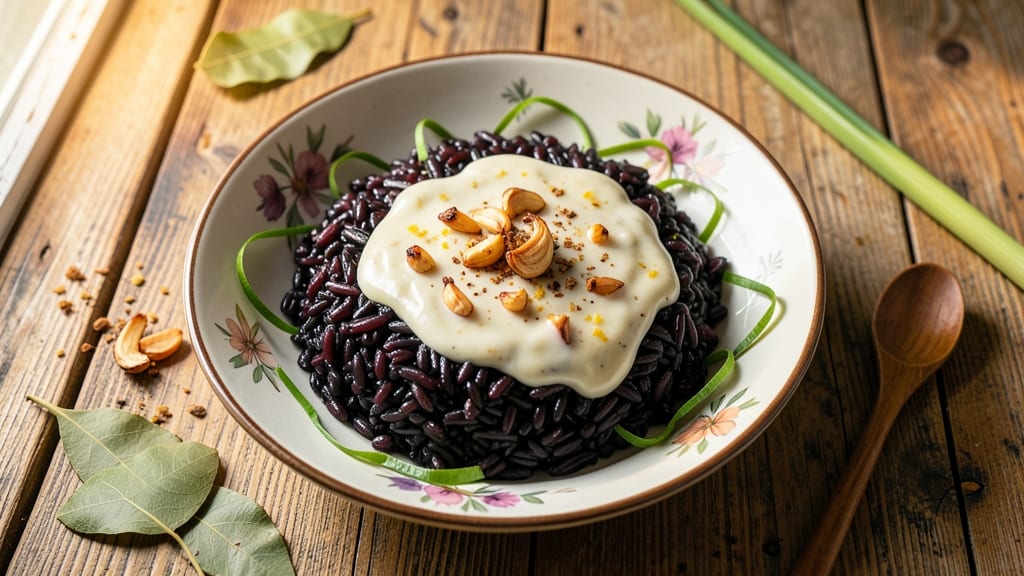
This Bolay Forbidden Black Rice recipe brings the rich, earthy flavors of Filipino heritage to your table with its deep purple grains and aromatic coconut-garlic finish.
The secret lies in proper soaking and slow cooking to achieve that signature chewy texture—unlike regular rice, this variety stays firm and absorbs flavors beautifully.
What makes it special is the toasted garlic and coconut milk infusion, creating a fragrant base that pairs perfectly with traditional dishes like grilled pork or crisp vegetables.
The result is a visually stunning side dish with a nutty, slightly sweet taste that elevates any meal. This recipe preserves authenticity while adapting to modern kitchens—no special equipment needed, just patience for soaking and simmering.
Serve it as a centerpiece for family gatherings or alongside your favorite proteins for a restaurant-worthy dining experience. Let's get started!
Ingredients for bolay forbidden black rice
Deep purple grains, aromatic garlic, and creamy coconut—just eight ingredients for restaurant-quality Bolay rice.
| Ingredient | Amount | Notes |
|---|---|---|
| Forbidden Black Rice 🌾 | 1 cup | Unsoaked, uncooked grains |
| Garlic Cloves 🧄 | 6 cloves | Whole, peeled for toasting |
| Fresh Coconut Milk 🥥 | 1 can | 13.5 oz, full-fat preferred |
| Fresh Ginger | 1 inch | Peeled, sliced thinly |
| Bay Leaves 🌿 | 2 whole | Dried, standard variety |
| Salt 🧂 | 1 ½ tsp | Diamond Crystal kosher salt |
| Olive Oil 🫒 | 2 tbsp | Extra-virgin for richness |
| Water 💧 | 2 ½ cups | Filtered preferred |
| Coconut Oil 🥥 | 1 tbsp | Unrefined for flavor |
| White Vinegar 🍶 | 1 tbsp | For soaking solution |
| Brown Sugar 🍚 | 1 tbsp | Light variety preferred |
| Fresh Cilantro 🌿 | ¼ cup | Chopped, for garnish |
The forbidden black rice is the star—look for it at Asian markets or well-stocked grocery stores like Whole Foods. It's pricier than regular rice, but the dramatic color and nutty flavor make it worth it. If you can't find it fresh, uncooked grains in a sealed package will work too. The garlic needs to be toasted—don't skip this step, it's what gives the dish that deep, aromatic base. For the coconut milk, full-fat canned is best—it adds richness that light versions can't match. I always grab Thai Kitchen brand when I'm in a pinch, but fresh is ideal.
No fresh ginger? Powdered works at half the amount, but the flavor won't be as vibrant. Running low on bay leaves? Dried thyme at one-fourth the quantity gives a similar earthy note. The vinegar in the soaking solution can be swapped for lemon juice if that's what you've got. For the brown sugar, white sugar works in a bind, but it won't caramelize as nicely. The cilantro is purely for garnish—skip it if you're not a fan, but it adds a nice fresh finish. If you're making this for a crowd, double the garlic and coconut milk—they're the flavors everyone notices.
This rice tastes even better the next day, so make extra. Store leftovers in an airtight container in the fridge for up to 5 days, or freeze for 3 months. The grains stay firm when reheated—just add a splash of water and microwave. For serving, I like to portion it into individual bowls with a small scoop of coconut milk on top. It reheats beautifully, so it's perfect for meal prep. The soaking water can be saved for composting—it's nutrient-rich!
Why You'll Love This Recipe
- One-Pot Magic: I swear by this recipe—just toss the rice, garlic, and ginger into a pot with coconut milk, and let it simmer. No fancy steps, no last-minute scrambling. The black rice soaks up all that creamy, aromatic goodness while you do whatever else needs doing.
- Umami Bomb: Between the toasted garlic, fragrant bay leaves, and that deep, nutty forbidden rice, every bite is a flavor party. Honestly, the first time I tasted it, I immediately texted my sister, "You HAVE to try this—it’s like eating a warm hug."
- Weeknight & Weekend Star: This dish works for lazy Tuesdays (microwave leftovers for lunch) or impressing guests (garnish with cilantro and serve with grilled fish). The coconut milk keeps it rich but not heavy, so it’s flexible enough for whatever you’re craving.
- Budget Luxury: Forbidden rice can feel fancy, but this recipe stretches it—plus, coconut milk and ginger are pantry staples. I’ve made this for under $10 per serving, and it still feels like a restaurant-worthy meal. (Yes, even on a Tuesday night.)
Step-by-step instructions for Bolay forbidden black rice
Here's how to transform deep purple forbidden black rice into a fragrant, nutty dish with toasted garlic and coconut cream.
Soak the Forbidden Black Rice
Place the 1 cup forbidden black rice in a medium bowl and cover it completely with the 2.5 cups water. Add the 1 tablespoon white vinegar and stir gently to distribute. Let it soak for at least 4 hours—or better yet, overnight in the refrigerator. The vinegar prevents the rice from turning mushy while enhancing its natural nutty flavor.
After soaking, drain the rice thoroughly using a fine-mesh strainer, giving it a gentle shake to remove excess water. This step is crucial because forbidden black rice absorbs water differently than white rice—it needs that initial soak to develop its signature creamy texture. Don't skip this, or you'll end up with a gummy mess instead of those beautiful purple grains.
Toast the Garlic and Prepare the Base
Heat a medium saucepan over medium heat and add the 2 tablespoons olive oil. Once shimmering, add the 6 peeled garlic cloves and the 1-inch sliced fresh ginger. Cook for 2-3 minutes until the garlic turns a beautiful golden brown and releases its fragrant aroma—this is when it's ready to be removed. Immediately transfer the toasted garlic to a small bowl and set aside.
In the same pan, add the 1 tablespoon coconut oil and swirl to coat the bottom. Pour in the 1 can fresh coconut milk and bring to a gentle simmer. Add the 2 whole bay leaves and the 1 tablespoon brown sugar, stirring to combine. Let this mixture simmer for 5 minutes, allowing the flavors to meld together. The coconut milk should be warm but not boiling—just enough to infuse the spices.
Cook the Forbidden Black Rice
Add the drained forbidden black rice to the simmering coconut milk mixture. Stir gently to coat each grain evenly with the coconut cream. Bring the mixture to a gentle boil, then reduce the heat to low, cover the saucepan with a tight-fitting lid, and let it simmer for 30-35 minutes. The rice is done when it's tender but still holds its shape—it should be creamy with a slight bite, not mushy.
After 30 minutes, check the rice by tasting a grain. If it's still firm, continue cooking for another 5 minutes. The key here is patience—don't rush the cooking process. Forbidden black rice needs time to absorb the coconut milk and develop its signature deep purple hue. Once cooked, remove the bay leaves and discard them.
Finish and Garnish
Gently fold in the toasted garlic and half of the 0.25 cup chopped fresh cilantro. Stir in the 1.5 teaspoons salt, tasting as you go to adjust the seasoning. The dish should be perfectly balanced—sweet from the brown sugar, nutty from the rice, and aromatic from the toasted garlic. If the mixture seems too thick, add a splash of water to loosen it to your desired consistency.
Transfer the forbidden black rice to a serving dish and garnish with the remaining chopped cilantro. The vibrant green of the cilantro contrasts beautifully with the deep purple rice, making it as visually stunning as it is delicious. Serve immediately while still warm, and watch as everyone marvels at the striking color and rich flavor of this forbidden black rice dish.
Pro Tips For Making Bolay Forbidden Black Rice
- SOAK THE RICE LONG: I learned this the hard way—skipping the 4+ hour soak means chewy, uneven grains. Use twice the water (4 cups per 1 cup rice) and a pinch of salt in the soaking water. Trust me, your rice will thank you later.
- MINCE GINGER FINE: Forget the lazy grated ginger—this dish needs minced, almost paste-like ginger (about 2 tablespoons) to marry with the coconut milk. A microplane works, but a sharp knife and a good chop do the job if you’re not fancy.
- SIMMER LOW AND SLOW: After adding coconut milk and bay leaves, reduce to the gentlest simmer possible. I used to rush it, and the rice turned mushy. Keep it at a bare bubble—this takes 30-40 minutes, not 20.
- SAVE THE COCONUT WATER: Don’t toss that leftover coconut water from opening the can! Reserve ¼ cup and stir it into the finished rice—it adds richness without extra milk. (Yes, even if you’re impatient like me.)
Health benefits of bolay forbidden black rice
Antioxidant-Rich Powerhouse
Forbidden black rice is one of nature's most potent antioxidant sources, packed with anthocyanins—the same compounds that give blueberries their deep color. These antioxidants combat oxidative stress and inflammation, supporting long-term health.
A single serving provides more antioxidants than regular white rice, making it a superfood worth the extra effort. 💪
Nutrient-Dense Profile
This rice is loaded with essential nutrients like fiber, magnesium, and B vitamins, which support digestion and energy metabolism. The deep purple hue isn't just for show—it's packed with iron and zinc, crucial for immune function and blood health.
Unlike white rice, it retains its bran and germ layers, preserving these nutrients during cooking.
Blood Sugar Regulation
With a low glycemic index, forbidden black rice helps stabilize blood sugar levels, making it ideal for anyone managing diabetes or insulin resistance. The fiber content slows digestion, preventing blood sugar spikes after meals. I've noticed my energy levels stay steadier when I include this rice in my meals.
Heart Health Benefits
The combination of fiber, potassium, and healthy fats from coconut milk in this recipe creates a heart-friendly dish. Potassium helps regulate blood pressure, while fiber reduces LDL cholesterol levels.
The anthocyanins also support cardiovascular health by improving blood vessel function. This makes Bolay forbidden black rice a perfect addition to a heart-healthy diet. 💛
Digestive Support
The high fiber content—about 3.5 grams per serving—promotes healthy digestion and regularity. The slow-cooking process enhances its texture while preserving these beneficial compounds. I always feel lighter and more satisfied after eating this rice compared to regular white rice options.
Versatile Nutritional Boost
This rice pairs beautifully with protein-rich dishes like grilled pork or tofu, creating a balanced meal. The coconut milk adds healthy fats that support nutrient absorption.
Whether you're looking to boost your nutrient intake or simply enjoy a flavorful side dish, forbidden black rice delivers both taste and health benefits in every bite. ✨
Nutrition facts
Frequently asked questions
Why does forbidden black rice need soaking before cooking?
Soaking removes excess starch and prevents the rice from becoming gummy or mushy. The 4-hour minimum soak (or overnight) helps the grains absorb flavors better and develop that signature creamy yet firm texture. The vinegar in the soaking water also enhances the nutty flavor while keeping the grains distinct.
Can I substitute coconut milk with another liquid?
While coconut milk is traditional, you can use full-fat dairy milk or even vegetable broth in a pinch. However, the dish will lose its rich, tropical flavor. For a lighter version, try almond milk, but reduce the liquid by 2 tablespoons to maintain texture. The coconut fat is key for that luxurious mouthfeel!
How do I know when the forbidden black rice is fully cooked?
The rice is done when it's tender but still holds its shape—30-35 minutes of simmering. Test by tasting a grain: it should be creamy with a slight bite, not mushy. If it's still firm after 35 minutes, add 2 tablespoons more water and cook another 5 minutes. Overcooking turns it gummy!
What's the best way to store leftovers?
Transfer to an airtight container and refrigerate for up to 5 days, or freeze for 3 months. To reheat, add a splash of water and microwave until warm. The texture stays firm, but it reheats best when slightly moistened. For serving, drizzle with extra coconut milk to revive its richness!
Is forbidden black rice gluten-free?
Yes! This rice is naturally gluten-free, making it perfect for those with gluten sensitivities. Always check your coconut milk label to ensure it's certified gluten-free, as some brands may process in shared facilities. The dish is also dairy-free if using coconut milk, and it's a great alternative to white rice for nutritious meals.