
Side Dishes
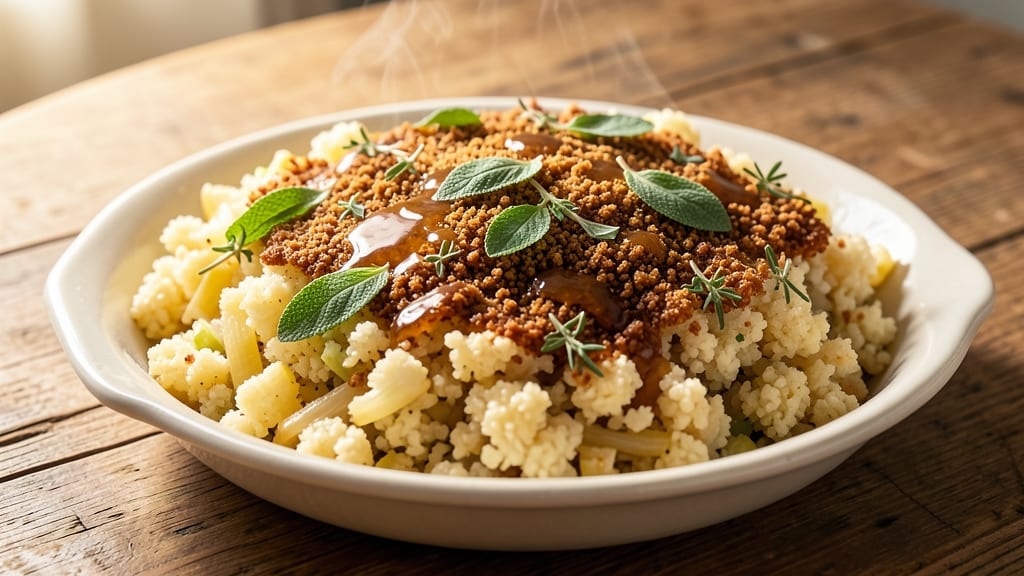
This cauliflower rice stuffing recipe transforms traditional holiday sides into a lighter, herb-packed version that delivers all the texture and flavor without the heaviness.
The secret lies in perfectly seasoned cauliflower rice—crispy at the edges, tender in the center—bound together with just enough breadcrumbs and aromatic herbs to mimic classic stuffing while cutting carbs dramatically.
What makes this recipe work is the balance: roasted cauliflower rice for natural sweetness, fresh herbs for bright depth, and a touch of crispy breadcrumbs for that satisfying bite.
It bakes up golden and fragrant, with enough moisture to stay tender but enough structure to hold its shape—ideal for stuffing roasted vegetables, turkey, or even as a standalone side. The best part? It's vegetarian-friendly and easily adaptable for vegan diets with simple swaps.
Ingredients for cauliflower rice stuffing
Herb-forward cauliflower rice transforms traditional stuffing into a lighter, vibrant vegetarian masterpiece.
| Ingredient | Amount | Notes |
|---|---|---|
| Fresh Cauliflower Rice 🥬 | 4 cups | Freshly grated or pre-riced |
| Vegetable Broth 💧 | 1 ½ cups | Low-sodium preferred |
| Fresh Sage Leaves 🌿 | ½ cup | Chopped, stems removed |
| Fresh Thyme Leaves 🌿 | ¼ cup | Chopped, stems removed |
| Fresh Parsley Leaves 🌿 | ¼ cup | Chopped, stems removed |
| Panko Breadcrumbs 🍞 | ½ cup | For added texture |
| Extra-Virgin Olive Oil 🫒 | ¼ cup | High-quality, fruity |
| Garlic Cloves 🧄 | 3 cloves | Minced, fresh preferred |
| Yellow Onion 🧅 | ½ whole | Diced, medium size |
| Celery Stalks 🥬 | 2 whole | Diced, fresh preferred |
| Vegetarian Butter 🧈 | 2 tbsp | For crispy edges |
| Diamond Crystal Kosher Salt 🧂 | 1 ½ tsp | Adjust to taste |
| Freshly Ground Black Pepper 🌶️ | ½ tsp | Freshly cracked |
| Nutritional Yeast 🍄 | 2 tbsp | For umami depth (optional) |
The cauliflower rice is the foundation—freshly grated yields the best texture, avoiding the mushy consistency of pre-riced bags. Trader Joe's carries excellent pre-riced options if fresh isn't available, but for optimal results, invest in a good food processor or box grater. Fresh herbs are non-negotiable here; dried will work in a pinch but lack the bright, aromatic depth. Whole Foods Market or local farmers markets offer the freshest sage, thyme, and parsley. For the vegetable broth, Pacific Foods or Imagine brands provide clean, flavorful options without excessive sodium. The garlic and onion should be finely minced to create a robust aromatic base, while the celery adds subtle sweetness and texture contrast.
No fresh herbs? Dried will work at one-third the amount, but the flavor profile shifts dramatically. Substitute panko with regular breadcrumbs toasted in olive oil for a heartier texture. For a vegan adaptation, replace the vegetarian butter with vegan butter or olive oil—both work beautifully. The nutritional yeast adds a cheesy depth without dairy; if unavailable, white miso paste at half the quantity provides a similar umami punch. For extra crispiness, consider adding toasted bread slices instead of breadcrumbs, though this will increase carb content. The vegetable broth can be swapped for white wine or apple cider for a different flavor profile.
Freshly prepared cauliflower rice releases moisture quickly, so assemble the stuffing no more than 15 minutes before baking to maintain texture. Store leftovers in an airtight container for up to 4 days in the refrigerator, though it reheats best when fresh. For longer storage, freeze portions in a single layer before transferring to a bag—this prevents clumping. The stuffing reheats beautifully in the oven at 350°F until warmed through, or can be microwaved for 1-2 minutes with a splash of water to restore moisture. Portion into individual ramekins for easy reheating as a side dish.
Why You'll Love This Recipe
- I’ll be real: most stuffing turns into a sad brick after day two. Not this. The cauliflower stays tender, the herbs keep their pop, and I’ve reheated it in the microwave with a splash of broth for days. It’s my secret weapon for lazy lunches—no one suspects it’s “healthy.”
- No-Rice Nightmare Here: I just pulse a head of cauliflower in my food processor—done. No soaking, no chopping, no waiting for grains to cook. The riced texture soaks up that vegetable broth like a dream, and honestly? It’s the only stuffing I’ll make when I’m too tired to fuss.
- Herb-Packed Punch: Between us, the sage and thyme here aren’t just garnishes—they’re the stars. I toast the leaves in the pan first (yes, even the parsley gets a little char), and that crispy aroma? It turns this into something that tastes like a fancy holiday dish, not a low-carb hack.
- Stuff It Anywhere: This isn’t just for Thanksgiving. I’ve stuffed it into roasted bell peppers, baked it into a crustless quiche, even used it as a topping for grilled fish. The broth keeps it moist no matter what you do, and the herbs stay bright—no sad, wilted leftovers here.
Step-by-step instructions for cauliflower rice stuffing
Here's how to transform simple ingredients into a flavorful, low-carb alternative that rivals traditional stuffing.
Sauté the Aromatic Base
Heat the 0.25 cup extra-virgin olive oil in a large skillet over medium heat. Add the 0.5 whole yellow onion and 2 whole celery stalks, both diced into ¼-inch pieces. Cook for 5-6 minutes until the vegetables soften and begin to release moisture, stirring occasionally. This foundational step develops the base flavor that will infuse the entire stuffing.
Add the 3 cloves minced garlic cloves and cook for an additional 30 seconds until fragrant. The garlic should sizzle gently but not brown—burnt garlic adds bitterness that overpowers the delicate herb notes. Remove the skillet from heat and transfer the sautéed vegetables to a large mixing bowl.
Combine Dry Ingredients and Herbs
To the warm vegetable mixture, add the 4 cups fresh cauliflower rice, 0.5 cup panko breadcrumbs, 2 tbsp nutritional yeast, 1.5 tsp diamond crystal kosher salt, and 0.5 tsp freshly ground black pepper. Stir gently with a wooden spoon to distribute the seasonings evenly throughout the cauliflower. The panko will begin to absorb some of the vegetable oils, creating a textural contrast that mimics traditional bread stuffing.
Next, fold in the 0.5 cup chopped fresh sage leaves, 0.25 cup chopped fresh thyme leaves, and 0.25 cup chopped fresh parsley leaves. The herbs should be distributed evenly—visible herb clusters create uneven flavor distribution. I recommend using a rubber spatula for this step to ensure delicate leaves aren't crushed against the bowl.
Add Moisture and Final Touches
Return the skillet to medium heat and melt the 2 tbsp vegetarian butter until it foams. Pour the melted butter over the cauliflower mixture and toss gently to coat. The butter's fat content will help create crispy edges when baked, while its richness balances the earthy cauliflower flavor.
Gradually add the 1.5 cups vegetable broth, tossing after each addition to ensure even distribution. The mixture should be moist but not soupy—you want the cauliflower to hold its shape while still absorbing flavor. If it appears too dry, add an additional 1-2 tablespoons broth to maintain the proper texture.
Bake to Golden Perfection
Transfer the stuffing mixture to a greased 9x9-inch baking dish and spread it evenly. Bake in a preheated 375°F oven for 25-30 minutes until the top is golden brown and the edges are crispy. The internal temperature should reach 165°F—this ensures any potential bacteria are eliminated while maintaining the cauliflower's natural texture.
For extra crispiness, broil for 1-2 minutes at the end of baking time, watching closely to prevent burning. The stuffing should have a firm, golden crust on top while remaining tender and moist underneath. If it begins to darken too quickly, remove it from the broiler and return it to the oven.
Pro Tips For Making Cauliflower Rice Stuffing
- Sauté the Cauliflower First: Dump the raw cauliflower rice into a dry pan and cook it for 3–4 minutes before adding broth. This step removes excess moisture and prevents a soggy stuffing—trust me, I’ve made this mistake enough times to know.
- Chop Herbs at the Last Minute: Fresh sage, thyme, and parsley lose their punch when cooked too long. Toss them in just before removing the pan from heat—this keeps their bright flavors intact, not bitter or wilted.
- Don’t Overmix the Stuffing: Stir just enough to distribute the broth and herbs evenly. Overworking it turns the cauliflower into mush, and nobody wants a dense, gluey stuffing. A few gentle folds are all you need.
- Use a Splash of Lemon: Add 1 teaspoon of lemon juice or zest with the herbs at the end. It cuts through the earthiness of the cauliflower and brightens the whole dish—it’s a tiny detail that makes a real difference.
Flavor customization for this recipe
Herb Variations
Swap the classic sage-thyme-parsley trio for rosemary and tarragon for a French-inspired twist—these herbs add piney and anise notes that pair beautifully with roasted vegetables. For a Mediterranean flair, use oregano and marjoram with a pinch of red pepper flakes for warmth.
I find fresh dill works surprisingly well in a lemon-infused version, brightening the earthy cauliflower with citrusy freshness. 🌿
Spice Infusions
Add ½ teaspoon smoked paprika and ¼ teaspoon cayenne for a smoky kick that mimics traditional cornbread stuffing. For warmth without heat, try 1 teaspoon ground coriander and ½ teaspoon cinnamon—this works especially well with apples or pears mixed into the cauliflower rice.
A sprinkle of fresh nutmeg (just ¼ teaspoon) elevates the stuffing for holiday meals, adding depth without overpowering. 🌶️
Umami Boosters
Enhance the savory profile with 1 tablespoon soy sauce or 1 teaspoon miso paste for a deeper, richer flavor. Sun-dried tomatoes (¼ cup, chopped) add concentrated umami and moisture, while 2 tablespoons capers introduce a briny tang.
For a cheesy note without dairy, ¼ cup nutritional yeast (in addition to the recipe's amount) provides a nutty, umami punch that vegans will love. 🍄
Sweet Contrasts
Fold in ½ cup diced apples or pears (tossed in lemon juice) for natural sweetness that balances the savory herbs. 2 tablespoons dried cranberries add tartness and texture, while 1 tablespoon maple syrup caramelizes beautifully during baking.
For a tropical twist, ½ cup diced mango (lightly sautéed) introduces a bright, fruity contrast that works surprisingly well with the herby base. 🍎
Crunchy Add-Ins
Swap panko for toasted walnuts or pecans (¼ cup) for a nutty crunch and healthy fats. Crushed potato chips (¼ cup) add a salty, crispy texture that mimics traditional stuffing's heartiness.
For a seafood-friendly option, ½ cup cooked shrimp or crab meat (finely chopped) transforms this into a luxurious side dish that still fits the low-carb profile. 🥜
Global Flavors
Transform this into a Moroccan-inspired dish by adding 1 teaspoon ground cumin, ½ teaspoon coriander, and ¼ teaspoon cinnamon, then folding in ¼ cup raisins.
For an Italian version, mix in ¼ cup sun-dried tomatoes, 2 tablespoons grated Parmesan, and 1 teaspoon dried basil. A Mexican-inspired adaptation uses ½ teaspoon chili powder, ¼ teaspoon cumin, and ¼ cup black beans for texture. 🌍
Nutrition facts
Frequently asked questions
Can I make this stuffing ahead of time?
This cauliflower rice stuffing actually tastes better when prepped in advance. Assemble the mixture up to 24 hours ahead and refrigerate uncovered for 30 minutes before baking to let flavors meld. For longer storage, bake the stuffing 1-2 days ahead and reheat at 350°F until warmed through. The texture remains crispy when reheated properly.
How do I prevent the cauliflower rice from getting mushy?
Freshly grated cauliflower rice is key—pre-riced bags release too much moisture. Use a food processor or box grater for the best texture. Also, avoid overmixing after adding broth, and bake at 375°F (not higher) to maintain structure. For extra firmness, add 1-2 tablespoons more panko before baking.
What's the best way to reheat leftovers?
For crispy edges, spread leftovers on a baking sheet and reheat at 375°F for 10-15 minutes. Microwave reheating works but can make it soggy—cover with a damp paper towel and heat for 1-2 minutes. For stuffing used in roasted vegetables, bake the whole dish at 350°F until warmed through.
Can I substitute other low-carb vegetables?
Yes! Try shredded zucchini or grated cabbage (each cup replaces 1 cup cauliflower rice). For extra moisture, add 1-2 tablespoons extra broth when using these ingredients. The texture will be slightly different but still delicious—just expect a softer final product than pure cauliflower rice.
How do I make this vegan?
Simple swaps make this fully plant-based! Replace the vegetarian butter with vegan butter or olive oil, and use vegan breadcrumbs (or toasted nuts). For extra umami, add 1 tablespoon soy sauce or 1 teaspoon miso paste. The nutritional yeast already makes it vegan-friendly—just ensure all other ingredients are plant-based.