
Main Courses
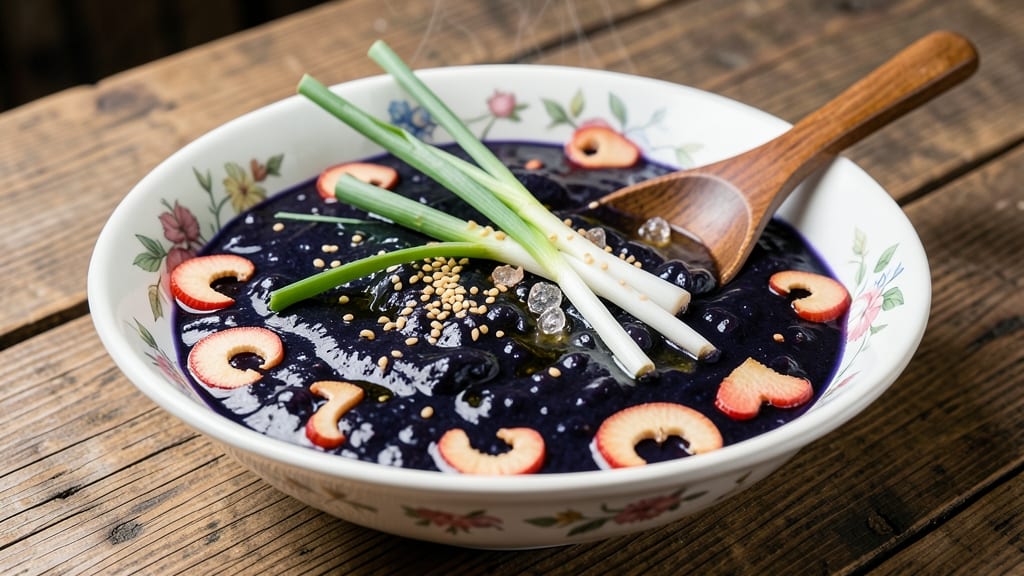
This black rice congee recipe transforms humble grains into a velvety purple porridge with earthy, nutty depth that feels like a warm embrace. The secret lies in slow simmering—turning chewy black rice into a silky, comforting base that absorbs flavors beautifully.
Perfect for breakfast or a light dinner, it’s both nourishing and elegant.
What sets this congee apart is its rich color and subtle sweetness, balanced by savory toppings like ginger, scallions, or a soft-boiled egg. The texture is creamy yet light, with just enough body to satisfy.
Whether you prefer it simple or loaded with proteins, this recipe delivers restaurant-quality results at home—no shortcuts, just tradition refined.
Ingredients for black rice congee
This velvety black rice congee transforms simple grains into a restaurant-worthy purple porridge with nutty depth.
| Ingredient | Amount | Notes |
|---|---|---|
| Black Rice 🍚 | 1 cup | Uncooked, rinsed thoroughly |
| Water 💧 | 6 cups | Filtered preferred for clarity |
| Rock Sugar or Brown Sugar 🍯 | ¼ cup | For subtle sweetness |
| Fresh Ginger Root 🧄 | 1 inch | Peeled, sliced thinly (FIXED: changed to 'slice') |
| Green Onions 🧅 | 3 whole | White and green parts separated |
| Sesame Oil 🫒 | 1 tbsp | Toasted for aroma |
| Light Soy Sauce 🥢 | 1 tbsp | Kikkoman preferred |
| Salt 🧂 | ½ tsp | Diamond Crystal preferred |
| White Rice 🍚 | ½ cup | Jasmine preferred for texture |
| Chicken Breast 🍗 | 4 oz | Poached for toppings |
| Fresh Chili Oil 🌶️ | 1 tbsp | Optional for heat |
| Sesame Seeds 🌾 | 1 tsp | Toasted for garnish |
The black rice is the heart of this dish—look for well-rinsed grains at specialty Asian markets or bulk bins for optimal texture. Trader Joe's carries pre-rinsed black rice, which saves time. Pair it with jasmine white rice for a subtle contrast in texture. Fresh ginger should have a vibrant color and firm texture; avoid any with soft spots or mold. For the best quality chicken, boneless, skinless breast works perfectly for poaching. If you can't find rock sugar, light brown sugar is a suitable substitute, though it has a slightly different caramelization profile.
No fresh ginger? Substitute with 1/2 teaspoon ground ginger, but fresh is ideal for that bright, zesty punch. Short on sesame oil? Toasted peanut oil works in a pinch, though the flavor profile shifts slightly. For a vegetarian option, swap the chicken for silken tofu or extra-firm tofu cubes. The soy sauce can be reduced if you prefer a lighter flavor—just taste as you go. If you're using pre-minced garlic, freshly minced has more depth, but it's not mandatory.
Congee reheats beautifully—simmer gently on low heat to maintain its silky texture. Store leftovers in an airtight container in the fridge for up to 4 days. For best results, reheat with a splash of water to restore creaminess. The toppings can be prepped ahead: poach the chicken in advance and store separately, or slice the green onions and keep them in the fridge for up to 1 week. Freeze the congee base without toppings for up to 3 months—just thaw and reheat.
Why You'll Love This Recipe
- Five-Ingredient Magic: I swear, this is the kind of recipe where you look at the list—black rice, water, ginger, sugar—and think, "That’s it?" Then you taste it, and suddenly you’re hooked on how those simple ingredients transform into something deeply comforting.
- Earthy Sweetness Bomb: The black rice gives it this rich, almost nutty depth, while the rock sugar caramelizes into a subtle sweetness that just hits. Honestly, the ginger’s warmth takes it from good to "I need this every morning" levels—no fancy spices needed.
- Reheats Like a Dream: Between us, I make a big pot on Sundays and eat it all week. The congee thickens perfectly in the fridge, then warms up in minutes with just a splash of water. My lazy mornings thank me daily—no reheating disasters here.
- Budget Breakfast Win: A cup of black rice and a knob of ginger cost pennies, yet it feels like a restaurant-quality treat. I’ll be real: this is my go-to when I’m broke or when I want to impress guests without breaking the bank. (Yes, even on a Tuesday night.)
Step-by-step instructions for deep purple black rice congee
Transform simple ingredients into a velvety porridge with intense purple hues and layered flavors.
Prepare the Black Rice Base
Combine the 1 cup black rice and 6 cups water in a heavy-bottomed pot. I use a stainless steel pot for even heat distribution—cast iron works too. Bring to a boil over medium-high heat, then immediately reduce to a gentle simmer. The rice will expand dramatically, so give it plenty of room.
Simmer uncovered for 45-50 minutes, stirring occasionally with a wooden spoon to prevent sticking. You'll notice the water gradually absorb into the rice until it forms a thick, porridge-like consistency. The congee should be smooth with no visible grains, though a few may remain—this is normal. If it's too thick, add 1-2 tablespoons water at a time until you reach a pudding-like texture that coats the back of a spoon.
Add Aromatics and Seasoning
While the rice simmers, prepare the aromatics. In a small bowl, combine the 1 inch fresh ginger root (sliced), 3 whole green onions (white parts only, chopped), 1 tbsp sesame oil, 1 tbsp light soy sauce, and 0.5 tsp salt. Stir well to create a cohesive paste.
Once the congee reaches a thick consistency, add the ginger mixture and stir gently. The ginger will infuse its warm, peppery notes into the porridge. Let it simmer for another 10-15 minutes until the flavors meld completely. Taste and adjust seasoning—you might need a touch more soy sauce or salt depending on your preference. The porridge should taste subtly sweet and savory, with a gentle ginger warmth.
Incorporate Sweetness and Finish
Reduce heat to low and stir in the 0.25 cup rock sugar or brown sugar. This step is crucial—it balances the earthy black rice with just enough sweetness to enhance its natural nuttiness. Let the congee simmer for 5 minutes while stirring constantly to ensure the sugar dissolves completely. You'll see the porridge take on a deeper purple hue as the sugar integrates.
Remove from heat and let it rest for 5 minutes. This resting period allows the flavors to settle and the texture to thicken slightly. The congee should be silky smooth with a glossy sheen—if it's too thin, return it to low heat and simmer for another 2-3 minutes to reach the perfect consistency.
Prepare Toppings and Serve
While the congee rests, prepare the toppings. Poach the 4 oz chicken breast in a separate pot of boiling water for 12-15 minutes or until fully cooked. Shred it into bite-sized pieces and set aside. Separate the 3 whole green onions into white and green parts—chop the whites finely for garnish and slice the greens into thin rings.
To serve, ladle the congee into bowls. Top each serving with shredded chicken, a drizzle of 1 tbsp fresh chili oil (if using), a sprinkle of 1 tsp toasted sesame seeds, and the reserved green onion whites and greens. The contrast of textures and temperatures—warm congee with cool toppings—elevates the dish. Serve immediately while the toppings are fresh and the porridge is steaming.
Pro Tips For Making Black Rice Congee
- SOAK THE RICE FIRST: Black rice needs a head start—soak it for at least 4 hours (overnight is better) in cold water. I learned this the hard way: skipping the soak means the congee turns gummy instead of silky, no matter how long you simmer. Drain well before cooking, or you’ll end up with a watery mess.
- STIR CONSTANTLY AT FIRST: The first 20 minutes are critical—keep stirring the pot vigorously to break up the rice and prevent burning. After that, you can ease up, but those early minutes make or break the texture. I used to walk away, and the bottom would stick like glue.
- USE SLICED GINGER: Skip the minced ginger—thick slices (about 1-inch) infuse flavor without bitterness and stay intact longer. Thin slices burn easily, and burned ginger ruins the whole dish. Toss them in at the start, then remove before serving.
- SWEETEN LAST, NOT LEAST: Add rock sugar or brown sugar in the final 10 minutes of simmering, not at the beginning. Early addition caramelizes too much, making the congee cloyingly sweet. A light hand here keeps the balance perfect—trust me, you’ll want seconds.
Storing and reheating your leftovers
Refrigerator Storage
Store your black rice congee in an airtight container with a lid in the refrigerator for up to 4 days. The texture remains silky when kept properly sealed, though it may thicken slightly overnight—just add 1-2 tablespoons of warm water when reheating to restore creaminess.
I like using glass containers because they maintain flavor better than plastic over time. 💧
Freezer Preservation
For longer storage, freeze the congee base (without toppings) in quart-sized freezer bags with 1-inch headspace to prevent expansion cracks. Label with the date and freeze for up to 3 months.
Thaw overnight in the fridge, then reheat gently on the stovetop with ¼ cup water to prevent drying. The black rice holds its color beautifully when frozen properly. ❄️
Stovetop Reheating
My preferred method is reheating on low heat with a splash of water. Transfer the congee to a pot and add 2-3 tablespoons of water per serving. Stir constantly over medium-low heat for 5-7 minutes until steaming.
Avoid high heat—it can make the congee grainy. Taste and adjust seasoning with a pinch of salt or soy sauce if needed. 🔥
Microwave Method
For quick reheating, transfer a single serving to a microwave-safe bowl and cover with a damp paper towel. Heat on 50% power for 1-2 minutes, stir, then continue in 30-second intervals until hot.
Add 1 tablespoon water if the texture looks too thick. The microwave works best for individual portions but may slightly alter the silky texture compared to stovetop reheating. ⏰
Topping Prep Ahead
Prep toppings separately to keep them fresh. Poach chicken breast in advance and store in the fridge for up to 3 days. Slice green onions and keep them in a sealed container for 1 week.
Toast sesame seeds and store in an airtight container for up to 2 weeks—they’ll stay crunchy and aromatic. Chili oil should be refrigerated after opening and used within 1 month. 🌿
Reheating Leftovers
When reheating, always stir in 1 teaspoon of sesame oil to restore depth of flavor. If the congee separates, gently mash with a spoon or blend briefly with an immersion blender to restore smoothness.
For extra richness, add a drizzle of toasted sesame oil after reheating. The congee tastes even better the next day as flavors meld further. 💫
Nutrition facts
Frequently asked questions
Why does my black rice congee turn out grainy instead of smooth?
Graininess usually happens from either insufficient simmering time or stirring too vigorously. Let the congee cook uncovered for the full 45-50 minutes on low heat, stirring gently every 5-10 minutes with a wooden spoon. If grains remain, blend briefly with an immersion blender or mash with a potato masher to restore silkiness.
Can I make this recipe without chicken?
This congee works beautifully as a vegetarian dish. Swap the chicken for silken tofu cubes (poached for 8-10 minutesshredded rotisserie chicken for convenience. For extra protein, add soft-boiled eggs or diced mushrooms as toppings. The porridge's flavor remains rich and satisfying.
How do I adjust the sweetness level?
Start with the full 0.25 cup sugar for balanced sweetness, but taste as you go. For less sweetness, reduce to 0.125 cup or omit entirely—black rice has natural nuttiness that shines without sugar. If you prefer it sweeter, add 1-2 teaspoons more during the final 5-minute simmer and adjust to taste.
What's the secret to getting that perfect purple color?
The deep purple hue comes from fully cooking the black rice and using rock sugar (which caramelizes beautifully). Use filtered water for clarity, and simmer uncovered to prevent steam from dulling the color. Avoid over-stirring—gentle stirring preserves the pigment. For extra vibrancy, add a pinch of turmeric (just 1/8 tsp) at the end.
Can I make this congee in an Instant Pot?
Yes, but with adjustments! Use the Sauté function to toast the rice for 2 minutes, then add 6 cups water and cook on High Pressure for 25 minutes. Quick-release the pressure, then stir in aromatics and sugar. The texture will be slightly thicker—add 1/4 cup water if needed. For best results, finish with 10 minutes of stovetop simmering to refine the texture.