
Main Courses
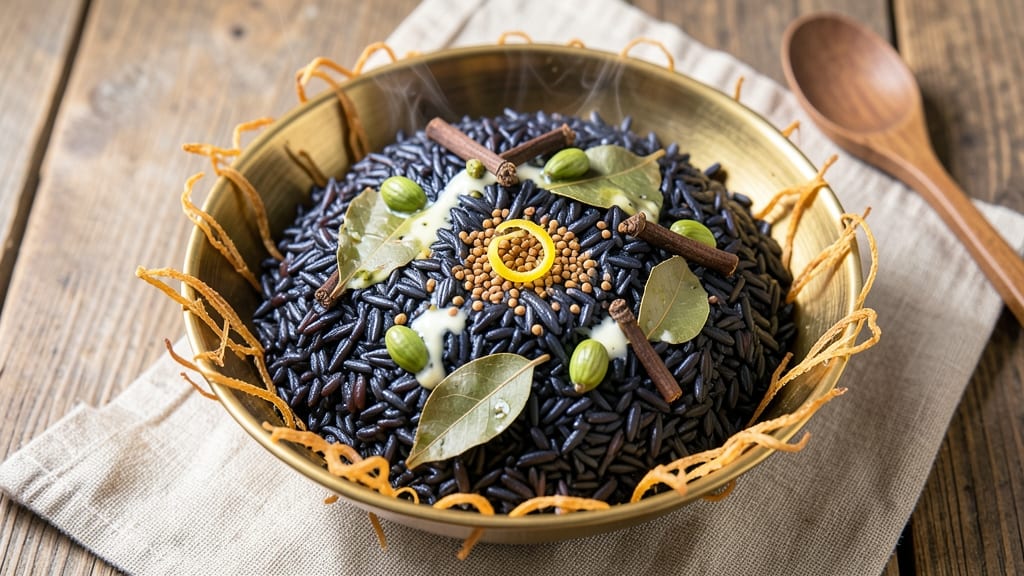
This black rice Indian recipe transforms deep purple forbidden rice into a fragrant, spice-infused centerpiece that rivals biryani. The key lies in proper soaking and gentle cooking to preserve its rich color and nutty flavor, then layering it with aromatic Indian spices and tender vegetables.
Unlike white rice, black rice needs patience—soaking for at least 4 hours unlocks its full potential, while pressure cooking ensures perfect texture every time.
What sets this dish apart is the authentic Indian tempering—whole spices like cardamom, cloves, and bay leaves toasted in ghee until fragrant, then combined with cumin and turmeric for depth. Pair it with paneer or lentils for a vegetarian version, or add chicken for a heartier meal.
The result? A visually stunning, nutrient-packed dish that’s as impressive as it is delicious, served best with cooling raita or a side of tamarind chutney.
Ingredients for black rice indian
Purple grains meet aromatic spices—here’s what you’ll need for this visually stunning Indian dish.
| Ingredient | Amount | Notes |
|---|---|---|
| Black Rice 🍚 | 1 ½ cups | Uncooked, rinsed thoroughly |
| Ghee 🧈 | ½ cup | Clarified butter for authentic flavor |
| Bay Leaves 🌿 | 2 whole | Dried, for tempering |
| Green Cardamom Pods 🌿 | 6 whole | Lightly crushed |
| Cloves 🌿 | 4 whole | For aromatic tempering |
| Cumin Seeds 🌶️ | 2 tbsp | Toasted for depth |
| Turmeric Powder 🌶️ | 1 tbsp | Freshly ground preferred |
| Fresh Cilantro 🌿 | ½ cup | Chopped, for garnish |
| Yellow Onions 🧅 | 1 whole | Finely chopped |
| Fresh Tomatoes 🍅 | 2 medium | Chopped, or 1 cup diced |
| Fresh Ginger 🧄 | 1 tbsp | Grated, for tempering |
| Garlic Cloves 🧄 | 4 cloves | Minced for tempering |
| Water 💧 | 3 cups | For soaking and cooking |
| Salt 🧂 | 1 tsp | Adjust to taste |
Black rice is the star, so look for whole, unpolished grains at Indian grocery stores or specialty markets. Brands like Navana or 90 Seconds are reliable choices, but any whole-grain black rice works. Soaking is non-negotiable—4 hours minimum transforms the texture. For tempering, whole spices (not powdered) make all the difference—Penzeys or bulk bins at Whole Foods are great sources. The ghee should be pure, unsalted—none of that hydrogenated nonsense.
No fresh ginger? Powdered works at half the amount, but it lacks that bright kick. Substituting tomatoes? Roasted cauliflower or sweet potatoes add natural sweetness. The onions can be swapped for shallots, but yellow onions give that classic depth. For a quicker prep, pre-chopped frozen ginger saves time (just thaw first). If you’re short on cilantro, fresh mint or parsley works in a pinch—just adjust the amount to taste. The cardamom and cloves? Don’t skip these—they’re the soul of the dish.
Rinse the rice thoroughly after soaking to remove excess starch. Store dry spices in airtight containers away from light—they’ll stay potent for 6-12 months. Fresh ginger and garlic keep in the fridge for 2 weeks; freeze grated ginger in ice cube trays for easy use. The cooked rice reheats beautifully—just add a splash of water and steam it covered. Portion into containers for 4-5 days of meal prep, or freeze for 3 months. The flavors only deepen over time.
Why You'll Love This Recipe
- One-Pot Magic: I swear by this recipe when I’m too tired to wash pots—just toss the rice, spices, and ghee in one vessel, and let it simmer. The black rice absorbs all those warm, earthy aromas (bay leaves, cardamom, cloves) without any fuss, turning into something rich and fragrant with almost no effort.
- Deep, Nutty Luxe: That first bite of black rice—it’s like biting into a chewy, almost chocolatey nugget with a whisper of spice. The ghee adds this buttery depth, while the whole spices (especially the cloves) give it a cozy, slightly sweet warmth that lingers. Honestly, it’s the kind of flavor that makes me want to eat it straight from the pot.
- Weeknight & Weekend: Between us, this rice is my go-to for both lazy Tuesdays and fancy dinner parties. For weeknights, I bulk it up with veggies or chicken; for guests, I drizzle it with toasted coconut and serve it with raita. It’s the same base, but feels different every time—no stress, all reward.
- Budget-Friendly Staple: Black rice might sound fancy, but it’s actually cheaper than basmati per pound, and the spices last forever. A single batch stretches for three meals: lunch leftovers reheat beautifully, and I even sneak it into breakfast bowls with yogurt and nuts. Plus, the ghee adds richness without breaking the bank—just a few teaspoons go a long way.
Step-by-step instructions for black rice Indian recipe
Transform ordinary rice into a fragrant, deep purple masterpiece with this authentic method.
Soak and Prepare the Black Rice
Rinse the 1.5 cups black rice thoroughly under cold water until the water runs clear. This removes excess starch that can make the rice gummy. Transfer the rice to a bowl and cover with 3 cups water—you'll need about 1 inch of water above the rice. Let it soak for at least 30 minutes (or up to 4 hours for better texture). The rice should absorb water and swell noticeably. Drain well before cooking.
Here's the thing—black rice benefits from longer soaking. If you have time, soak it overnight. The longer soak breaks down the tough outer layer, resulting in grains that stay distinct rather than mushy. Don't skip this step; it's what separates good from exceptional.
Toast the Whole Spices and Temper the Ghee
In a heavy-bottomed pot, melt the 0.5 cup ghee over medium-low heat. Add the 2 whole bay leaves, 6 whole green cardamom pods, 4 whole cloves, and 2 tbsp cumin seeds. Let them toast for 2-3 minutes until the cumin seeds begin to sizzle and release their aroma—you'll smell that earthy, nutty fragrance. This is your signal to move quickly to the next step.
Remove the pot from heat and let the spices steep in the ghee for 1 minute. Then strain the ghee through a fine-mesh sieve, discarding the whole spices. Reserve the infused ghee—it carries all the aromatic flavors we worked so hard to develop. This tempering process is what gives the dish its signature depth.
Sauté Aromatics and Build the Base
In the same pot, add 1 whole yellow onion that's been finely chopped and cook over medium heat for 5-6 minutes until soft and translucent. Add 1 tbsp fresh ginger and 4 cloves garlic that have been minced, cooking for another 2 minutes until the raw garlic smell disappears. Stir in 1 tbsp turmeric powder and cook for 30 seconds to toast the spices—this removes their bitterness and enhances their flavor.
Add the drained black rice to the pot and stir to coat the grains evenly with the aromatic oil. This ensures every bite carries the complex flavors we've built. The rice should look glossy and well-distributed. If it sticks, add 1-2 tablespoons water to help it release from the pot.
Cook the Rice to Perfect Texture
Pour in 3 cups fresh water and add 1 tsp salt. Bring to a boil over high heat, then immediately reduce to low heat. Cover the pot with a tight-fitting lid and cook for 25-30 minutes. The rice is done when all the liquid has been absorbed and the grains are tender but still hold their shape. You'll know it's ready when a grain breaks easily between your fingers but doesn't feel mushy.
Here's a pro tip: Don't peek or stir during cooking. Each time you lift the lid, you release steam and potentially overcook the rice. If you're unsure, check the water level after 20 minutes—it should be completely absorbed by the end.
Finish with Fresh Herbs and Serve
Once the rice is cooked, turn off the heat and let it sit covered for 5 minutes. Then fluff gently with a fork and stir in the 0.5 cup chopped fresh cilantro. The herbs add a bright contrast to the rich, earthy flavors of the rice. For extra depth, you can also add 2 medium fresh tomatoes that have been finely chopped at this stage.
Serve immediately while still warm. The black rice should have a beautiful deep purple hue and a delicate, nutty flavor with hints of cardamom and cumin. Each grain should be distinct, not mushy, with a satisfying bite. This dish pairs beautifully with yogurt, raita, or grilled meats.
Pro Tips For Making Black Rice Indian
- SOAK THE RICE FIRST: Black rice stays stubbornly hard if you skip this—soak it for at least 4 hours (or overnight if you’re in a hurry). I learned this the hard way after serving a batch that was still al dente after 45 minutes of cooking. Trust me, the texture changes everything.
- TOAST WHOLE SPICES: Lightly toast the bay leaves, cardamom, and cloves in ghee for 30 seconds before adding them to the rice. This releases their oils and deepens the aroma—your dish will smell like a spice shop. (Yes, even if you’re impatient like me, don’t skip this.)
- LOW AND SLOW COOK: Black rice needs gentle heat to soften properly—simmer it on low after the initial boil, and cover tightly. I used to rush it, and the rice would either turn mushy or stay undercooked. Covering traps steam, and low heat keeps it from sticking.
- USE LESS WATER: Black rice absorbs water like a sponge, so use just 1.5 cups of water per cup of rice—less than white rice. I used to follow the same ratio and ended up with a soggy mess. The grains should be tender but still hold their shape.
Troubleshooting perfect results
Rice Turns Mushy
Black rice has a tough outer layer that needs proper soaking and gentle cooking. If your rice turns mushy, you likely didn’t soak it long enough—aim for at least 4 hours.
Also, avoid lifting the lid while cooking, as steam escape causes uneven cooking. If it’s already mushy, drain excess water immediately and fluff with a fork to separate grains. 💫
Color Fades
The deep purple hue comes from anthocyanins, which are sensitive to heat. If your rice loses color, you may have overcooked it or used too much water. Cook on low heat after boiling and use just 3 cups water for 1.5 cups rice.
For extra vibrancy, add a pinch of turmeric powder at the end—it enhances color without overpowering flavor.
Spices Burn
Toasting whole spices too aggressively can turn them bitter. Keep heat at medium-low and watch closely—cumin seeds should sizzle but not darken. If they burn, discard them and start over. For a smoother tempering, lightly crush cardamom pods before adding. This releases flavor without risking burning. 🌿
Uneven Texture
Black rice cooks faster than white rice, so don’t let it sit in hot water too long. If some grains are undercooked, add 2 tbsp water, cover, and steam for 5 more minutes.
For overcooked sections, spread the rice on a tray and let it cool—it’ll firm up as it dries slightly. Always use a heavy-bottomed pot to distribute heat evenly.
Ghee Separates
Ghee is stable, but if it separates during cooking, your heat might be too high. Maintain medium-low heat when melting and tempering. If it does separate, gently reheat the ghee to 150°F and stir until smooth.
For extra insurance, use grass-fed ghee—it has a higher smoke point and better stability.
Lacks Flavor
Tempering is key! If your dish tastes bland, your spices weren’t toasted enough. Next time, let the cumin seeds sizzle for 30 seconds longer and steep the spices in ghee for 2 minutes off heat.
For deeper flavor, add a pinch of asafoetida (hing) to the tempering—it’s a secret ingredient in many Indian dishes. 🔥
Nutrition facts
Frequently asked questions
Why does black rice need soaking longer than white rice?
Black rice has a tough outer bran layer that requires extra hydration to soften properly. Soaking for 4 hours (or overnight) breaks down this layer, preventing mushy grains and ensuring each kernel stays distinct. This step also helps release its deep purple anthocyanins for maximum color and flavor.
Can I substitute ghee with regular butter or oil?
Ghee's high smoke point and nutty flavor are essential for authentic tempering. For butter, use unsalted European-style butter—it handles heat better than American butter. For oil, choose avocado or coconut oil (both have neutral flavors), but you'll miss the rich depth ghee provides. Never use margarine or vegetable oils with additives.
What's the best way to make this vegetarian?
Add 1 cup cooked lentils (moong dal or masoor dal) for protein, or mix in 1 cup paneer cubes that've been lightly spiced with turmeric and cumin. For extra richness, stir in 2 tbsp yogurt at the end. The dish also pairs beautifully with coconut milk for a South Indian-inspired twist.
How do I store leftovers to keep them fresh?
Let the rice cool completely, then store in an airtight container in the fridge for 4-5 days. For longer storage, freeze portions in single-serving containers for up to 3 months. To reheat, add 1 tbsp water per cup of rice, cover, and steam on low heat for 5 minutes. Never microwave without moisture—it dries out the grains.
What's the secret to getting that perfect deep purple color?
The color comes from anthocyanins, which are heat-sensitive. Cook on low heat after boiling, use just 3 cups water for 1.5 cups rice, and avoid overcooking. For extra vibrancy, add a pinch of turmeric at the end—it enhances the purple hue without altering flavor. Also, use fresh ghee instead of oil for better color retention.