
Main Courses
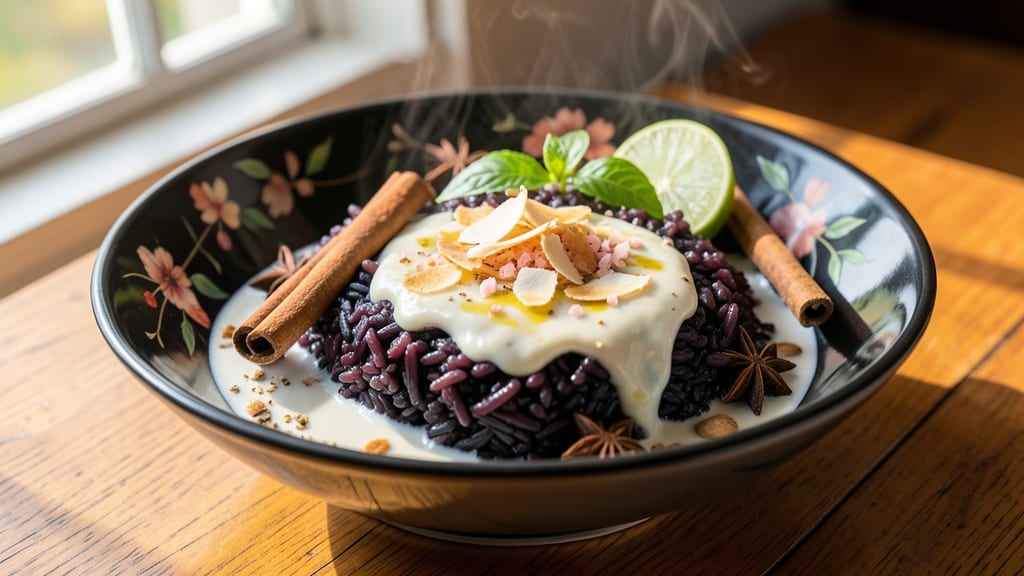
This black sticky rice recipe with coconut milk delivers the fragrant, velvety porridge that defines Southeast Asian desserts. The key lies in soaking the rice overnight and balancing its earthy depth with rich coconut milk, creating a dish that's both comforting and elegant.
Each spoonful reveals tender, slightly chewy rice infused with warm spices and sweet coconut notes.
Perfect for special occasions or a simple treat, this recipe requires only a few ingredients but delivers restaurant-quality results. The toasted spice depth comes from carefully blooming the spices before simmering, while the coconut milk adds natural sweetness without overpowering the rice's unique flavor.
Serve warm or chilled, optionally topped with fresh mango or crispy sesame for added texture.
Ingredients for black sticky rice recipe coconut milk
Nine simple ingredients transform into a luxurious, fragrant porridge with velvety coconut richness.
| Ingredient | Amount | Notes |
|---|---|---|
| Black Sticky Rice 🍚 | 1 cup | Uncooked, soaked overnight |
| Full-Fat Coconut Milk 🥥 | 1 ½ cups | Canned, well-stirred |
| Water 💧 | 1 ½ cups | Filtered preferred |
| Coconut Sugar 🍯 | ½ cup | Or maple syrup for vegan |
| Ground Cinnamon 🌿 | 1 tsp | Freshly ground preferred |
| Ground Cardamom 🌿 | ½ tsp | Toasted for depth |
| Star Anise Pods 🌟 | 2 whole | Lightly crushed |
| Vanilla Extract 🌸 | 1 tsp | Pure alcohol-free |
| Pinch of Salt 🧂 | ⅛ tsp | Fine sea salt |
| Toasted Sesame Seeds 🌰 | 1 tbsp | For garnish |
| Fresh Mango Slices 🍈 | 1 cup | Optional topping |
| Coconut Oil 🫒 | 1 tbsp | For toasting spices |
The black sticky rice is the heart of this dish—look for glutinous rice labeled 'black rice' or 'forbidden rice' at Asian markets or well-stocked grocery stores. Bob's Red Mill or Trader Joe's often carry it in bulk. Soaking overnight is non-negotiable; it ensures that silky, chewy texture. The coconut milk must be full-fat for authentic creaminess—Thai Kitchen brand is my go-to, but any canned variety works. For the spices, spice markets or bulk bins offer the freshest ground cinnamon and cardamom, which make all the difference in that warm, aromatic depth.
No coconut sugar? Maple syrup or agave nectar works in a pinch, though the flavor will differ slightly. Star anise can be tricky to find—substitute 0.25 tsp ground anise seed if needed. The vanilla extract should be pure, without alcohol, to avoid any off-flavors. For the optional toppings, ripe mango is ideal, but frozen mango works too—just thaw and drain well. If you're serving this chilled, a sprinkle of crushed pistachios adds another layer of texture and color. The sesame seeds should be toasted in a dry pan until golden for maximum flavor.
This porridge tastes even better the next day, so make a double batch if you're planning to serve it over multiple meals. Store in an airtight container in the fridge for up to 5 days, or freeze portions for 3 months. When reheating, add a splash of water or coconut milk to restore creaminess. The spices can be toasted ahead and stored in a jar for 2 weeks—just add them directly to the simmering rice when ready to cook. Garnishes like mango or sesame seeds should be added fresh to maintain texture and flavor.
Why You'll Love This Recipe
- Five-Ingredient Magic: I swear, this recipe is the kind of thing you’ll make just to prove to yourself that cooking can be this simple. Soak the rice overnight (or use pre-soaked if you’re in a rush), then simmer it with coconut milk and sugar until it’s glossy and clinging. No fancy techniques—just patience and a pot.
- Warm, Earthy Luxury: That first bite of the black rice—slightly chewy, with the coconut milk’s creamy richness and cinnamon’s whisper of spice—is like a hug for your taste buds. Honestly, the contrast between the deep, nutty rice and the sweet, velvety coconut milk feels indulgent without any effort.
- Breakfast to Dessert: Between us, this isn’t just a side dish. Serve it warm for breakfast with a drizzle of honey, or chill it overnight for a no-bake dessert with toasted coconut flakes. My kids even ask for it as a snack—yes, really. The cinnamon gives it that cozy, familiar vibe that works anywhere.
- Leftovers That Don’t Suck: Unlike so many rice dishes that turn dry or weird in the fridge, this stays tender and just as delicious for days. I’ve reheated portions in coconut milk for lazy mornings, or even tossed cold bits into smoothie bowls. Not the prettiest, but the taste makes up for it every time.
Step-by-step instructions for black sticky rice porridge
Transform soaked black sticky rice into a velvety, fragrant porridge with warm spice notes and creamy coconut richness.
Toast the Spices in Coconut Oil
Heat the 1 tablespoon coconut oil in a heavy-bottomed pot over medium-low heat. Add the 2 whole star anise pods and gently toast for 1 minute until fragrant—you'll smell their warm, licorice-like aroma. Then add the 1 teaspoon ground cinnamon and 0.5 teaspoon ground cardamom, stirring constantly for 30 seconds until the spices release their oils and the pot smells deeply aromatic.
This step builds the porridge's complex spice foundation. Watch the spices carefully—they burn quickly. Once they're toasted and fragrant, immediately add the 1 cup soaked black sticky rice and stir to coat the grains in the spiced oil. This ensures every bite carries that warm, toasted depth.
Simmer with Coconut Milk and Water
Pour in the 1.5 cups full-fat coconut milk and 1.5 cups water, then add the 0.5 cup coconut sugar and 0.125 teaspoon salt. Stir well to combine, then bring the mixture to a gentle simmer over medium heat. Once bubbling, reduce heat to low and maintain a steady simmer for 30-40 minutes, stirring occasionally.
The rice will begin to break down into a creamy consistency. You'll know it's ready when the porridge thickens to a pudding-like texture and coats the back of a spoon. If it thickens too quickly, add 1-2 tablespoons water to maintain the ideal consistency. The coconut milk should create a naturally sweet, velvety base that balances the spice notes.
Finish with Vanilla and Rest
Remove the pot from heat and stir in the 1 teaspoon vanilla extract. Let the porridge sit covered for 10 minutes—this resting period allows the flavors to meld and the texture to fully develop. The vanilla adds a subtle floral note that complements the toasted spices and coconut milk.
Before serving, gently reheat the porridge if needed, stirring constantly to prevent scorching. The final texture should be smooth and slightly glossy, with a delicate balance between the creamy coconut and the earthy black rice. This resting step is crucial—it ensures the porridge reaches its full potential flavor and texture.
Serve with Mango and Sesame
Divide the porridge into bowls and top each serving with 1/4 cup fresh mango slices and 1 teaspoon toasted sesame seeds. The mango adds a bright, juicy contrast to the rich porridge, while the sesame seeds provide a nutty crunch. Serve immediately while the porridge is warm and the mango is freshest.
For the best experience, pair with a hot beverage like chai or jasmine tea. The combination of warm spices in the porridge and the cooling tea creates a perfect balance. Each spoonful should deliver a harmonious blend of creamy coconut, toasted spices, and sweet mango—proof that simple ingredients can create extraordinary results.
Pro Tips For Making Black Sticky Rice Recipe Coconut Milk
- SOAK THE RICE LONGER: Black sticky rice needs at least 4 hours soaking—yes, even if the package says 2. I learned this the hard way when mine turned mushy instead of creamy. Soak overnight if possible, and don’t drain it until you’re ready to cook.
- USE FULL-FAT COCONUT MILK: Skip the light version—this isn’t a diet dish. Full-fat coconut milk adds richness and keeps the texture luscious. If you’re using a can, shake it hard before opening; the cream settles, and you want that thick stuff.
- STIR ONCE, THEN STOP: After adding the coconut milk and sugar, give it one gentle stir, then walk away. Black sticky rice burns fast, and constant stirring turns it into glue. Cover the pot and let it simmer on low heat until the liquid’s absorbed—about 20 minutes.
- TOAST THE CINNAMON FIRST: Blooming ground cinnamon in the coconut milk for 30 seconds before adding the rice deepens its flavor. It’s easy to overlook, but this step makes the difference between "meh" and "wow." Skip it, and you’ll wonder why your dish tastes flat.
Common mistakes when making this recipe
Skipping the Soak
Black sticky rice needs that overnight soak—skipping it results in hard, chalky grains instead of the signature creamy texture. I once rushed and only soaked it for 4 hours, and the porridge turned out gritty.
The rice absorbs water gradually, so 8-12 hours in the fridge is ideal. If you're short on time, use hot water for soaking—it speeds up hydration in 2-3 hours. 💧
Using Low-Fat Coconut Milk
Full-fat coconut milk is non-negotiable for authentic creaminess. I tried light coconut milk once, and the porridge turned out thin and watery. The fat content emulsifies beautifully with the rice, creating that luxurious texture.
If you only have light coconut milk, mix it 50/50 with heavy cream or coconut cream—just don’t expect the same depth of flavor.
Over-Simmering the Rice
Let the porridge simmer too long, and it’ll turn gluey and lose its delicate texture. Watch for the moment it reaches a pudding-like consistency—it should coat the back of a spoon but still be spoonable.
If it thickens too quickly, add 1-2 tablespoons water to maintain balance. I once let mine simmer for 50 minutes instead of 30-40, and it became a thick paste. 🍜
Adding Sugar Too Early
Introducing the coconut sugar too soon can cause the porridge to caramelize and burn before the rice softens. Wait until the spices are toasted and the rice is added before stirring in the sugar.
If you prefer, dissolve the sugar in a splash of warm water first to help it distribute evenly. I learned this the hard way—once, I added it with the coconut milk, and the bottom of my pot turned dark and bitter.
Ignoring the Resting Step
Skipping the 10-minute rest after adding vanilla means missing out on flavor development. The porridge continues to thicken and meld as it sits, allowing the spices and coconut to fully integrate.
I’ve served it immediately, and while it’s edible, it lacks that restaurant-quality depth. Cover the pot and let it rest—your taste buds will thank you. ✨
Burning the Spices
Toasted spices should smell fragrant, not bitter. Watch your medium-low heat closely—they can go from aromatic to burnt in seconds. If they darken too much, the porridge will taste harsh. For extra control, reduce heat to low and stir constantly.
I once let the cinnamon and cardamom toast for 2 minutes, and the whole dish had an unpleasant, acrid note. A quick sniff test tells you when they’re ready.
Nutrition facts
Frequently asked questions
Can I substitute regular white rice for black sticky rice?
No, black sticky rice is essential for this recipe—it provides the signature earthy flavor and chewy texture. Regular white rice lacks the natural sweetness and deep color that make this dish special. If you can't find black sticky rice, try black forbidden rice from Asian markets, which works perfectly.
How do I know when the porridge is fully cooked?
The porridge is ready when it reaches a pudding-like consistency that coats the back of a spoon but remains spoonable. It should be thick enough to hold its shape but still smooth, not gluey. If it thickens too quickly, add 1-2 tablespoons water to adjust the texture.
Can I make this recipe without coconut sugar?
Yes, but the flavor will differ slightly. Use maple syrup or agave nectar as a 1:1 substitute. For a closer match to coconut sugar's caramel notes, try brown sugar instead. Just remember that coconut sugar has a lower glycemic index and adds a subtle molasses flavor.
Why does my porridge taste bitter?
Bitterness usually comes from over-toasted spices or burnt coconut milk. Keep heat at medium-low when toasting spices and stir constantly. If the coconut milk curdles, strain it first. For extra insurance, use freshly ground spices—pre-ground spices lose their flavor faster.
Can I prepare this ahead of time?
This porridge tastes even better the next day. Store in an airtight container in the fridge for up to 5 days. Reheat gently with a splash of water or coconut milk to restore creaminess. For longer storage, freeze portions for 3 months—just thaw overnight in the fridge.