
Main Courses
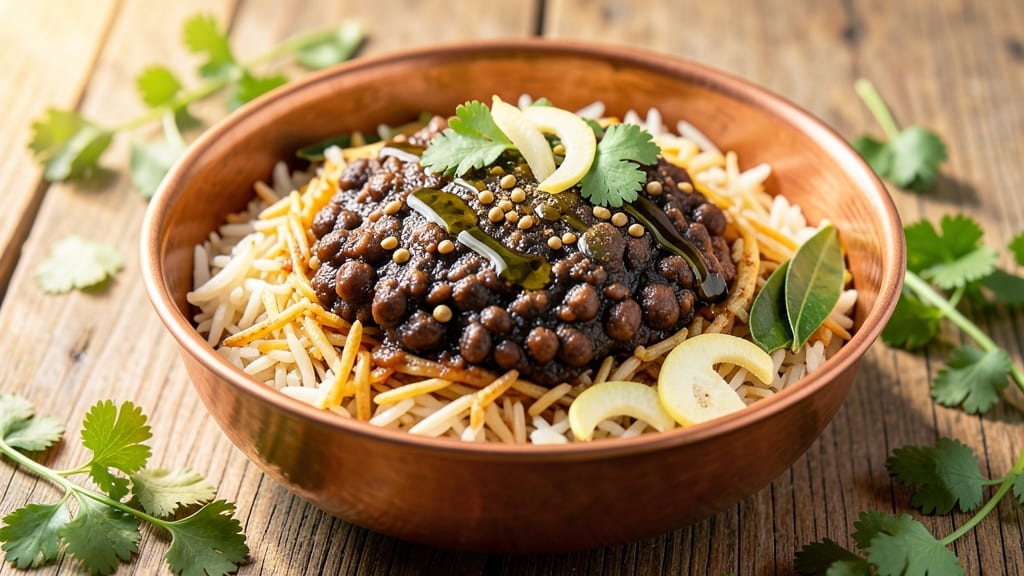
This black urad dal rice recipe in Tamil delivers the hearty, spiced comfort of South India in every bowl. The secret lies in perfectly tempered urad dal—slow-cooked until tender yet retaining its earthy richness, then paired with fluffy basmati rice for the ideal balance of texture and flavor.
Traditional Tamil homes swear by this dish for its ability to satisfy even the hungriest crowds, using simple pantry staples to create restaurant-quality results.
The magic happens in the tempering stage, where mustard seeds, curry leaves, and asafoetida bloom into fragrant aromas that transform the dal into something deeply comforting. Cooked just right, the dal becomes velvety and clings to each grain of rice, creating a dish that's both nourishing and deeply satisfying.
This is the kind of meal that turns ordinary weeknights into celebrations of South Indian tradition.
Ingredients for black urad dal rice recipe in tamil
Simple spices and whole grains transform into South India's most comforting dish.
| Ingredient | Amount | Notes |
|---|---|---|
| Black Urad Dal 🌾 | 1 ½ cups | Unsoaked, washed thoroughly |
| Long Grain Basmati Rice 🍚 | 1 cup | Uncooked, rinsed well |
| Fresh Curry Leaves 🌿 | ¼ cup | Packed, whole leaves |
| Mustard Seeds 🌶️ | 1 tbsp | Whole seeds preferred |
| Asafoetida Powder 🧂 | ¼ tsp | High-quality, pure |
| Fresh Ginger 🧅 | ½ inch | OR 1 tbsp grated ginger |
| Green Chillies 🌶️ | 2 whole | Slit lengthwise, seeds removed |
| Coconut Oil 🥥 | 3 tbsp | For tempering |
| Turmeric Powder 🌿 | ½ tsp | Freshly ground preferred |
| Cumin Seeds 🌶️ | ½ tsp | Toasted for aroma |
| Salt 🧂 | 1 ½ tsp | Adjust to taste |
| Bay Leaf 🌿 | 2 whole | Fresh or dried |
| Water 💧 | 4 ½ cups | For rice cooking |
| Fresh Coriander Leaves 🌿 | ¼ cup | Chopped for garnish |
The urad dal is the heart of this recipe—look for whole, black urad dal at Indian grocery stores like Patel Brothers or Apna Bazaar. Fresh curry leaves make all the difference; if you can't find them, dried will work but use half the amount. Coconut oil is traditional here—it adds a subtle richness that vegetable oil can't match. For the ginger, fresh is ideal, but if you're short on time, 1 tbsp grated ginger works perfectly. The green chilies should be fresh and vibrant—no wilted stems. Toast your cumin seeds in a dry pan until fragrant before adding to the dal, as this deepens their flavor significantly.
No fresh curry leaves? Dried leaves at half the amount will work, but the flavor won't be as bright. Substitute coconut oil with ghee or vegetable oil, though the dish will have a slightly different character. For a milder heat, remove the seeds from the green chilies before slicing. If you can't find asafoetida, garlic powder at half the amount is a decent alternative. The bay leaf is non-negotiable—it adds that authentic South Indian depth. For the rice, jasmine rice can substitute basmati, though basmati's distinct aroma is preferred. Always rinse your rice well before cooking to remove excess starch.
Store cooked dal in an airtight container in the fridge for up to 3 days, though it reheats beautifully. The rice keeps for 2 days separately. For best results, cook the dal and rice separately and combine just before serving. This dish freezes well for up to 3 months—portion the dal and rice separately before freezing. When reheating, add a splash of water to prevent drying. Garnish with fresh coriander just before serving to keep it vibrant. This recipe doubles easily for larger gatherings, so scale the ingredients accordingly.
Why You'll Love This Recipe
- No-Soaking Needed: The black urad dal here doesn’t demand overnight soaking—just a quick 15-minute rinse and pressure cook. Honestly, that’s a game-changer when I’m too tired to remember to soak beans overnight.
- Temple of Flavor: Those mustard seeds popping in the pan with curry leaves and a pinch of asafoetida? It’s like a tiny explosion of aroma that sticks with you. The dal turns rich and velvety while the rice stays separate but fragrant—no mushy rice here.
- Lunchbox Hero: Pack it cold or reheat it—this holds up perfectly for work lunches or kids’ school meals. I’ll be real: my son actually asks for this when he sees it in his bento box. (Yes, even on a Tuesday night.)
- Pocketbook Pleaser: A cup of black urad dal and rice costs me less than $1.50 to feed four people. Between us, that’s cheaper than takeout and better for you—no guilt, just flavor. Plus, leftovers taste just as good the next day.
Step-by-step instructions for black urad dal rice
This traditional Tamil recipe combines rich dal with fragrant basmati rice for a comforting, protein-packed meal.
Prepare the Black Urad Dal
In a medium pot, combine the 1.5 cups black urad dal with 4.5 cups water. Bring to a boil over medium-high heat until the water reaches a rolling boil. Reduce heat to medium-low and let it simmer uncovered for 15-20 minutes, stirring occasionally to prevent sticking.
You'll notice the dal will thicken gradually as it cooks. The texture should be smooth and creamy, similar to a thick soup. If it becomes too thick before reaching the 15-minute mark, add ½ cup water to maintain the right consistency. This dal forms the flavorful base of your dish, so proper cooking is essential.
Season the Dal with Spices
Once the dal has thickened, add 0.5 tsp turmeric powder, 0.5 tsp cumin seeds, and 1.5 tsp salt. Stir well to distribute the spices evenly. For extra flavor, gently fold in the 2 whole bay leaf and 0.5 inch fresh ginger (peeled and sliced). Let the mixture simmer for another 5 minutes on low heat to allow the spices to infuse.
The dal should now have a vibrant yellow hue from the turmeric and a subtle spiced aroma. If you prefer a smoother texture, you can strain it through a fine-mesh sieve. I prefer to leave it slightly textured for authentic flavor. Keep the dal warm while you prepare the rice.
Cook the Basmati Rice
In a separate pot, rinse the 1 cup long grain basmati rice thoroughly under cold water until the water runs clear. This removes excess starch and prevents the rice from becoming gummy. Drain well and transfer to a clean pot.
Add 2 cups fresh water (about 1:2 rice-to-water ratio) and bring to a boil over medium-high heat. Once boiling, reduce heat to low, cover tightly with a lid, and let it cook for 12-15 minutes. The rice should be tender but still slightly firm to the tooth—this ensures it doesn't turn mushy when mixed with the dal.
Temper the Oil with Aromatics
In a small pan, heat 3 tbsp coconut oil over medium heat until it shimmers but doesn't smoke. Add the 1 tbsp mustard seeds and let them splutter for 30 seconds until they begin to pop. Add the 0.25 cup fresh curry leaves and 2 whole green chillies (slit lengthwise), and cook for 1 minute until the curry leaves turn dark green and fragrant.
This tempering step is what gives the dish its signature aroma. The mustard seeds should be golden and the curry leaves should be crisp. Immediately pour this tempering over the cooked dal and rice mixture, stirring gently to combine. The heat from the oil will infuse the dal with even more flavor.
Combine and Garnish
Gently mix the tempered dal with the cooked basmati rice until fully combined. The dal should coat the rice evenly, creating a harmonious blend of textures and flavors. For the final touch, sprinkle with 0.25 cup chopped fresh coriander leaves and a pinch of 0.25 tsp asafoetida powder for its distinct savory note.
Serve immediately while hot, garnished with additional coriander if desired. The dish should have a rich, spiced dal base with perfectly cooked basmati rice that's tender yet firm. Each bite should deliver a balance of earthy dal flavors and the delicate aroma of the tempered spices.
Pro Tips For Making Black Urad Dal Rice Recipe In Tamil
- SOAK DAL SEPARATELY: Black urad dal expands way more than rice—skip the pre-soak with rice. Toss the dal in warm water (1:3 ratio) for at least 30 minutes before cooking, then drain. I learned this the hard way: dal that’s not soaked properly turns mushy and gummy, no matter how much you stir.
- CRACK MUSTARD SEEDS LOW: Mustard seeds burn faster than you think. Start them in cool oil (just warm enough to sizzle gently) and keep heat low until they pop. If you rush it, they’ll turn bitter—trust me, your taste buds will notice. The moment they crack, add curry leaves and asafoetida to lock in that aroma.
- RICE TO DAL RATIO: Don’t eyeball it. For every 1 cup of black urad dal, use 1.5 cups of uncooked basmati rice. The dal’s strong flavor needs rice to balance it, but too much rice makes the dish watery. My grandmother’s trick: cook the dal first, then add rice to the same pot—it absorbs the dal’s flavor perfectly.
- STIR THE DAL ONCE: After the initial boil, walk away. Let the dal cook undisturbed for 15 minutes before giving it a single stir. I used to check every 5 minutes, and it’d turn into glue. The dal needs time to thicken naturally—stirring too soon just makes it gummy. Once it’s thick, add rice and water, then simmer covered.
Troubleshooting your black urad dal rice recipe in tamil
Dal Too Thick?
If your dal thickens too quickly, simply add ½ cup water at a time while stirring gently. This keeps the texture creamy rather than gluey. I’ve found that using whole black urad dal (not split) helps maintain better consistency.
For extra insurance, simmer on low heat after adding water to prevent burning. 🌡️
Rice Too Soft?
If your rice turns mushy, you likely used too much water. The ideal ratio is 1 cup rice to 2 cups water—never exceed this. For firmer rice, reduce water by ¼ cup and cook for 10 minutes instead of 15.
Always use a tight-fitting lid to trap steam and cook evenly. 🍚
Spices Not Blooming?
Low heat kills tempering magic! Heat your oil to medium-high until it shimmers, then add mustard seeds. They should pop loudly within 30 seconds. If they burn, start over—this is non-negotiable for authentic flavor. Fresh curry leaves must sizzle for 1 full minute to release their aroma. 🌿
Dal Too Salty?
If your dal tastes overly salty, balance it with ½ cup plain yogurt or coconut milk—this dilutes the salt while adding creaminess. For a quicker fix, stir in 1 tbsp lemon juice to brighten flavors.
Never add water alone, as it weakens the dal’s body. Taste as you go! 🧂
Grainy Texture?
Overcooked dal gets grainy because the lentils break down. To fix this, strain the cooked dal through a fine-mesh sieve and press gently with a spoon. For future attempts, simmer on low heat and stir frequently to prevent sticking.
A splash of warm water before serving can also soften any rough edges. ✨
Leftover Flavor Fades?
Store dal and rice separately in airtight containers. Reheat dal with 2 tbsp water per cup, stirring constantly on low heat. For extra flavor, add a pinch of asafoetida** and a few curry leaves while reheating. Never microwave—it kills the tempering aroma. 🔥
Nutrition facts
Frequently asked questions
What makes black urad dal rice different from regular urad dal rice?
The key difference lies in the lentil itself—black urad dal (also called toor dal) has a distinct earthy, nutty flavor that's more robust than regular urad dal. This version uses the whole black urad dal (not split), which creates a creamier, more flavorful base when cooked. The traditional tempering with mustard seeds, curry leaves, and asafoetida further enhances its rich, aromatic profile compared to simpler urad dal preparations.
Can I substitute basmati rice with another variety?
Yes, but basmati is ideal for its delicate aroma and firm texture. You can use jasmine rice as a close substitute, though it may absorb more dal flavor. For a lighter option, try sona masoori rice, but avoid short-grain varieties like sushi rice—they'll turn mushy when mixed with the dal. Always rinse your rice well before cooking to prevent gumminess.
How do I know when the dal is perfectly cooked?
The dal is ready when it reaches a smooth, creamy consistency with no whole lentils remaining—this usually takes 15-20 minutes of simmering. Press a small amount between your fingers: it should feel velvety, not grainy. If you prefer some texture, cook for 12-15 minutes instead. The dal should coat the back of a spoon without being gluey.
What are the best sides to serve with this dish?
Traditional pairings include sambar (lentil stew), coconut chutney, or tamarind rice to balance the richness. For a complete meal, add a simple cucumber salad or papadums. The mild spices in this dal rice make it perfect with yogurt-based raitas or pickled vegetables like mango or carrot. Avoid overly spicy sides that might overpower the dish.
Can I make this recipe without a pressure cooker?
This recipe uses stovetop cooking for both dal and rice. For the dal, simmer uncovered on medium-low heat for 20-25 minutes instead of 15 minutes in a pressure cooker. For rice, cook for 15-18 minutes with the lid on. The key is patience—stovetop cooking requires more attention but yields equally delicious results when done right.