
Main Courses
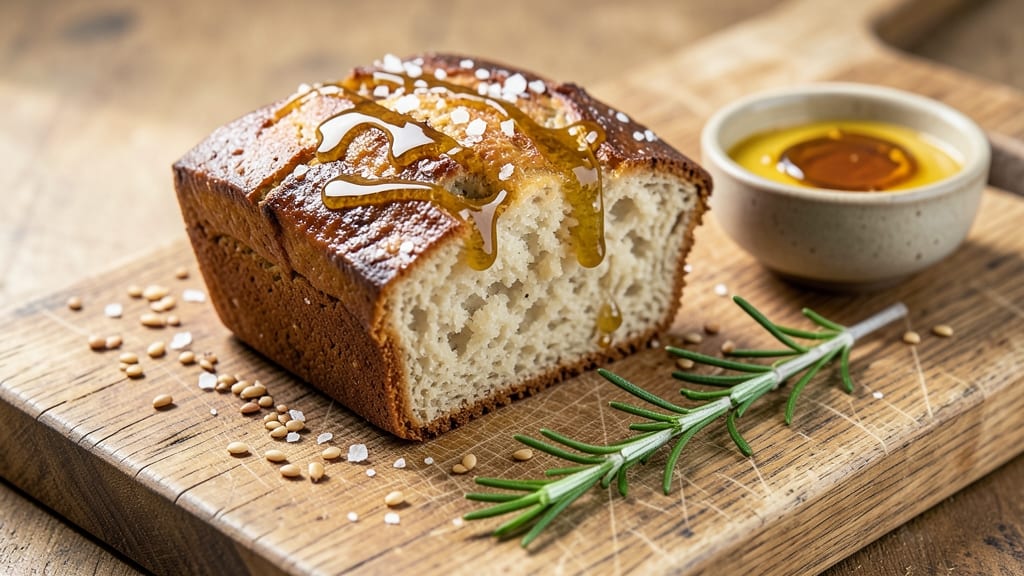
This blender rice bread transforms simple rice flour into a light, airy loaf without a single knead—thanks to Chefsteps' signature no-fuss method. The secret lies in blending rice flour to a fine powder, creating a dough that develops gluten-free structure while staying tender.
Perfect for those who love fluffy bread but want to skip the labor.
With just 5 ingredients and 30 minutes of hands-on time, you'll achieve a golden, crusty exterior and a soft, pillowy crumb that rivals traditional yeast breads. The recipe relies on precise hydration and a long fermentation, ensuring maximum flavor and texture. Ready to bake bread that impresses without the effort?
Ingredients for blender rice bread recipe chefsteps
Five simple ingredients transform rice flour into a fluffy, no-knead loaf with restaurant-quality texture.
| Ingredient | Amount | Notes |
|---|---|---|
| White Rice Flour 🌾 | 3 cups | Finely ground, gluten-free |
| Instant Yeast 🍞 | ½ tsp | Active dry or bread machine yeast |
| Granulated Sugar 🍚 | ½ tsp | For yeast activation |
| Salt 🧂 | ½ tsp | Diamond Crystal preferred |
| Water 💧 | 1 ¼ cups | Room temperature, filtered |
| Olive Oil 🫒 | ¼ cup | Extra-virgin for flavor |
| Egg 🥚 | 1 whole | Room temperature |
| Honey 🍯 | 1 tbsp | For crust browning |
Rice flour is the foundation—Bob's Red Mill or King Arthur brands yield the finest grind for optimal texture. The yeast must be fresh, so check the expiration date on the package. Instant yeast dissolves directly into the water, eliminating the need for proofing. For the sugar, granulated works best—powdered can alter hydration. The water temperature is critical: too hot kills yeast, too cold slows activation. Room temperature (around 75°F) ensures proper fermentation. If your kitchen runs cold, warm the water slightly before mixing.
No rice flour? Sweet rice flour or a blend of all-purpose and cornstarch can substitute, though texture will differ slightly. Short on olive oil? Avocado or melted coconut oil work equally well. The egg provides structure—if avoiding eggs, replace with 1 tbsp ground flaxseed mixed with 3 tbsp water. For a sweeter loaf, increase honey to 2 tbsp, but reduce sugar by 0.25 tsp to maintain balance. The dough will be sticky; don't overmix. Use a stand mixer with a dough hook for 2 minutes to combine, or mix by hand with a silicone spatula.
This dough ferments best at 75-80°F for 1-2 hours—use a warm oven with the light on if your kitchen is chilly. For storage, wrap the baked loaf in a clean kitchen towel to retain moisture. Keeps 3-4 days at room temperature or 1 week refrigerated. Freeze slices for up to 3 months by wrapping individually in parchment. Reheat in a 350°F oven for 5-10 minutes to restore freshness. The crust stays crisp for 24 hours post-baking if stored in an airtight container.
Why You'll Love This Recipe
- No-Fuss Blender Magic: I just toss rice flour, yeast, sugar, and water into the blender—no sifting, no kneading, no fuss. The blender does all the heavy lifting while I sip my coffee.
- Sweet & Soft Crumb: That touch of sugar makes it irresistibly tender, not cloying—just enough to balance the mild rice flour. It’s the kind of bread that disappears faster than my willpower on a lazy Sunday.
- Budget Breakfast Hero: A loaf costs pennies, feeds my family for days, and even reheats beautifully. Toast it for crispy edges or serve it warm with jam—it’s my go-to when I’m broke but need to impress.
- Leftovers? More Like Forever: This bread holds up like a champ. Stale? Not a chance. I freeze slices for quick toast or pack them in lunches—no sad, dry ends here. Pure practical perfection.
Step-by-step instructions for blender rice bread
This no-knead method transforms simple ingredients into a light, airy loaf with minimal effort.
Combine Wet Ingredients in a Blender
In a high-speed blender, combine the 1.25 cups water, 0.25 cup olive oil, 1 whole egg, and 1 tablespoon honey. Blend on high for 30 seconds until the mixture becomes completely smooth and homogeneous. The olive oil and honey should fully emulsify, creating a silky liquid base.
I like to add the egg last to prevent any potential curdling from the heat of the olive oil. If you notice any streaks or separation, pulse briefly again until fully combined. This liquid mixture forms the foundation of your bread, so take your time to ensure it's perfectly smooth.
Add Dry Ingredients and Blend to a Dough
With the blender running on low speed, gradually add the 3 cups white rice flour, 0.5 teaspoon instant yeast, 0.5 teaspoon granulated sugar, and 0.5 teaspoon salt. Increase the speed to high and blend for 30-45 seconds until the dough comes together and pulls away from the sides of the blender.
The dough will initially look shaggy but will transform into a cohesive, slightly sticky mass. If it's still too wet or sticky after blending, add 1-2 tablespoons more white rice flour and pulse briefly to adjust consistency. This step is crucial for developing the gluten-like structure in gluten-free bread.
Knead and Shape the Dough
Transfer the dough to a lightly floured surface and knead gently for 2-3 minutes until smooth and elastic. Avoid over-kneading, as this can make the bread dense. The dough should be soft but not sticky—if it sticks to your hands, lightly dust with more white rice flour.
Shape the dough into a round loaf and place it in a lightly greased 8-inch round cake pan or 9-inch round loaf pan. Cover the pan with a clean kitchen towel and let the dough rise at room temperature for 1-2 hours, or until it has visibly doubled in size. This slow rise allows the gluten-free structure to develop properly.
Preheat and Bake for a Golden Crust
Preheat your oven to 350°F. Brush the risen dough with a light coating of water using a pastry brush, then sprinkle generously with white rice flour. This creates a beautiful crust while preventing sticking. Bake for 30-35 minutes until the top is golden brown and the internal temperature reaches 190°F.
Here's where the honey shines—it caramelizes during baking, adding subtle sweetness and enhancing the crust's texture. If the top browns too quickly, loosely cover the pan with aluminum foil to prevent over-browning while ensuring the interior cooks through evenly.
Cool and Slice for Maximum Freshness
Remove the bread from the oven and let it cool in the pan for 10 minutes. Then transfer it to a wire rack to cool completely for 30-45 minutes. This resting period allows the internal structure to set, making each slice cleaner and easier to handle.
The bread should have a soft, pillowy crumb with a slightly crisp exterior. For best results, slice with a sharp serrated knife and serve warm. Store any leftovers in an airtight container at room temperature for up to 3 days, or freeze for longer storage. The honey-infused crust makes this bread perfect for toast or French toast.
Pro Tips For Making Blender Rice Bread Recipe Chefsteps
- STIR THE FLOUR FIRST: Mix the rice flour and yeast together in the blender before adding sugar or salt—this prevents yeast from clumping when you add water later. I learned this after three batches where my dough had weird lumps, and it’s the simplest fix.
- WEIGH THE FLOUR: Use a kitchen scale for the rice flour—spooning it in leads to inconsistent batches. A gram off throws off the hydration, and this bread is unforgiving when it’s too dry or sticky. (Yes, even if you’re impatient like me.)
- LET THE DOUGH REST: After mixing, wait 15–20 minutes before shaping—this lets the gluten relax and prevents a dense, chewy loaf. I used to skip this and ended up with bread that tasted more like a brick than a roll.
- USE WARM WATER: The water should be just warm to the touch (around 100°F/38°C)—not hot enough to kill the yeast, but warm enough to activate it fully. Cold water makes the dough sluggish, and hot water can turn your bread gummy. (Your future self will thank you.)
Perfect pairings for this recipe
Sweet Toppings
This bread’s mild sweetness makes it perfect for jam or honey drizzles. I love spreading warm apricot jam or local wildflower honey on toasted slices—both complement the honey-infused crust beautifully. For a breakfast twist, top with whipped cream and fresh berries for a dessert-like treat. 🍯
Savory Spreads
For a savory version, pair with butter and flaky sea salt or cream cheese mixed with chives. The bread’s neutral base absorbs flavors well, so try olive oil and cracked black pepper for a Mediterranean touch.
I also enjoy it with avocado and smoked salmon for a brunch-worthy combo. 🥑
Cheese Pairings
Soft cheeses elevate this bread’s texture. Brie or Camembert melt beautifully on warm slices, while aged Gouda or sharp cheddar add a satisfying bite. For a quick snack, layer with provolone and roasted red peppers. The bread’s subtle sweetness balances rich, salty cheeses perfectly. 🧀
Breakfast Combinations
Transform slices into French toast by dipping in an egg-milk batter with vanilla and cinnamon, then pan-frying until golden. For a lighter option, toast and top with scrambled eggs, crispy bacon, and hot sauce. The bread’s soft crumb soaks up flavors without getting soggy. 🍳
Drink Pairings
A lightly sweet iced tea or chilled white wine like Pinot Grigio complements the bread’s honey notes. For coffee lovers, a strong brew with a splash of cream highlights the bread’s texture. Warm spiced chai or hot cocoa pairs well with the toasted version. ☕
Global Variations
In Japan, this bread resembles mochi-like sweet breads—add matcha powder to the dough for a green tea twist. For a Mexican-inspired version, mix in 1 tsp cinnamon and ½ tsp cumin, then serve with chili powder. The adaptable dough works globally with simple swaps. 🌎
Nutrition facts
Frequently asked questions
Why blend rice flour instead of just mixing it?
Blending rice flour creates a finer, more uniform powder that mimics traditional wheat flour's texture. This helps develop a better gluten-free structure in the dough, resulting in a lighter, airier crumb rather than a dense one. The high-speed blending also ensures all ingredients are perfectly incorporated, creating a smoother dough.
Can I make this bread without a blender?
Yes, but the texture won't be as light. Sift the rice flour through a fine-mesh sieve to break up clumps, then mix all ingredients by hand. You may need to add an extra 1-2 tablespoons of flour to compensate for the less refined texture. The dough will be slightly denser but still delicious!
What if my dough doesn't rise properly?
Check your yeast first—it must be fresh (test by dissolving ½ tsp in ¼ cup warm water with 1 tsp sugar**; if it bubbles in 5 minutes, it's active). Keep the dough in a warm place (like a turned-off oven with the light on) for up to 2 hours. If it still doesn't rise, try adding ½ tsp more yeast and letting it rest another 30 minutes.
How do I store leftovers to keep them fresh?
Wrap the cooled loaf tightly in a clean kitchen towel or aluminum foil, then place in an airtight container. It stays fresh for 3-4 days at room temperature. For longer storage, slice and freeze individual portions on parchment paper—thaw at room temperature for 1-2 hours before serving. Reheat slices in a 350°F oven for 5 minutes to restore crispness.
Can I add seeds or nuts to this recipe?
Fold in ¼ cup chopped walnuts, sunflower seeds, or sesame seeds during the kneading step. For extra flavor, toast the nuts/seeds first. Just reduce the water by 1 tablespoon to maintain proper dough consistency. These additions add crunch and nutrition without overpowering the bread's delicate texture.