
Main Courses
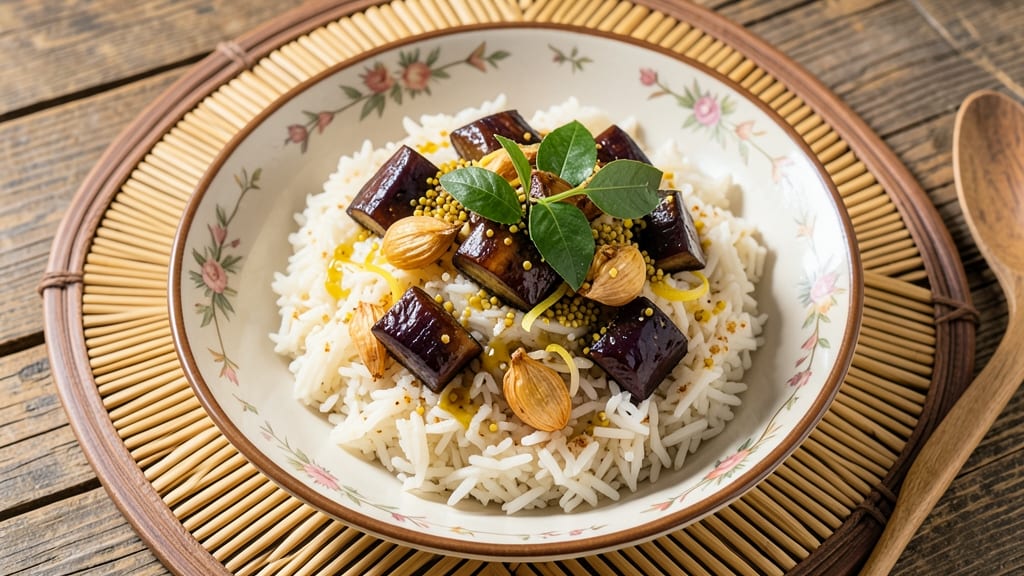
This brinjal rice recipe in Tamil transforms humble eggplant and rice into a fragrant, one-pot masterpiece that captures the essence of South Indian home cooking. The aromatic blend of mustard seeds, curry leaves, and tempered spices creates layers of flavor that dance on your palate, while tender eggplant and perfectly cooked rice come together in harmony.
The secret lies in the traditional tadka—a sizzling mix of whole spices and coconut that infuses every grain of rice with its golden aroma. This dish isn't just food; it's a celebration of Tamil cuisine's simplicity and depth, perfect for festive occasions or comforting weeknight meals.
Let's bring this classic recipe to life with just a few essential ingredients and time-honored techniques.
Ingredients for brinjal rice recipe in tamil
The aromatic foundation of Tamil cuisine in one pot, balancing earthy brinjal with fragrant spices.
| Ingredient | Amount | Notes |
|---|---|---|
| Long-Grain Basmati Rice 🍚 | 1 cup | Uncooked, rinsed thoroughly |
| Eggplant (Brinjal) 🍆 | 1 ½ lb | Medium-sized, peeled and cubed |
| Yellow Mustard Seeds 🌿 | 1 tbsp | Whole, for tempering |
| Curry Leaves 🌿 | ¼ cup | Fresh, packed loosely |
| Coconut Oil 🥥 | ½ cup | Unrefined, for tempering |
| Onions 🧅 | 1 whole | Medium, finely chopped |
| Tomatoes 🍅 | 2 medium | Ripe, chopped (or 1 cup diced) |
| Green Chilies 🌶️ | 2 whole | Slit lengthwise, seeds removed |
| Ginger 🌿 | 1 inch | Fresh, peeled and grated |
| Garlic Cloves 🧄 | 6 cloves | Peeled, minced finely |
| Turmeric Powder 🌶️ | ½ tsp | Freshly ground preferred |
| Cumin Seeds 🌿 | ½ tsp | Toasted lightly for aroma |
| Salt 🧂 | 1 tsp | Adjust to taste |
| Fresh Coriander Leaves 🌿 | ¼ cup | Chopped, for garnish |
The eggplant is the star here—look for firm, glossy-skinned varieties at the market, as they hold up best during cooking. Indian grocery stores often carry the perfect brinjal for this dish, though most supermarkets stock eggplant too. Peeled and cubed uniformly ensures even cooking, preventing any bitter aftertaste. For the mustard seeds, yellow mustard seeds are traditional, but brown will work in a pinch—just toast them slightly longer to compensate for their stronger flavor. Curry leaves are non-negotiable; fresh leaves from an Indian market have the most authentic aroma, though dried leaves can substitute at half the quantity.
No fresh curry leaves? Dried curry leaves powder works, but the flavor profile shifts slightly. Substituting tomatoes? Roma tomatoes have the best texture, but any ripe variety will do—just ensure they're chopped finely for that traditional South Indian texture. The ginger should be freshly grated for maximum zing; pre-minced ginger from jars lacks the same punch. For the green chilies, adjust the quantity based on heat preference—Tamil cuisine often balances heat with sweetness, so don't shy away from adding more if you love spice. The coconut oil is crucial for that authentic tadka; virgin coconut oil from Indian specialty stores adds a subtle sweetness that refined oils miss.
Store the cooked rice and brinjal mixture in an airtight container for up to 3 days in the refrigerator, though it's best enjoyed fresh. The tadka spices lose their potency over time, so reheat gently with a splash of water to restore moisture. For longer storage, freeze portions in single-serving containers—they reheat beautifully and make quick lunches. The fresh coriander garnish should be added just before serving, as it wilts quickly when exposed to heat. If prepping ahead, store the garnish separately and mix it in at the last minute.
Why You'll Love This Recipe
- One-Pot Magic: I swear by this trick—just toss everything into a single pot with coconut oil, and let the rice and brinjal cook together. No fussing with separate pans, no sticky rice clumps, just effortless harmony.
- Crispy-Tender Bites: That first char from the mustard seeds and curry leaves? Chef’s kiss. The brinjal gets caramelized edges while staying creamy inside—like a little flavor explosion in every grain.
- Leftover Hero: Between us, this dish tastes better the next day. The flavors meld into this rich, comforting bowl that’s perfect for lunches or quick dinners when you’re too tired to cook.
- Pantry Staple Power: Honestly, you’re probably already making this. Basmati rice, a brinjal, and a few spices? It’s the kind of meal that costs next to nothing but feels like a treat—no fancy ingredients needed.
Step-by-step instructions for brinjal rice in Tamil style
Master this aromatic one-pot dish where tender eggplant and fragrant basmati rice unite in a symphony of South Indian spices.
Prepare the Eggplant and Rice Base
Begin by peeling and cutting the 1.5 lb eggplant (brinjal) into 1-inch cubes. Rinse the 1 cup long-grain basmati rice thoroughly under cold water until the water runs clear, then soak it for 20 minutes in a bowl of water. This removes excess starch and prevents the rice from becoming mushy.
In a large pressure cooker or heavy-bottomed pot, heat 0.25 cup coconut oil over medium heat. Add the eggplant cubes and sauté for 5-6 minutes until they begin to soften slightly but don't brown. Remove the eggplant and set aside. In the same pot, add the drained rice and stir gently to coat it lightly with the oil. This step ensures each grain develops its own crispy texture during cooking.
Build the Spiced Tomato and Aromatic Base
Add 0.5 cup coconut oil to the pot and heat until shimmering. Add 0.5 tsp cumin seeds and let them sizzle for 20 seconds until they release their aroma. Add 1 tbsp yellow mustard seeds and 0.25 cup curry leaves, stirring constantly for 30 seconds until the seeds pop and the curry leaves turn vibrant green.
Add the 1 whole finely chopped onion and sauté for 3-4 minutes until golden brown. Stir in 1 inch grated ginger, 6 cloves minced garlic, 2 whole slit green chilies, and 0.5 tsp turmeric powder. Cook for 2 minutes until the raw aroma disappears. Add the 2 medium chopped tomatoes and cook for 4-5 minutes until they soften and release their juices. This aromatic base forms the flavor foundation for the entire dish.
Combine and Pressure Cook to Perfection
Return the eggplant cubes to the pot and mix gently. Add 1 tsp salt and stir everything together. Pour in 2 cups water (or enough to cover the rice by about 1 inch). Bring to a boil, then reduce heat to medium-low and cover with a tight lid.
Cook for 4-5 whistles in a pressure cooker (about 20 minutes on high heat) or 20-25 minutes in a regular pot. The rice should be tender and the eggplant should be soft but still hold its shape. If using a regular pot, check periodically to ensure water doesn't evaporate completely. This step requires patience—the rice must absorb all the liquid to achieve perfect texture.
Temper and Garnish for Final Flavor
Once cooking is complete, reduce heat to low and let the pressure release naturally for 5 minutes. Open the lid and gently fluff the rice with a fork. In a small separate pan, heat 0.25 cup coconut oil until smoking point. Quickly add 0.5 tsp cumin seeds and let them sizzle for 10 seconds until they turn golden brown. Pour this tempering oil over the rice and eggplant mixture.
Finally, garnish with 0.25 cup chopped fresh coriander leaves and mix gently. Let the dish sit covered for 5 minutes to allow the flavors to meld together. Serve hot with a side of yogurt or papadam for the complete South Indian experience. The dish should have a perfect balance of tender rice, soft eggplant, and aromatic spices in every bite.
Pro Tips For Making Brinjal Rice Recipe In Tamil
- CHAR THE BRINJAL FIRST: I learned this the hard way—skip the soft, mushy eggplant. Cut into 1-inch chunks, toss with 1 tsp salt, and char in coconut oil over medium-high heat until blackened in spots (about 8-10 minutes). The smoky flavor is what makes this dish sing, not some sad, undercooked brinjal.
- SALT THE RICE WATER LATE: Add salt only after the water boils—basmati rice absorbs flavor better when the starches activate. I used to salt early and ended up with bland rice every time. Trust me, wait until the pot’s rolling before seasoning.
- CRUSH THE MUSTARD SEEDS: Don’t just toss whole mustard seeds into the oil—they’ll pop but won’t release their full punch. Lightly crush them with the flat side of a knife or pestle before tempering. This makes a real difference in the aroma, especially when paired with curry leaves.
- USE LESS WATER FOR RICE: Measure rice, then use 1.5 cups water per 1 cup basmati (not the 2:1 ratio). The brinjal releases moisture, so you’ll end up with sticky, clumped rice if you overdo it. I skip this step when I’m tired, and the dish turns out soggy—your future self will thank you.
Dietary considerations for this recipe
Vegetarian-Friendly
This brinjal rice recipe is naturally vegetarian and perfect for plant-based diets, offering a hearty protein alternative through the eggplant's fiber and nutrients. The dish relies on whole spices and coconut oil instead of dairy or meat, making it easily adaptable for vegans.
Simply ensure your coconut oil is refined if avoiding all plant-based fats, though traditional recipes use unrefined for authentic flavor. 🌱
Gluten-Free
The recipe is inherently gluten-free, as it contains no wheat, barley, or rye. The base ingredients—basmati rice, eggplant, and spices—are naturally gluten-free when purchased from certified sources.
Always double-check spice blends for hidden gluten, especially if using pre-mixed curry powders. The dish pairs beautifully with gluten-free papadam or a side of coconut chutney for extra assurance. ✨
Nut-Free
For those avoiding nuts, this recipe requires no nut ingredients, making it nut-free by default. The primary flavor comes from mustard seeds, curry leaves, and coconut oil—all nut-free staples in Tamil cuisine.
If you're concerned about cross-contamination, use a dedicated pan and utensils to prevent any accidental exposure to nut oils. The dish remains rich and aromatic without nuts. 💛
Spice Adjustments
Adjust the green chilies to suit your spice tolerance—remove seeds for milder heat or keep them for extra kick. For a mild version, reduce to 1 chili or substitute with ½ tsp red chili powder.
If you love heat, add ½ tsp cayenne pepper to the tempering oil for a smoky depth. The dish balances well with yogurt or raita to cool the palate. 🌶️
Protein Boost
To enhance protein content, stir in ½ cup cooked lentils (moong dal or masoor dal) during the pressure cooking stage. Alternatively, top with crumbled paneer or tofu cubes while serving.
For a Tamil-style twist, add 1 tbsp roasted chana dal for extra texture and protein. These additions keep the dish vegetarian while making it more filling. 💪
Allergen Awareness
This recipe contains coconut oil, which may trigger allergies in some individuals. For a coconut-free version, substitute with ghee or olive oil (though flavor will differ slightly).
If allergies are a concern, always check ingredient labels—especially for curry leaves and spices, which may be processed in shared facilities. Keep emergency allergy meds on hand when trying new dishes. 🚨
Nutrition facts
Frequently asked questions about brinjal rice
Can I use regular eggplant instead of brinjal?
Yes, but there are key differences. Regular eggplant (like globe varieties) has thicker skin and more water content, which can make the dish mushy. For authentic results, choose small, firm Indian brinjal (like the round purple variety) from an Indian grocery store. If using regular eggplant, peel it thoroughly and pat it dry before cooking to reduce moisture.
What if I don't have a pressure cooker?
No problem! Use a heavy-bottomed pot instead. Increase the cooking time to 20-25 minutes on medium-low heat, stirring occasionally to prevent sticking. Keep an eye on the water level—add ½ cup hot water if it evaporates completely. The rice should be tender but not mushy when done.
Why does my brinjal rice taste bland?
Blandness usually means the spices didn't infuse properly. First, ensure your mustard seeds are fresh and toasted until they sizzle. Second, don't skip the tempering step—this is where most of the flavor comes from! For extra depth, add ½ tsp asafoetida (hing) when cooking the onions. Also, let the dish rest 5 minutes after cooking to allow flavors to meld.
Can I make this dish in advance?
This dish actually tastes better the next day. Store in an airtight container in the fridge for up to 3 days. Reheat gently with a splash of water to restore moisture. For longer storage, freeze portions—just thaw overnight in the fridge and reheat slowly. The eggplant absorbs flavors better after resting, making it even more aromatic!
What's the secret to perfectly cooked rice?
The key is in the ratio and technique. Use 1:2 rice-to-water ratio (1 cup rice to 2 cups water) and rinse the rice thoroughly to remove excess starch. The light oil coating before cooking creates individual grains. Most importantly, cook until all water is absorbed—this prevents mushy rice. If using a pressure cooker, 4-5 whistles is ideal for basmati.