
Main Courses
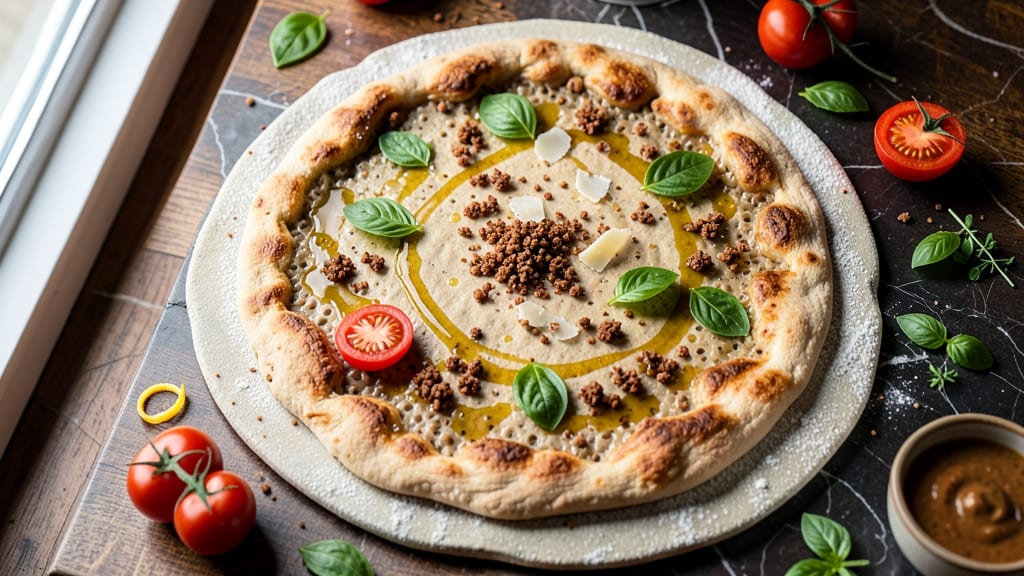
This brown rice flour pizza dough recipe delivers a crispy-crust, gluten-free pizza that surprises even skeptics with its texture and flavor. ✨ The secret lies in balancing hydration and xanthan gum to create a dough that holds shape while baking into a golden, crispy crust—no wheat flour required.
Perfect for those avoiding gluten or seeking plant-based alternatives, this dough proves you don’t need traditional ingredients for restaurant-quality results.
What sets this recipe apart is its versatility—use it for classic vegan pizzas, flatbreads, or even calzones, all while keeping the crust crispy and sturdy. The dough’s nutty undertones from brown rice flour add depth, and the addition of olive oil ensures a rich, satisfying bite.
With just a few simple ingredients and 15 minutes of prep, you’ll have a dough ready to shape and top however you like.
Ingredients for brown rice flour pizza dough
Nine ingredients transform into a gluten-free, crispy-crust pizza dough with restaurant-quality texture.
| Ingredient | Amount | Notes |
|---|---|---|
| Brown Rice Flour 🌾 | 2 ½ cups | Finely milled for smooth texture |
| Extra-Virgin Olive Oil 🫒 | ¼ cup | High-quality, fruity variety |
| Water 💧 | ¾ cup | Room temperature preferred |
| Xanthan Gum 🍞 | ½ tsp | Critical for gluten-free binding |
| Active Dry Yeast 🍄 | ¼ tsp | Ensure freshness for activation |
| Salt 🧂 | ½ tsp | Diamond Crystal preferred |
| Sugar 🍚 | ¼ tsp | Feeds yeast for fermentation |
| Apple Cider Vinegar 🍎 | 1 tbsp | Balances acidity for crispiness |
| Nutritional Yeast 🧀 | 2 tbsp | Adds cheesy depth and umami |
| Garlic Powder 🧄 | ½ tsp | Freshly ground preferred |
| Onion Powder 🧅 | ½ tsp | For aromatic depth |
| Ground Black Pepper 🌶️ | ¼ tsp | Freshly ground for best flavor |
The brown rice flour is the foundation—opt for Bob's Red Mill or Anthony's for consistent texture. Xanthan gum is non-negotiable; it mimics gluten's elasticity, and Wholesome! brand works reliably. For yeast, Saf-Instant activates faster without proofing time. Apple cider vinegar (look for organic at Whole Foods) enhances crispiness, while nutritional yeast from Bragg adds that cheesy depth. Store flour in airtight containers away from light to prevent rancidity—Costco bulk bins offer the best value for frequent bakers.
No xanthan gum? Psyllium husk powder at half the amount works in a pinch, though texture may vary slightly. Swap apple cider vinegar for white vinegar or lemon juice—both add acidity, but ACV has the most nuanced flavor. Diamond Crystal salt dissolves better than table salt, but Morton is fine if that's what you have. For garlic and onion powders, Simply Organic delivers superior flavor, but McCormick is a solid budget alternative. The nutritional yeast can be omitted if avoiding all yeast (including nutritional), though flavor will differ noticeably.
Freshly mixed dough keeps 24 hours in the fridge wrapped tightly in plastic. For longer storage, freeze shaped portions for up to 3 months**—thaw overnight in the fridge before baking. The xanthan gum blend holds moisture exceptionally well, so no need for extra wrapping. Pre-portion dough balls for convenience; they reheat beautifully after baking. If making ahead, ferment the dough for 1-2 hours before shaping for improved texture.
Why You'll Love This Recipe
- No Yeast Hassle: I mix the dough in 10 minutes flat—just flour, water, olive oil, and a pinch of xanthan gum. No kneading, no waiting for yeast to wake up, just stretch and bake. Honestly, it’s the kind of dough that makes me feel like a lazy genius.
- Nutty Crisp Edge: That brown rice flour gives it a toasty, almost nutty crunch when baked—way better than the soggy crust I used to get. The olive oil keeps it rich without overpowering, and the xanthan gum holds it together like a dream.
- Meal Prep MVP: I make two dough balls on Sundays, freeze one, and boom—weeknight pizza night solved. Thaw it in the fridge overnight, and it’s ready to roll. My kids don’t even notice it’s not fresh-baked (though I won’t tell them that).
- Budget-Friendly Luxe: Brown rice flour is cheap, and this dough stretches farther than store-bought. I get twice the pizza for half the cost, and it still feels like a treat. Plus, the olive oil adds richness without breaking the bank—just a splash goes a long way.
Step-by-step instructions for brown rice flour pizza dough
Here's how to create a gluten-free pizza dough with a crispy crust that rivals traditional recipes.
👨🍳 Step 1: Activate the Yeast with Warm Water
In a small bowl, combine the 0.75 cup water with the 0.25 tsp sugar and 0.25 tsp active dry yeast. Let it sit for 5-10 minutes until you see frothy bubbles forming on the surface—this confirms your yeast is alive and ready to work. The water should be warm to the touch (around 105-110°F) but not hot enough to kill the yeast.
If you don't see bubbles after 10 minutes, your yeast may be inactive. In that case, start fresh with a new packet. This activation step is critical for developing the dough's structure and flavor. I always use a thermometer to check water temperature—yeast can be finicky about heat.
👨🍳 Step 2: Mix the Dry Ingredients Thoroughly
In a large mixing bowl, whisk together the 2.5 cups brown rice flour, 0.5 tsp xanthan gum, 0.5 tsp salt, 2 tbsp nutritional yeast, 0.5 tsp garlic powder, 0.5 tsp onion powder, and 0.25 tsp ground black pepper. The xanthan gum is essential here—it mimics gluten's binding properties in gluten-free baking. Sift the dry ingredients if possible to prevent clumping and ensure even distribution.
Create a well in the center of the dry mixture and pour in the yeast mixture along with the 0.25 cup extra-virgin olive oil and 1 tbsp apple cider vinegar. The vinegar adds a subtle tang that balances the dough's richness and helps create that signature crispy crust. Mix with a wooden spoon or silicone spatula until a shaggy dough forms—don't overmix or you'll develop gluten-like properties that make the dough tough.
🥘 Step 3: Knead and Rest for Optimal Texture
Transfer the dough to a lightly floured surface and knead gently for 3-5 minutes until it becomes smooth and elastic. You won't get the same stretchy properties as wheat dough, but it should hold together when pressed. The apple cider vinegar and olive oil work together to create a tender yet crispy texture when baked.
Form the dough into a ball, place it in a lightly oiled bowl, cover with a damp towel, and let it rest at room temperature for 1 hour. This resting period allows the xanthan gum to fully hydrate and the flavors to meld. I find that resting at room temperature rather than refrigerating gives better results for this particular dough—it prevents the rice flour from absorbing too much moisture and becoming gummy.
🔥 Step 4: Shape and Pre-Bake the Dough
Preheat your oven to 425°F with a pizza stone or inverted baking sheet inside—this ensures even heat distribution for that crispy crust. On a lightly floured surface, gently press and stretch the dough into your desired pizza shape, about ⅛-inch thick. Remember, this gluten-free dough is more delicate than traditional pizza dough, so handle it with care.
Transfer the shaped dough to a piece of parchment paper and slide it onto the preheated pizza stone. Bake for 8-10 minutes until the edges are golden brown and the surface looks dry to the touch. This pre-baking step is crucial—it sets the structure so your toppings don't make the crust soggy. The dough should hold its shape but still be pliable enough to add toppings.
🍽️ Step 5: Add Toppings and Finish Baking
Remove the pre-baked crust from the oven and quickly add your sauce, cheese, and toppings. For the crispiest results, I recommend using minimal sauce and focusing on high-moisture toppings like fresh vegetables that won't weigh down the crust. The pre-baked structure gives you the flexibility to add toppings without worrying about a soggy base.
Return the pizza to the oven and bake for an additional 10-12 minutes until the cheese is bubbly and the crust is deep golden brown with crispy edges. The high heat and pre-baking ensure that crispy texture we're after—this is where all our preparation pays off. Let the pizza rest for 2-3 minutes before slicing to allow the juices to redistribute and the crust to set properly.
Pro Tips For Making Brown Rice Flour Pizza Dough
- Measure Xanthan Gum Last: Brown rice flour dough needs xanthan gum to hold its shape, but too much makes it tough. Sprinkle it directly into the mixing bowl after adding water—this prevents clumping and ensures even distribution. I used to mix it into the flour first, and the dough always ended up gummy.
- Use Warm Olive Oil: Cold olive oil slows yeast activation in this dough. Heat about ¼ cup to room temp (70°F/21°C) before mixing—just enough to make it slightly slippery. This small step cuts fermentation time by 30 minutes, especially in cooler kitchens.
- Skip the Over-Kneading: Brown rice flour dough is delicate—knead just until the edges smooth out (about 3-4 minutes by hand). Overworking it breaks down the gluten substitutes (like xanthan gum) and makes the crust dense. Less effort here = better texture.
- Proof in a Drawer: The back of your fridge or a closed drawer keeps the dough warm without overproofing. Set it there for 1-2 hours until doubled—this mimics a proofing box and prevents that sad, flat crust. (Yes, even if you’re impatient like me.)
Flavor customization for this brown rice flour pizza dough
Sweet & Savory Twist
Add 1 tbsp maple syrup to the dough mixture for a subtle sweetness that pairs beautifully with savory toppings like caramelized onions or roasted mushrooms. The natural sweetness enhances the nutty flavor of the brown rice flour while balancing the tangy apple cider vinegar.
For extra depth, sprinkle ½ tsp cinnamon into the dry ingredients—it adds warmth that complements both sweet and savory toppings perfectly. 🍯
Herb-Infused Variations
Boost the dough’s flavor profile by mixing in 1 tbsp finely chopped fresh herbs like basil, oregano, or rosemary into the wet ingredients. For a Mediterranean twist, use 1 tsp dried oregano and ½ tsp dried thyme in the dry ingredients.
Fresh herbs add brightness, while dried herbs provide a more concentrated, aromatic punch. Store-bought herb blends from Penzeys work well for convenience. ✨
Spicy Kick Options
For heat lovers, add ½ tsp cayenne pepper or 1 tsp smoked paprika to the dry ingredients for a subtle smoky spice. For a bolder kick, mix 1 tbsp red pepper flakes into the olive oil before combining with the wet ingredients.
Top with vegan chorizo or jalapeños for an extra spicy finish. Adjust heat to taste—this dough absorbs spices well without overpowering the crust. 🌶️
Cheesy Depth Boost
Increase the nutritional yeast to 3 tbsp for an even cheesier flavor, or mix in 1 tbsp tapioca starch to the dry ingredients for a slightly richer texture.
For a vegan "mozzarella" effect, sprinkle ¼ cup vegan mozzarella shreds (like Miyoko’s) directly on the pre-baked crust before adding other toppings. The starch helps mimic the stretchiness of traditional cheese. 🧀
Global Flavor Profiles
Transform your pizza into a Margherita-style with sun-dried tomatoes and fresh basil, or go BBQ with ¼ cup BBQ sauce (like Sweet Baby Ray’s) and vegan pulled jackfruit.
For a Japanese-inspired twist, top with miso glaze, shredded carrots, and nori strips. The brown rice flour’s neutral base lets global flavors shine without competing. 🗺️
Nutrition facts
Frequently asked questions
Why does this dough need xanthan gum?
Brown rice flour lacks gluten, which gives traditional dough its elasticity. Xanthan gum mimics gluten's binding properties, creating a dough that holds shape during baking. Without it, your crust would crumble or fall apart—especially important for gluten-free bakers!
Can I make this dough without a pizza stone?
Yes! Use a preheated baking sheet or cast-iron skillet for even heat distribution. For extra crispiness, place the shaped dough directly on the sheet and bake at 450°F for 10-12 minutes before adding toppings. A pizza peel works too if you're comfortable transferring hot dough.
How do I prevent a soggy crust with vegan toppings?
Pre-bake the crust for 8-10 minutes before adding toppings to create a barrier. Use high-moisture toppings like roasted vegetables or fresh herbs, and avoid watery sauces. For extra insurance, brush the crust with olive oil after pre-baking—this creates a protective layer.
What's the best way to store leftover dough?
Wrap the dough tightly in plastic wrap and refrigerate for up to 24 hours. For longer storage, freeze shaped portions for 3 months. Thaw overnight in the fridge before baking. The xanthan gum helps preserve moisture, so no extra wrapping is needed. Perfect for meal prep!
Can I substitute brown rice flour with another gluten-free flour?
While possible, results may vary. White rice flour works but lacks the nutty depth of brown rice. For a 1:1 swap, add ½ tsp extra xanthan gum per cup of flour. Buckwheat flour adds earthiness but changes texture—best used in blends. Always adjust hydration if substituting.