
Main Courses
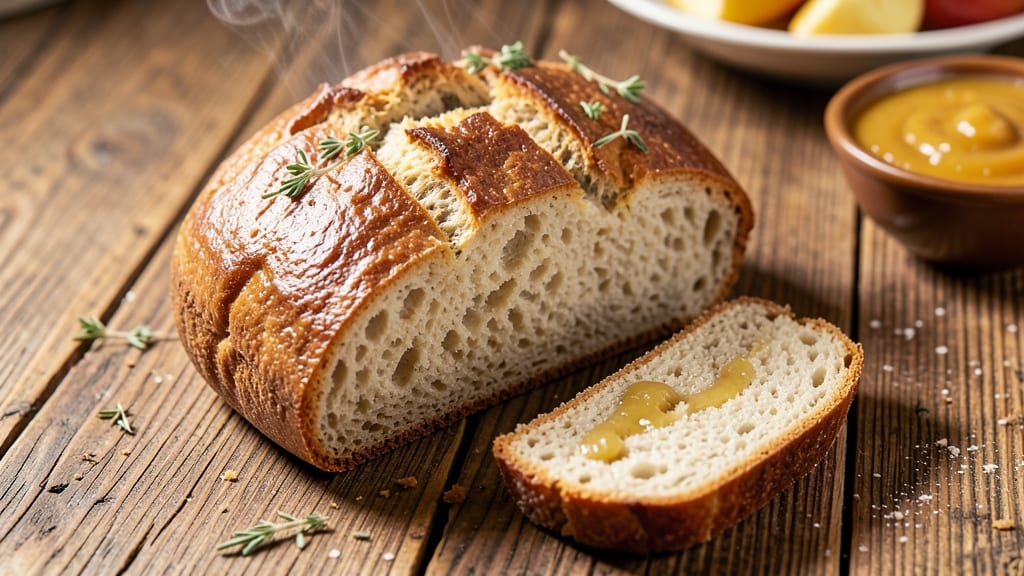
This brown rice flour sourdough bread delivers the nutty depth and fermented tang of traditional sourdough without a single grain of wheat. 🌱 The key lies in nurturing a vibrant starter using brown rice flour—a process that unlocks complex flavors while maintaining the bread's signature chew and open crumb.
Unlike conventional sourdough, this version thrives on the flour's natural acidity and hydration balance, creating a loaf that's both hearty and digestible.
The result is a crust with subtle caramel notes and a tender interior threaded with airy pockets, all while keeping the gluten-free promise. What makes this recipe work is the two-stage fermentation—first building the starter, then patiently developing the dough over 24 hours.
This method ensures proper gluten formation (even without wheat) and maximizes flavor extraction from the brown rice flour.
Ingredients for brown rice flour sourdough bread
Precision-measured ingredients for gluten-free sourdough with nutty depth and open crumb structure.
| Ingredient | Amount | Notes |
|---|---|---|
| Brown Rice Flour 🌾 | 4 cups | Fine grind, organic preferred |
| Active Dry Yeast 🍞 | ¼ oz | Or 2.5g, fresh preferred |
| Filtered Water 💧 | 2 ½ cups | Room temperature, 70°F |
| Unsweetened Applesauce 🍎 | ½ cup | For gluten-free structure |
| Psyllium Husk Powder 🌿 | 1 tbsp | Essential for gluten-free rise |
| White Vinegar 🍶 | 1 tbsp | For starter acidity |
| Sea Salt 🧂 | 1 ½ tsp | Diamond Crystal preferred |
| Olive Oil 🫒 | 1 tbsp | Extra-virgin for flavor |
| Sugar 🍚 | ½ tsp | Feeds yeast starter |
| Xanthan Gum 🧪 | ¼ tsp | Optional for elasticity |
| Flaxseed Meal 🌰 | 1 tbsp | For egg replacement |
| Cold Water ❄️ | ¼ cup | For dough hydration |
Brown rice flour is the foundation—Bob's Red Mill or Anthony's Goods brands yield the best texture. The psyllium husk is non-negotiable; it mimics gluten's elasticity. For the starter, use unbleached flour exclusively to avoid inhibiting fermentation. Whole Foods bulk bins often carry organic options, but store-bought bags work fine. The psyllium husk should be measured precisely—too little compromises structure, too much makes the dough gummy. Store flour in airtight containers to prevent moisture absorption, which can alter hydration ratios.
No psyllium husk? Ground flaxseed at double the amount works as a partial substitute, though texture will differ. Substitute white vinegar with lemon juice for acidity, but reduce to 1 tsp to avoid over-souring. The applesauce can be swapped for mashed banana, though flavor will shift slightly. For yeast, instant yeast requires no proofing—just mix directly into dry ingredients. Store-bought sourdough starters (like Bobs Red Mill's) can replace your starter, but homemade yields superior flavor development. The xanthan gum, while optional, is worth the investment for a more professional crumb structure.
Flour and psyllium husk keep indefinitely in cool, dark places. Once mixed, the starter should be refrigerated between feedings to slow fermentation. The final dough can be shaped and refrigerated overnight for enhanced flavor, then baked straight from the fridge. Wrapped in parchment and stored at room temperature, the bread stays fresh for 3-4 days. For longer storage, slice and freeze portions—reheat in a 350°F oven for 5-7 minutes to restore texture. The crust benefits from a 5-minute preheat to achieve optimal caramelization.
Why You'll Love This Recipe
- No-Knead Nightmare Solved: I swear by this dough—just mix, wait, and bake. That psyllium husk powder does all the heavy lifting, so no stiff arms or overworked wrists here.
- Nutty Earthy Richness: The brown rice flour gives it a deep, toasty flavor that’s way more interesting than plain white bread. Applesauce keeps it tender without tasting sweet—honestly, it’s the kind of bread that makes you pause mid-bite.
- Gluten-Free Crowd Pleaser: My gluten-sensitive friends actually ask for seconds, and it’s perfect for sandwiches, toast, or even charred slices over soup. No one feels left out, and no one’s stomach rebels afterward.
- Budget-Friendly Staple: Brown rice flour and psyllium husk are cheap, and this loaf lasts a week in my fridge. I make two batches on Sundays—one for meals, one for freezing—and never scramble for bread again.
Step-by-step instructions for brown rice flour sourdough bread
A gluten-free sourdough with nutty depth and fermented complexity—here's how to craft it with precision.
👨🍳 Step 1: Activate the Yeast and Prepare the Starter
In a small bowl, combine the 0.25 oz active dry yeast, 0.5 tsp sugar, and 1 tbsp white vinegar with ½ cup of the 2.5 cups filtered water at 70°F. Let this mixture sit for 10 minutes until it becomes frothy—this indicates the yeast is active. If it doesn't bubble, your yeast may be dead, and you'll need to start over.
In a separate small bowl, whisk together the 1 tbsp flaxseed meal with the remaining 0.25 cup cold water to create a flax "egg." Let this sit for 5 minutes to thicken slightly. This will replace the binding properties of eggs in your gluten-free dough.
🥘 Step 2: Mix the Dough Base and Hydrate the Flour
In the bowl of a stand mixer fitted with the paddle attachment, combine the 4 cups brown rice flour, 1 tbsp psyllium husk powder, 1.5 tsp sea salt, and 0.25 tsp xanthan gum. Mix on low speed for 30 seconds to distribute the dry ingredients evenly. This step ensures uniform texture and prevents dry spots in your final loaf.
Add the yeast mixture, flax "egg," 0.5 cup unsweetened applesauce, and the remaining 2 cups filtered water to the dry ingredients. Mix on low speed for 2 minutes until the dough comes together. It will be thick and sticky—this is normal. Scrape down the sides of the bowl as needed to ensure all the flour is incorporated.
🔥 Step 3: Develop the Dough and Shape the Loaf
Transfer the dough to a lightly oiled bowl and cover it tightly with plastic wrap or a damp towel. Let it rest at room temperature for 1 hour. This initial rest allows the psyllium husk to hydrate fully and the dough to relax slightly, making it easier to handle.
After resting, gently fold the dough over itself 3-4 times to strengthen the structure. Transfer it to a parchment-lined loaf pan, smoothing the top with oiled hands. Cover again and let it proof at room temperature for another 3-4 hours until it has risen about 50% and springs back slowly when gently pressed. The dough should feel slightly jiggly but not overly wet.
🔪 Step 4: Score and Bake for Perfect Crust
Preheat your oven to 375°F with a baking stone or inverted baking sheet on the middle rack. Once preheated, carefully remove the dough from the pan and place it directly onto the baking stone. Using a sharp razor or serrated knife, score the top of the loaf in a crosshatch pattern—this helps control expansion and creates a professional finish.
Bake for 40-45 minutes until the crust is deep golden brown and the internal temperature reaches 205°F. The bread should sound hollow when tapped on the bottom. If the top browns too quickly, tent loosely with foil after 20 minutes to prevent over-browning while the interior finishes baking.
⏰ Step 5: Cool and Slice for Maximum Flavor
Remove the bread from the oven and transfer it to a wire rack to cool completely for at least 1 hour. This cooling period is crucial—it allows the internal structure to set and prevents a gummy texture. The bread will continue to firm up as it cools, developing even more depth of flavor.
Once fully cooled, slice with a serrated knife for clean cuts. The interior should be tender with a slightly crumbly yet moist texture, while the crust remains crisp. Store wrapped at room temperature for up to 3 days or freeze for longer storage. The nutty aroma of the brown rice flour will intensify as it cools, rewarding your patience.
Pro Tips For Making Brown Rice Flour Sourdough Bread
- Bloom the Yeast First: Skip mixing yeast straight into the dry flour—it’s a waste of time and weakens the rise. Instead, dissolve the active dry yeast in warm (not hot) filtered water with a pinch of sugar (or a spoon of applesauce) for 5-10 minutes until frothy. This guarantees your yeast is alive and ready to work, not just sitting dormant in the batter.
- Soak the Psyllium: Psyllium husk powder clumps like a nightmare if you toss it in dry. Mix it with all the applesauce first—let it sit for 10 minutes until it turns into a thick, gel-like paste. This mimics gluten’s stretchiness and makes the dough handleable. (Yes, even if you’re impatient like me.)
- Don’t Over-Knead (Or Knead at All): Brown rice flour dough isn’t wheat—it won’t develop gluten the same way. After mixing, fold the dough just 2-3 times to strengthen the structure, then let it rest. Overworking it turns the crumb gummy. Think "gentle coaxing," not "beating into submission."
- Steam the First 15 Minutes: The crust on brown rice flour bread burns faster than wheat-based loaves. Place a metal bowl of boiling water in your oven before baking, then close the door for the first 15 minutes. The steam keeps the top soft while the center cooks through—no more charred tops and raw centers. (Trust me, I’ve done both.)
Serving suggestions for this recipe
Toasted Nut Butter
Spread a generous layer of creamy almond butter or cashew butter on warm slices—about 1 tablespoon per serving. The nutty richness complements the brown rice flour's earthy notes perfectly.
For extra flair, lightly toast the nut butter in a small pan with ½ teaspoon cinnamon and ¼ teaspoon vanilla extract for 2-3 minutes before spreading. 🌰
Avocado Mash
Mash ½ ripe avocado with 1 teaspoon lemon juice, ½ teaspoon sea salt, and a pinch of garlic powder. Spread this vibrant green mash on toasted bread slices for a creamy, nutrient-packed alternative.
The healthy fats in avocado enhance the bread’s moisture while adding a fresh contrast to the nutty flavor. 🥑
Spiced Jam Pairings
Pair your bread with homemade apricot jam spiced with ½ teaspoon cardamom and ¼ teaspoon ginger. Warm the jam slightly before serving to release its aromatic depth.
Alternatively, try fig jam with a splash of orange liqueur for a sophisticated touch. The natural sweetness balances the bread’s fermented tang beautifully. 🍯
Smoked Almonds
Top slices with ¼ cup smoked almonds, roughly chopped, for added crunch and depth. Toast them in a dry pan over medium heat for 3-4 minutes until fragrant. The smoky flavor bridges the gap between the bread’s nutty base and any sweet or savory toppings.
Store extra almonds in an airtight container for up to 2 weeks. 🌿
Savory Olive Oil
Drizzle 1 teaspoon extra-virgin olive oil over warm slices, then sprinkle with flaky sea salt and a pinch of smoked paprika. This simple combo highlights the bread’s crusty texture and fermented complexity. For extra richness, add a few drops of chili oil for a subtle kick. 🫒
Seasonal Fruit
Layer slices with sliced pear or apple during fall, or berries in summer. The natural sweetness of fruit contrasts the bread’s tangy, nutty profile. For a tropical twist, try mango with a squeeze of lime. Serve with a sprinkle of toasted coconut flakes for added texture. 🍎
Nutrition facts
Frequently asked questions
Why does brown rice flour sourdough need psyllium husk?
Psyllium husk acts as a gluten substitute by creating elasticity and structure in gluten-free dough. Without it, your loaf would collapse during baking. The husk absorbs moisture and forms a gel-like network that mimics gluten’s stretchiness—essential for that signature sourdough rise.
Can I use white rice flour instead of brown?
Technically yes, but your bread will lack the nutty depth and chewiness that brown rice flour provides. Brown rice flour’s bran content adds complexity and better mimics traditional sourdough texture. For a lighter crumb, blend equal parts brown and white rice flour—but expect less flavor.
What if my starter doesn’t bubble after 24 hours?
Your starter needs patience! Brown rice flour ferments slower than wheat flour—keep feeding it daily with equal parts flour and water (plus a pinch of sugar) for up to 5 days. If it still shows no activity, try using instant yeast (¼ tsp) as a backup to kickstart fermentation.
How do I fix a dense, gummy loaf?
Overmixing or insufficient proofing usually causes this. Next time, mix just until combined and let the dough rest longer (up to 6 hours) before baking. Also ensure your oven reaches 375°F—underbaking can leave the center gummy. A baking stone helps create proper crust.
Can I make this bread without a stand mixer?
Use a sturdy wooden spoon or your hands to mix the dough thoroughly in a large bowl. Work in batches if needed, and scrape the sides frequently. The psyllium husk requires extra mixing to fully hydrate—aim for 3-4 minutes of vigorous stirring. A dough scraper helps with cleanup.