
Main Courses
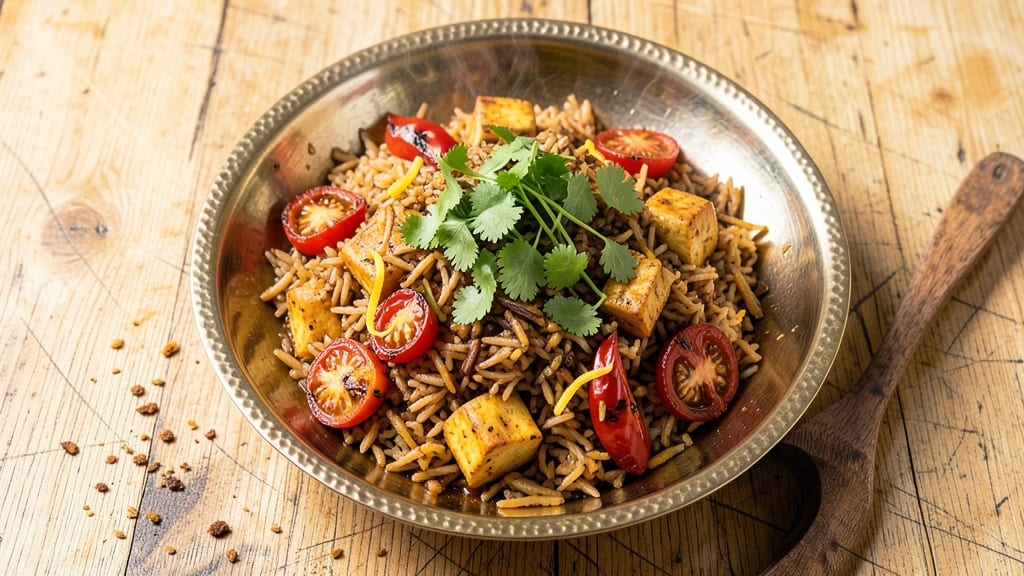
This brown rice veg biryani recipe transforms simple ingredients into a fragrant, layered masterpiece where tender rice and vibrant vegetables marry with aromatic spices.
The secret lies in parboiling the rice just enough to soften it while preserving texture, then layering it with spiced veggies and herbs for a restaurant-quality result at home. Every bite delivers a symphony of flavors—warm, earthy, and satisfying—without relying on dairy or meat.
The layered cooking method ensures each component stays distinct yet harmonious: fluffy brown rice, caramelized vegetables, and fragrant spices infused through slow steaming. No special equipment is needed—just patience and a few key techniques that guarantee tender grains and perfectly seasoned layers.
This vegan adaptation proves biryani can be just as rich and comforting without compromising dietary preferences.
Ingredients for brown rice veg biryani
Transform simple ingredients into restaurant-quality veg biryani with tender brown rice and aromatic spices.
| Ingredient | Amount | Notes |
|---|---|---|
| Long-Grain Brown Rice 🌾 | 1 ½ cups | Uncooked, rinsed thoroughly |
| Extra-Firm Tofu 🍱 | 1 lb | Press for 30 mins to remove water |
| Yellow Onions 🧅 | 2 whole | Medium size, thinly sliced |
| Red Bell Peppers 🌶️ | 2 whole | Medium size, sliced into strips |
| Fresh Tomatoes 🍅 | 2 medium | OR 1 cup chopped canned tomatoes |
| Fresh Cilantro 🌿 | ½ cup | Chopped, stems removed |
| Fresh Mint Leaves 🍃 | ¼ cup | Chopped, for garnish |
| Ginger Root 🧄 | 1 ½ tbsp | Freshly grated |
| Garlic Cloves 🧄 | 6 cloves | Minced finely |
| Vegetable Oil 🫒 | ½ cup | High smoke point preferred |
| Coconut Milk 🥥 | 1 cup | Full-fat for creaminess |
| Ground Turmeric 🌿 | 1 tsp | Freshly ground preferred |
| Ground Cumin 🌿 | 1 tsp | Toasted for deeper flavor |
| Ground Coriander 🌿 | 1 tsp | Freshly ground preferred |
| Garam Masala 🌶️ | 1 tsp | Homemade or quality store-bought |
| Salt 🧂 | 1 ½ tsp | Diamond Crystal preferred |
The brown rice is the foundation—uncooked long-grain gives that perfect chewy texture. Rinse it thoroughly to remove excess starch, which prevents clumping. For tofu, extra-firm is non-negotiable—press it for at least 30 minutes to remove water, then cube it for even cooking. Fresh ginger and garlic are essential; grate the ginger yourself for maximum punch. The yellow onions should be thinly sliced to caramelize properly, while the bell peppers add vibrant color and crunch. If using canned tomatoes, opt for no-salt-added varieties to control seasoning.
No fresh tomatoes? Canned diced tomatoes work perfectly—just drain them well. Substituting tofu? Chickpeas or potatoes hold up well to the spices. For extra richness, swap half the coconut milk for cashew cream. The spices are where magic happens: garam masala is the star, but toast your cumin and coriander first for deeper flavor. If you can't find garam masala, blend equal parts cinnamon, cardamom, cloves, and black pepper for a DIY version. Fresh herbs like cilantro and mint should be added at the end—chop them just before serving to preserve their bright flavors.
Prep ahead to save time: Rinse and soak the rice overnight for even cooking, and chop all vegetables in advance. The biryani reheats beautifully—cover with foil and steam for 10 minutes to revive texture. Store leftovers in airtight containers for 4-5 days in the fridge or 3 months frozen. For serving, use a large platter to showcase the layered presentation—garnish with extra cilantro and mint right before eating for maximum freshness.
Why You'll Love This Recipe
- One-Pot Magic: I swear by this recipe because it’s all in one pot—no fancy layers or stress. The brown rice cooks right alongside the tofu and veggies, so no juggling timers or separate pans. Honestly, that’s half the battle won before you even taste it.
- Tofu’s Secret Crisp: Between us, the tofu is the star here. It gets that golden, slightly crispy edge when seared, then soaks up all the biryani spices like a sponge. That contrast—crunchy outside, tender inside—makes every bite feel special.
- Meal Prep Hero: This keeps perfectly for days, which is huge for me. I’ll make a big batch on Sundays, and by Thursday, it’s still packed with flavor—no sad, dry rice here. Even my picky teen grabs leftovers for lunch.
- Budget-Friendly Feast: Brown rice and tofu stretch this dish into a full meal without breaking the bank. A single batch feeds four for under $10, and the onions, peppers, and tomatoes bulk it up so no one feels shortchanged. That’s my kind of efficient.
Step-by-step instructions for brown rice vegetable biryani
Here's the method for crafting layers of fragrant, tender brown rice with vibrant vegetables and aromatic spices.
Prepare the Tofu and Marinate the Vegetables
Begin by pressing the 1 lb extra-firm tofu for 30 minutes to remove excess water, then cut it into ½-inch cubes. In a bowl, combine the tofu with 1 tablespoon vegetable oil, ½ teaspoon salt, ½ teaspoon ground turmeric, and ½ teaspoon ground cumin. Mix gently to coat evenly and set aside.
Next, thinly slice the 2 whole yellow onions and 2 whole red bell peppers into strips. Dice the 2 medium fresh tomatoes into small chunks. In a separate bowl, combine the sliced onions, bell peppers, tomatoes, 1.5 tablespoons freshly grated ginger root, 6 minced garlic cloves, ½ teaspoon ground coriander, ½ teaspoon garam masala, and ½ teaspoon salt. Mix well and let the vegetables marinate for 15 minutes to absorb the spices.
Parboil the Brown Rice
Rinse the 1.5 cups long-grain brown rice thoroughly under cold water until the water runs clear. In a medium pot, combine the rice with 3 cups water and bring to a boil over medium-high heat. Once boiling, reduce the heat to low, cover, and simmer for 25 minutes. The rice should be partially cooked but still firm—this ensures it absorbs the flavors during the final cooking process.
Drain the rice in a colander, reserving ½ cup of the cooking water. Spread the rice on a baking sheet and let it cool slightly while you prepare the remaining components. This step is crucial for creating the signature biryani texture.
Sauté the Spiced Tofu and Vegetables
Heat 2 tablespoons vegetable oil in a large skillet over medium heat. Add the marinated tofu and cook for 5-6 minutes, stirring occasionally, until golden brown and crispy on the edges. Remove the tofu and set it aside, leaving the oil in the skillet.
In the same skillet, add the marinated vegetables and cook for 8-10 minutes until the onions are soft and translucent and the bell peppers are tender but still vibrant. Stir in the 1 cup coconut milk, ½ teaspoon garam masala, and ½ teaspoon salt, then simmer for 3 minutes until the mixture thickens slightly. The vegetables should be tender yet retain their shape—overcooking will make them mushy.
Layer and Steam the Biryani
Preheat your oven to 375°F. In a deep oven-safe dish (or a heavy-bottomed pot), spread half of the partially cooked rice evenly on the bottom. Top with half of the spiced tofu and vegetable mixture, then sprinkle ¼ cup chopped fresh cilantro and 2 tablespoons chopped fresh mint leaves over the vegetables. Repeat the layering process with the remaining rice and mixture.
Drizzle ¼ cup reserved rice cooking water over the top layer to keep the rice moist. Cover the dish tightly with aluminum foil and bake for 20 minutes. Remove the foil and bake for an additional 10 minutes to allow the top layer to slightly crisp and the flavors to meld. The biryani is ready when the rice is tender and fluffy, and the aroma is rich and fragrant.
Rest and Serve
Let the biryani rest for 5 minutes before serving. This allows the juices to redistribute, ensuring each bite is moist and flavorful. Garnish with the remaining ¼ cup chopped fresh cilantro and 2 tablespoons chopped fresh mint leaves, and serve immediately with a side of yogurt or raita for balance.
The result should be a fragrant, layered dish where the tender brown rice absorbs the spices from the tofu and vegetables, creating a harmonious blend of textures and flavors. Each layer should be distinct yet cohesive, with the tofu adding a savory, crispy element to contrast the softness of the rice and vegetables.
Pro Tips For Making Brown Rice Veg Biryani
- SOAK THE BROWN RICE: I learned this the hard way—skipping the soak means your rice will stay dry and chewy. Cover 1 cup of long-grain brown rice in water for at least 4 hours (overnight if possible), then drain. The extra starch softens the rice and absorbs flavors better, especially when layered with the spiced veggies.
- PRESS THE TOFU DRY: Extra-firm tofu still holds water, and soggy tofu ruins texture. Wrap it in a clean towel, place a heavy pan on top, and let it sit for 10 minutes. This step guarantees a crispy, golden crust when you pan-fry it later—no one wants mushy tofu in their biryani.
- CHAR THE ONIONS LOW: Watch the heat—burnt onions taste bitter and overpower the dish. Cook sliced onions on medium-low for 15-20 minutes, stirring often, until deep golden and caramelized. High heat turns them black; patience here makes the flavor foundation richer.
- LAYER COOL, NOT HOT: I was skeptical until I tried it—stacking hot rice and veggies traps steam and turns the biryani into a mushy mess. Let the spiced veggie mix cool slightly (10 minutes) before layering it with the cooked rice. The grains stay distinct, and the flavors meld without sogginess.
Common mistakes when making perfect results
Overcooking Rice
One of the biggest mistakes is fully cooking the brown rice before layering. The rice should only be partially cooked (25 minutes)—this ensures it absorbs flavors during the final steaming.
Fully cooked rice becomes mushy when reheated, ruining the biryani's signature texture. I've learned the hard way: undercooked rice is better than overcooked! 🌾
Skipping the Marination
Letting your vegetables and tofu marinate for just 15 minutes makes all the difference. Without this step, the spices won't penetrate deeply enough, leaving your biryani tasting bland. I now always marinate—it's the secret to restaurant-quality flavor at home. The ginger and garlic especially need time to infuse properly.
Uneven Layering
Biryani relies on perfect layering for both texture and presentation. If you pile all the rice on one side or make uneven layers, the dish won't cook evenly.
Spread each layer evenly across the dish—this ensures consistent doneness and that beautiful layered look. I use a ruler to check my layers now for perfect symmetry!
Ignoring the Resting Time
Rushing to serve immediately after baking is a common mistake. The biryani needs 5 minutes of resting time so all the juices redistribute. Serving too soon means dry rice and lost flavor. This is especially important with brown rice, which needs extra time to absorb all those delicious spices. 💫
Overcrowding the Pan
When sautéing the vegetables and tofu, don't overcrowd the pan. This causes steaming instead of browning, leading to soggy vegetables. Cook in batches if needed—I use a large skillet and work in two rounds to get that perfect caramelization.
The result is crispy tofu edges and tender but still vibrant vegetables.
Weak Spice Balance
Many vegan biryanis fall flat because they skimp on spices. Don't be afraid to use the full 1 tsp garam masala—this is what makes biryani special.
Toast your cumin and coriander first for deeper flavor. I always double-check my spice measurements because this is where the magic happens in every bite!
Nutrition facts
Frequently asked questions
Can I substitute tofu with another protein in this veg biryani?
For a heartier option, try chickpeas (drained and rinsed) or potatoes (cubed and parboiled). If you prefer a firmer texture, cauliflower florets work beautifully too. Just adjust cooking times—potatoes need 5-6 minutes less than tofu to avoid mushiness.
Why does my brown rice turn mushy in biryani?
The key is partial cooking—only simmer for 25 minutes before layering. Overcooked rice loses its structure during the final steaming. For extra insurance, spread the partially cooked rice on a tray to cool slightly before assembling. Brown rice needs this two-stage cooking to stay firm.
Can I make this biryani in a pressure cooker instead of oven?
Yes! After layering, seal the pot with a tight lid and cook on low heat for 10 minutes after the initial pressure builds. The steam will create the same tender layers. For best results, use half the water ratio (1:1 rice to water) since pressure cooking reduces moisture loss.
How do I make this dish extra flavorful without dairy?
Boost umami with 1 tbsp soy sauce in the tofu marinade and ½ cup cashew cream> (blend soaked cashews with water) instead of coconut milk. For depth, add 1 tsp smoked paprika> to the vegetable mix. These tweaks create richness without dairy.
What's the best way to reheat leftovers?
Cover with foil and steam in a 200°F oven for 15 minutes> or microwave in 1-minute bursts> with a damp paper towel. Never reheat uncovered—this dries out the layers. For extra flavor, add 1 tsp water> before reheating to restore moisture.