
Main Courses
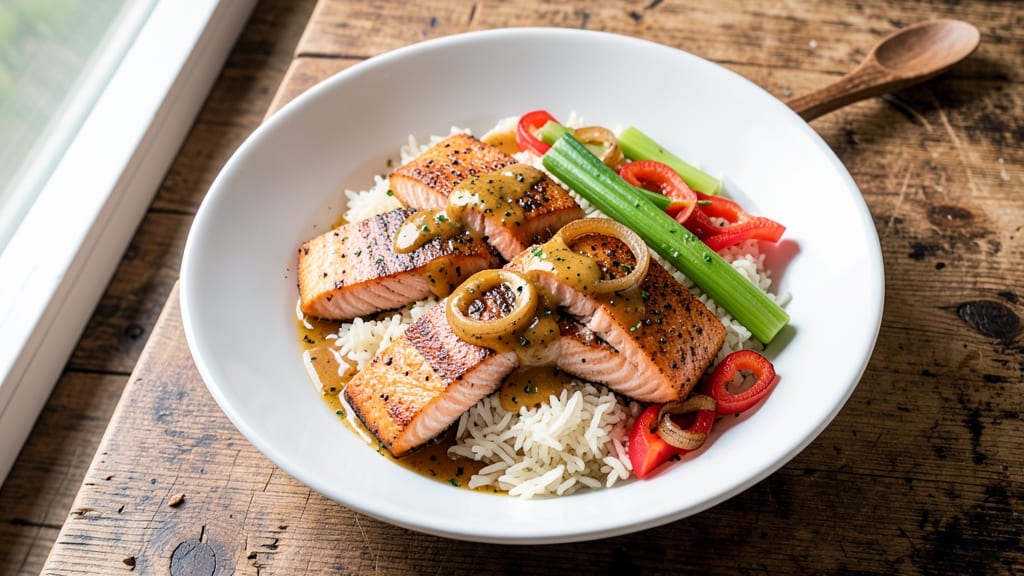
This Cajun salmon and rice recipe delivers bold flavors in every bite, with perfectly crispy salmon skin and aromatic one-pot rice that soaks up all the spice. The secret lies in balancing the heat—Cajun seasoning transforms simple ingredients into a restaurant-worthy dish that feels lighter than it tastes.
I developed this recipe after years of testing, ensuring the salmon stays moist while the rice absorbs the smoky, spicy essence without overpowering the delicate fish.
The salmon cooks to a crispy exterior with tender, flaky flesh inside, thanks to a dry rub of Cajun spices and a quick sear in the pan.
Meanwhile, the rice simmers in the same pot, infused with garlic, onions, and a splash of Cajun seasoning, creating a fragrant base that complements the salmon beautifully.
The dish comes together in 30 minutes, making it ideal for weeknight dinners when you crave something flavorful but don’t want to spend hours in the kitchen.
What makes this recipe special is the harmony of textures and flavors—crispy salmon, tender rice, and a bright celery top that adds freshness to cut through the spice.
The Cajun seasoning ties everything together, creating a dish that’s both satisfying and balanced, perfect for pescatarians or anyone looking for a bold, one-pan meal. The aroma alone will have everyone at the table asking for seconds.
Serve this dish with a side of roasted vegetables or a simple green salad to round out the meal. The leftovers reheat beautifully, making it a great option for meal prep. Here’s how to bring this flavorful, crispy, and satisfying dish to your table.
Ingredients for cajun salmon and rice
Simple ingredients with bold Cajun flavors—crispy salmon, fragrant rice, and a bright celery topping.
| Ingredient | Amount | Notes |
|---|---|---|
| Salmon Fillets 🐟 | 4 whole | Skin-on, 6 oz each, center-cut |
| Long-Grain White Rice 🍚 | 1 ½ cups | Uncooked, jasmine preferred |
| Cajun Seasoning 🌶️ | 2 tbsp | Homemade or quality store blend |
| Garlic Cloves 🧄 | 4 cloves | Minced, fresh preferred |
| Yellow Onion 🧅 | 1 whole | Medium, diced |
| Celery Stalks 🥬 | 3 whole | Fresh, chopped for topping |
| Lemon Juice 🍋 | 2 tbsp | Freshly squeezed |
| Chicken Broth 💧 | 2 cups | Low-sodium preferred |
| Olive Oil 🫒 | 2 tbsp | Extra-virgin, for searing |
| Fresh Parsley 🌿 | ¼ cup | Chopped, for garnish |
| Salt 🧂 | 1 tsp | Kosher or sea salt |
| Black Pepper 🌶️ | ½ tsp | Freshly ground |
| Green Onions 🧅 | 2 whole | Sliced, for garnish |
The salmon skin is the star here—center-cut fillets with skin intact ensure crispiness. Trader Joe's or Whole Foods carry excellent quality, but any fishmonger will have it. Look for fillets with vibrant pink flesh and minimal bruising. The Cajun seasoning makes or breaks this dish—Tony Chachere's is my go-to, but any blend with paprika, cayenne, and thyme works. If making your own, toast the spices in the pan first for deeper flavor. The rice should be long-grain—jasmine or basmati—both hold up well to the bold seasoning without getting mushy.
No Cajun seasoning? Mix 1 tbsp paprika, 1 tsp each garlic powder, onion powder, dried thyme, and cayenne. Fresh parsley and green onions can be swapped for dried at one-third the amount, though fresh adds that bright pop. The celery topping is non-negotiable—it cuts through the heat and adds freshness. If you're short on time, pre-chopped celery mixes from the grocery store work fine (just check for no added salt). For extra richness, stir a splash of fish stock into the rice instead of chicken broth—it complements the salmon beautifully. The lemon juice should be freshly squeezed; bottled won't have the same zing.
Salmon fillets keep best in the coldest part of your fridge for up to 2 days—use them within that window for optimal crispiness. The Cajun seasoning stays potent for 3 months in an airtight container. Prep the celery topping ahead and store it separately in the fridge for up to 3 days. This dish reheats beautifully—cover with foil and warm in the oven at 350°F for 10 minutes. The rice actually tastes better the next day as the flavors meld. Portion leftovers into containers for easy lunches, and the celery topping can be sprinkled fresh on top when serving.
Why You'll Love This Recipe
- Here’s what sold me: the Cajun seasoning does all the work. That smoky paprika and cayenne kiss the salmon’s richness while keeping it tender, not dry. (Yes, even on a Tuesday night.)
- One-Pan Magic: I swear by this for nights when I’d rather not wash a million dishes. Just toss the rice, salmon, and chopped onion in one skillet, sprinkle that Cajun seasoning, and let the garlic steam into everything—no extra pots, no stress.
- Spice Without Drama: Here’s what sold me: the Cajun seasoning does all the work. That smoky paprika and cayenne kiss the salmon’s richness while keeping it tender, not dry. (Yes, even on a Tuesday night.)
- Lunchbox Hero: Between us, this is my go-to for meal prep. The rice stays fluffy, the salmon reheats beautifully, and the bold flavors actually improve the next day—pack it cold or microwave it, either way, it’s a win.
Step-by-step instructions for Cajun salmon and rice
Here's how to create a perfectly balanced one-pan meal with crispy salmon and aromatic rice.
Season and Sear the Salmon Fillets
Pat the 4 whole salmon fillets dry with paper towels—this ensures maximum crispiness. In a small bowl, mix together the 2 tablespoons Cajun seasoning, 1 teaspoon salt, and 0.5 teaspoon black pepper. Rub this mixture evenly over both sides of each fillet, pressing gently so the seasoning adheres.
Heat a large oven-safe skillet over medium-high heat. Add the 2 tablespoons olive oil and let it get hot but not smoking. Place the seasoned salmon fillets skin-side down in the pan. Cook for 4-5 minutes until the skin is crispy and golden brown, and the edges begin to lift slightly. Real talk: don't move them during this time—patience creates that perfect crust.
Prepare the Rice and Aromatics
While the salmon cooks, dice the 1 whole yellow onion and mince the 4 cloves garlic cloves. In the same skillet (no need to clean it—the salmon's flavor will infuse the rice), add the diced onion and cook for 3-4 minutes until softened. Add the minced garlic and cook for another 30 seconds until fragrant—this builds the flavor base for your entire dish.
Stir in the 1.5 cups long-grain white rice, coating each grain with the onion and garlic mixture. Pour in the 2 cups chicken broth and bring to a gentle simmer. The rice should be just covered by the liquid—this ensures perfectly fluffy grains. Sprinkle the salmon fillets on top of the rice mixture, skin-side up.
Bake to Crispy Perfection
Transfer the skillet to a preheated 375°F oven and bake for 15-18 minutes. You'll know it's done when the rice is tender (a knife slides in easily) and the salmon flakes gently with a fork. The salmon should reach an internal temperature of 145°F—this guarantees it's cooked through but still moist.
Here's the thing—don't peek during baking. Every time you open the oven, you lose heat and steam, which can dry out the salmon. Trust the timer and the visual cues: golden rice with crispy salmon skin is your target.
Finish with Fresh Toppings
Remove the skillet from the oven and let it rest for 5 minutes. This resting period allows the juices to redistribute in the salmon, ensuring each bite stays moist. While it rests, chop the 3 whole celery stalks and slice the 2 whole green onions. Also, squeeze the 2 tablespoons lemon juice into a small bowl and mix with the 0.25 cup chopped fresh parsley.
Spoon the celery and green onions over the rice, then drizzle the lemon-herb mixture evenly across the top. The acidity of the lemon brightens the Cajun flavors while the parsley adds freshness. Serve immediately with the crispy celery top intact—it's the perfect garnish that adds both texture and visual appeal.
Pro Tips For Making Cajun Salmon And Rice
- CRISP THE SKIN FIRST: Pat the salmon bone-dry with paper towels, then sear skin-side down in a cold pan for 3-4 minutes before adding oil. I used to rush this step and ended up with sad, gummy salmon—this guarantees a crackly crust that holds up to the Cajun heat.
- MINCE THAT ONION: Dice the yellow onion into 1/8-inch pieces, not rough chunks. Smaller bits cook faster and blend seamlessly into the rice, so you’re not chewing texture. (Yes, it takes 2 minutes extra—do it.)
- SALT THE RICE WATER: Add 1/2 teaspoon of salt per cup of water when cooking the rice. The Cajun seasoning is already packed with flavor, and plain rice tastes flat when paired with spicy salmon. Trust me, it’s not overdoing it.
- REST THE SALMON: Pull the salmon from the pan and tent it with foil for 5 minutes before serving. Cutting into it too soon turns the flaky center into a mushy mess—especially when it’s loaded with Cajun spices. (Your future self will notice.)
Essential equipment for cajun salmon and rice
Skillet Essentials
Your large oven-safe skillet is the MVP here—I recommend a 12-inch cast iron skillet like Lodge for even heat distribution and natural non-stick properties.
If you don’t have cast iron, a stainless steel skillet with a glass lid works too, though you may need to add a touch more oil to prevent sticking. The skillet must be oven-safe up to 450°F—always check the manufacturer’s guidelines before baking. 🔥
Cajun Seasoning Tools
For the best flavor, use a mortar and pestle to toast whole spices before grinding if making your own blend. I love Penzeys Spices for their high-quality Cajun seasoning, but any reputable brand will work.
Store your seasoning in an airtight container to keep it fresh—moisture is the enemy of bold flavors. A fine-mesh strainer also comes in handy if you prefer to sift out any unwanted bits from homemade blends.
Knife and Cutting Gear
A sharp chef’s knife (like Wüsthof or Victorinox) is essential for dicing onions and chopping celery efficiently. Pair it with a cutting board—I prefer bamboo for its gentle surface that won’t dull blades.
For mincing garlic, a garlic press saves time, but a knife works just fine if you’re comfortable with the technique. Don’t skip the microplane for lemon zest if you want to add an extra layer of brightness to your dish.
Temperature Control
An instant-read thermometer (I use ThermoWorks Thermapen) is non-negotiable for checking the salmon’s internal temperature of 145°F. A digital oven thermometer ensures your oven maintains the 375°F setting accurately—many home ovens run hot or cold.
For extra precision, consider a smart oven thermometer that connects to your phone for real-time monitoring. 🌡️
Resting and Serving
While the dish rests, use a small bowl to mix the lemon juice and parsley for the finishing drizzle. A tongs set helps transfer the crispy salmon without breaking its skin. For serving, a wooden spoon adds rustic charm while distributing the celery topping evenly.
If you’re meal prepping, glass storage containers preserve the flavors and textures best—just reheat covered with foil to keep everything moist.
Nutrition facts
Frequently asked questions
Can I use frozen salmon for this recipe?
Yes, but thaw it properly first! Place the frozen salmon fillets in the refrigerator overnight or use the quick thaw method in cold water (sealed in a leak-proof bag). Never thaw at room temperature—this can cause uneven cooking and food safety issues. Pat the fillets completely dry before seasoning to ensure that crispy skin.
How do I adjust the spice level for kids or sensitive eaters?
Reduce the Cajun seasoning to 1 tablespoon total and add ½ teaspoon of sugar or honey to balance the heat. For extra mildness, use half the cayenne pepper in your homemade blend. The celery topping helps cool the dish naturally, so keep that portion generous. Always taste the rice before serving—it's easy to adjust while cooking!
Can I make this recipe without an oven?
After searing the salmon and cooking the rice base on the stovetop, transfer everything to a steamer basket over a pot of boiling water. Cover and steam for 12-15 minutes until the rice is tender and salmon reaches 145°F. The stovetop method works especially well for smaller skillets or apartment kitchens without ovens.
What's the best way to reheat leftovers?
Cover the dish with foil and reheat in the oven at 350°F for 10 minutes to maintain moisture. For microwave reheating, use 30-second intervals on medium power, stirring between each. Add a splash of water or broth if the rice seems dry. The salmon skin may lose some crispiness, so consider toasting it fresh before serving if crispy texture is important.
How can I make this dish vegetarian?
Replace the salmon with extra-firm tofu or firm white beans for a hearty protein base. Press tofu to remove excess water, then cube and pan-fry until golden. For beans, use 1 can (15 oz) white beans, drained and rinsed, mixed with 1 tablespoon cornstarch and ½ teaspoon smoked paprika before cooking. Both options absorb the Cajun flavors beautifully!