
Sauces & Condiments
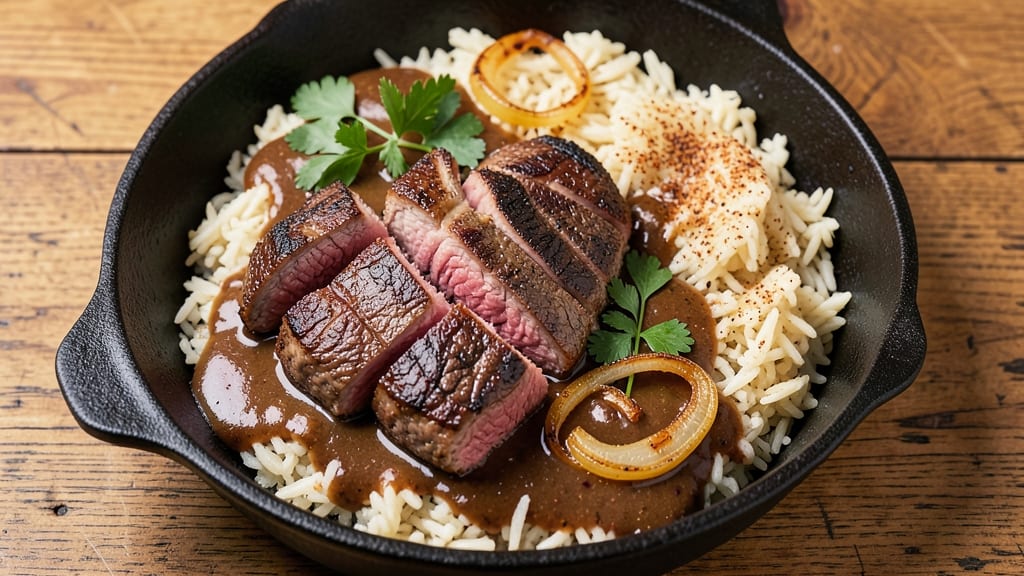
This Cajun steak, rice, and gravy recipe delivers bold Southern flavors in one smoky, spice-packed dish that tastes like a Louisiana restaurant classic. The secret lies in perfectly searing the steak, building rich gravy from the pan drippings, and infusing the rice with smoky Cajun seasoning—all while keeping prep simple.
Every bite delivers tender meat, fragrant rice, and a velvety gravy that ties it all together.
The beauty of this method is its efficiency: you start with a sizzling steak in a cast-iron skillet, then deglaze with beer or broth to create the gravy foundation while the rice simmers nearby.
No fancy techniques required—just bold flavors and a one-pan approach that makes cleanup effortless. The result is a hearty, restaurant-quality meal that comes together in under an hour. Ready to master this Southern staple?
Ingredients for cajun steak rice and gravy
Bold Southern flavors start with these 13 ingredients—smoky spices, tender steak, and rich gravy all in one pan.
| Ingredient | Amount | Notes |
|---|---|---|
| Ribeye Steak 🥩 | 1 ½ lb | 1-inch thick cut, bone-in preferred |
| Long-Grain White Rice 🍚 | 1 ½ cups | Uncooked, medium grain preferred |
| Cajun Seasoning 🌶️ | 2 tbsp | Homemade or quality store-bought blend |
| Dry Red Wine 🍷 | ½ cup | Bold variety like Cabernet Sauvignon |
| Beef Broth 💧 | 1 cup | Low-sodium preferred for flavor control |
| Yellow Onion 🧅 | 1 whole | Medium size, diced finely |
| Garlic Cloves 🧄 | 4 cloves | Fresh, minced for maximum flavor |
| Butter 🧈 | 2 tbsp | Unsalted, for rich gravy texture |
| All-Purpose Flour 🌾 | 1 tbsp | For gravy thickening |
| Olive Oil 🫒 | 2 tbsp | For high-heat searing |
| Salt 🧂 | 1 ½ tsp | Kosher or sea salt for seasoning |
| Black Pepper 🌶️ | ½ tsp | Freshly ground for brightness |
| Fresh Thyme 🌿 | ¼ cup | Chopped, or 1 tsp dried thyme |
The ribeye is non-negotiable here—bone-in cuts stay juicier, and the fat renders beautifully for gravy. Costco or Whole Foods carry excellent cuts, but any butcher shop will work. Look for good marbling and ask for 1-inch thick slices—thinner cuts won't sear properly. The Cajun seasoning makes all the difference; Tony Chachere's is the gold standard, but homemade blends work too if you toast the spices first. For the rice, long-grain white is ideal—it stays separate and absorbs the smoky flavors perfectly.
No red wine? Beef broth plus 1 tbsp balsamic vinegar works in a pinch. Fresh thyme is ideal, but dried at one-third the amount gets you close. The onion and garlic can be prepped ahead—they'll keep in the fridge for 5 days if stored in a sealed container. For the gravy, all-purpose flour is your best friend, but cornstarch works too if you prefer a glossier finish. The key is whisking it into the cold butter first to avoid lumps. If you're short on time, pre-cooked rice saves 20 minutes, though fresh rice is always better.
This dish tastes even better the next day—3-4 days in the fridge, covered tightly. For leftovers, reheat gently on the stove with a splash of broth to restore creaminess. The gravy thickens as it cools, so thin with extra broth if needed. Store components separately if reheating: rice, steak, and gravy reheat best when combined fresh. Freezes beautifully for up to 3 months—just thaw overnight in the fridge before reheating.
Why You'll Love This Recipe
- One-Pan Magic: I swear by this—just sear the steak, toss in the rice and wine, then let it simmer. No chopping, no fuss, and honestly? The gravy practically makes itself.
- Cajun Kick: That dry red wine and Cajun seasoning? It’s the secret weapon. The steak stays tender while the rice soaks up a rich, spicy-sweet sauce that’s dangerously addictive.
- Leftovers That Win: Between us, this dish tastes even better the next day. The rice softens just right, the gravy thickens into perfection, and I’ve sent containers home with coworkers—no complaints, ever.
- Budget-Friendly Feast: Ribeye might sound fancy, but a single cut feeds four with room to spare. The wine and broth stretch the flavor, and I’ve made this for game days, family dinners, and lazy Sundays—no excuses.
Step-by-step instructions for Cajun steak, rice, and gravy
Here's how to create a rich, flavorful one-pan meal where every element works together perfectly.
Season and Sear the Ribeye Steak
Pat the ribeye steak dry with paper towels—this ensures maximum browning. In a small bowl, mix the 2 tablespoons Cajun seasoning with 1.5 teaspoons salt and 0.5 teaspoon black pepper. Rub this generously over both sides of the steak, pressing the spices into the meat so they adhere well.
Heat 2 tablespoons olive oil in a large, heavy-bottomed skillet (preferably cast iron) over medium-high heat until shimmering. Add the steak and sear for 3-4 minutes per side, or until a deep golden-brown crust forms. The steak should be about 75% cooked at this point—it'll finish in the oven. Remove the steak and set it aside on a plate.
Sauté Onions, Garlic, and Thyme
In the same skillet (no need to wipe it clean—the browned bits add flavor), reduce heat to medium and add the diced yellow onion. Cook for 5-6 minutes until softened and beginning to caramelize. Add the 4 minced garlic cloves and 0.25 cup chopped fresh thyme, cooking for another 30 seconds until fragrant.
Here's the thing—don't let the garlic burn. It should smell sweet and pungent, not bitter. If it starts to darken too quickly, remove the skillet from heat for 10 seconds to cool slightly. This aromatics base forms the flavor foundation for both the rice and gravy.
Cook the Rice and Deglaze the Pan
Add the 1.5 cups long-grain white rice to the skillet, stirring to coat it evenly with the onion mixture. Pour in the 0.5 cup dry red wine and scrape up any browned bits from the bottom of the pan with a wooden spoon. This deglazing step captures all that meaty flavor.
Pour in the 1 cup beef broth and stir gently to combine. Bring to a gentle simmer, then reduce heat to low. Cover the skillet and cook for 15 minutes, or until the liquid is mostly absorbed. The rice should be tender but still slightly firm in the center—it'll finish cooking with the steak.
Finish the Steak and Make the Gravy
Return the steak to the skillet, placing it on top of the rice. Cover and cook for an additional 8-10 minutes, or until the steak reaches 145°F internal temperature (medium-rare) and the rice is fully tender. The residual heat will finish cooking both components together.
Once the steak is cooked to your liking, remove it from the skillet and let it rest for 5 minutes on a cutting board. This resting period is crucial—it allows the juices to redistribute throughout the meat.
Thicken the Gravy and Serve
While the steak rests, increase heat to medium and melt the 2 tablespoons butter in the skillet. Sprinkle in the 1 tablespoon all-purpose flour and whisk vigorously for 1-2 minutes until the mixture turns golden brown and nutty.
Slowly pour in 1 cup of hot beef broth (or water) while whisking constantly to prevent lumps. Simmer for 3-4 minutes until the gravy thickens to your desired consistency—it should coat the back of a spoon but still be pourable. Taste and adjust seasoning with additional salt and pepper if needed.
Slice the steak against the grain into 0.5-inch thick pieces and serve over the rice, ladling the rich gravy generously over the top. Each bite should deliver perfectly seasoned steak, tender rice, and that deep, smoky Cajun flavor throughout.
Pro Tips For Making Cajun Steak Rice And Gravy
- SEAR THE STEAK FIRST: Walk away from the pan after the initial sear—it’ll keep cooking while you toast the rice. I used to rush this and ended up with a dry steak that turned to shoe leather by the time the gravy was ready. Let that crust form for 3-4 minutes before cutting.
- TOAST THE RICE DRY: Cook the rice in the steak’s rendered fat until it’s actually toasted—golden, not just warm. Skip this, and your dish tastes like a bland beef and rice casserole. Stir constantly for 5 minutes, then add the liquid.
- DEGLAZE WITH WINE IMMEDIATELY: As soon as you remove the steak, pour in that red wine and scrape every last bit of browned bits from the pan. I learned this the hard way—skipping it means flavorless gravy, no matter how much Cajun seasoning you add.
- STIR THE GRAVY LATE: Let the beef broth and wine simmer uncovered for 10 minutes before stirring in the rice. This thickens the gravy naturally—no need to add flour or cornstarch. Stirring too soon makes it gluey.
Regional styles of this dish
Louisiana Creole Roots
This dish traces back to 19th-century Louisiana Creole cuisine, where French settlers blended their techniques with African and Native American traditions. The original version used chicken instead of steak, but Cajun adaptations quickly embraced beef for its richness.
Look for Tony Chachere's Cajun seasoning—the brand's founder, Tony Chachere, helped popularize this blend in the 1970s. The one-pan method reflects practicality, a hallmark of Southern cooking where every ingredient serves multiple purposes. 🌶️
Texas BBQ Twist
In Texas, this dish gets a smokier profile by adding chopped smoked paprika (½ tsp) to the Cajun seasoning and finishing the steak with a smoked salt rim (mix 1 tsp smoked salt with 1 tbsp brown sugar).
Texans also prefer chuck roast over ribeye for its marbling and affordability. The gravy gets thickened with cornstarch slurry instead of flour for a glossier finish. Serve with pickled jalapeños on the side—a nod to Tex-Mex influences. 🔥
New Orleans "Dirty" Rice
The New Orleans version incorporates chopped andouille sausage (½ lb) cooked with the onions, plus diced celery and bell peppers (½ cup each) for the "holy trinity" base. The rice gets cooked in the steak drippings with a splash of hot sauce (like Crystal or Tabasco) for heat.
For authenticity, use short-grain rice (like Calrose) instead of long-grain, and finish with green onions sprinkled on top. This version is often called "dirty rice" due to its meaty texture. 💛
Modern Shortcut Adaptations
For faster versions, use pre-cooked rice (like microwaveable pouches) and sear the steak in the oven at 425°F for 15 minutes before finishing on the stovetop. Swap red wine for beer (like Abita Amber) to deglaze—it adds a malty depth.
For a 30-minute version, cook the rice in a separate pot while searing the steak, then combine everything at the end with store-bought gravy. These tweaks keep the soul of the dish intact while saving time. ✨
Cajun Campfire Style
Outdoor cooks love this version, where the steak is smoked over hickory or pecan wood for 1-2 hours at 225°F before finishing on the grill.
The rice gets cooked in a campfire Dutch oven with the steak juices, and the gravy is made by reducing the smoke-infused drippings with a roux (equal parts butter and flour). Add corn on the cob to the Dutch oven for a full campfire meal.
This method highlights the dish's rustic, smoky origins. 🌲
Vegetarian Cajun "Steak"
For a meatless take, replace the steak with portobello mushrooms (marinated in balsamic and Cajun seasoning) or extra-firm tofu (pressed and pan-fried). The rice and gravy remain the same, but add smoked paprika and liquid smoke (¼ tsp) to mimic the meaty depth.
Top with avocado slices and pickled red onions for freshness. This version proves the dish's versatility while keeping the bold Cajun flavors intact. 🌱
Nutrition facts
Frequently asked questions
Can I use a different cut of beef instead of ribeye?
Chuck roast or sirloin work beautifully—they're more affordable and stay tender when cooked low-and-slow. For 1-inch thick cuts, sear as directed, then finish at 145°F internal temp. Avoid lean cuts like flank steak, as they dry out faster in the gravy.
How do I make the gravy thicker or thinner?
For a thicker gravy, whisk in 1 extra teaspoon flour with the butter before adding liquid. For a thinner consistency, stir in 1-2 tablespoons hot beef broth. Remember: gravy thickens as it cools, so adjust while it's still hot.
What if I don't have red wine for deglazing?
No problem! Use ½ cup dark beer (like Abita Amber) for malty depth, or beef broth + 1 tbsp balsamic vinegar for tang. Avoid white wine—it won't complement the Cajun flavors. The key is using ½ cup liquid total to properly deglaze the pan.
Can I make this dish ahead of time?
Yes! Cook the rice and steak as directed, then refrigerate components separately for 3-4 days. Reheat gently on the stove with a splash of broth to restore creaminess. For gravy, reheat on low heat, stirring constantly to prevent clumping. Freezes well for up to 3 months—just thaw overnight in the fridge.
Why does my rice turn out mushy?
Overcooking is the usual culprit. Remove the lid during the last 5 minutes of cooking to let excess moisture evaporate. Also, use long-grain white rice (not instant) and avoid stirring the rice while cooking—this breaks the grains. If it's still too soft, spread it on a baking sheet to dry out slightly.