
Main Courses
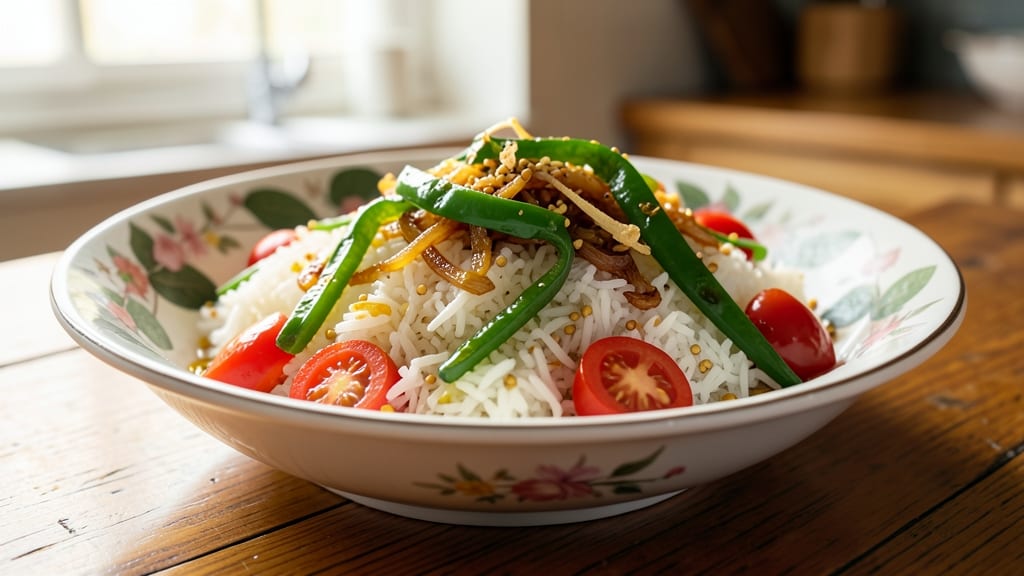
This capsicum rice recipe in Tamil delivers the perfect balance of crispy bell peppers and fragrant basmati rice, a staple in South Indian homes. The secret lies in tempering whole spices with mustard seeds and curry leaves, creating an aromatic base that infuses every grain.
Whether you're cooking for a family gathering or a weeknight meal, this one-pot dish brings the flavors of Tamil Nadu to your kitchen.
The dish starts with perfectly cooked rice, then layers in tender capsicums sautéed with onions, tomatoes, and a blend of spices that transform them into crispy, flavorful bites. The result is a comforting, spiced rice dish that pairs beautifully with sambar or a cooling raita.
Every bite delivers a symphony of textures—soft rice, crispy peppers, and a subtle tang from the tempering.
Ingredients for capsicum rice recipe in tamil
Pantry staples meet fresh veggies for this fragrant, crispy South Indian favorite.
| Ingredient | Amount | Notes |
|---|---|---|
| Long-Grain Basmati Rice 🍚 | 1 ½ cups | Uncooked, rinsed thoroughly |
| Green Bell Peppers 🍅 | 3 whole | Medium-sized, cut into even pieces |
| Yellow Onions 🧅 | 1 whole | Medium, finely chopped |
| Medium Tomatoes 🍅 | 2 whole | Ripe, chopped into small pieces |
| Mustard Seeds 🌱 | 1 tsp | For tempering, whole seeds |
| Curry Leaves 🌿 | ¼ cup | Fresh, tightly packed |
| Dried Red Chilies 🌶️ | 4 whole | Medium heat, broken into pieces |
| Asafoetida Powder 🧂 | ¼ tsp | Hing powder, for aroma |
| Ground Turmeric 🌿 | ¼ tsp | Freshly ground preferred |
| Ground Coriander 🌿 | 1 tsp | Freshly ground for best flavor |
| Garam Masala Powder 🌶️ | ½ tsp | Store-bought or homemade blend |
| Salt 🧂 | 1 tsp | Adjust to taste |
| Vegetable Oil 🫒 | 3 tbsp | Any neutral cooking oil |
| Water 💧 | 2 ½ cups | For rice cooking |
The bell peppers are the star here—look for firm, glossy ones at the grocery store. Trader Joe's or your local Indian market usually carry the best selection. Curry leaves? Fresh is a must—dried just won't cut it. I always grab extra because they wilt fast once picked. The mustard seeds should be yellow and whole, not those tiny powdered versions. For the rice, basmati is non-negotiable—it gives that signature fluffy texture. Rinse it well before cooking to remove excess starch.
No curry leaves? Fresh cilantro works in a pinch, but it won't have that authentic flavor. Running low on garam masala? Mix equal parts cumin, coriander, and cinnamon for a quick substitute. The bell peppers can be swapped for capsicum (the Indian name for bell peppers), but they're often spicier. For extra crispiness, blanch the pepper pieces in boiling water for 30 seconds before adding to the rice. The tomatoes? Roma or vine-ripened hold up best to chopping—no mealy ones here.
This dish tastes even better the next day—double the batch if you're feeding a crowd. Store leftovers in an airtight container for 3-4 days in the fridge. For freezing, cool completely first, then portion into single-serving containers—it reheats beautifully. The crispy peppers soften when reheated, so I always make extra for freshness. Pair with a cooling cucumber raita to balance the spices.
Why You'll Love This Recipe
- No-Chop Struggle: I swear by this recipe because the bell peppers and onions only need rough chopping—no fussy dicing. Toss them in while the rice cooks, and suddenly you’ve saved 15 minutes that’ll otherwise disappear into scrolling.
- Tamil Comfort in Bites: That first crunch of mustard seeds tempered in oil? Pure nostalgia. The tomatoes soften into a tangy sauce that clings to the rice just right—like my mom’s version, but with half the effort.
- Lunchbox Hero: Between us, this is my go-to for packed lunches. The capsicum stays crisp enough to eat cold, and the rice absorbs just enough flavor to taste fresh hours later. (Yes, even on a Tuesday night.)
- Pantry Stretch: I make this when I’m low on fresh herbs or fancy spices—still comes out solid. The onions and tomatoes carry the flavor, and the mustard seeds add that little pop that makes it feel special without breaking the bank.
Step-by-step instructions for capsicum rice in Tamil style
Here's how to make this South Indian classic with perfectly crisp veggies and aromatic spices.
Prepare the Rice and Vegetables
Start by rinsing the 1.5 cups long-grain basmati rice thoroughly under cold water until the water runs clear. Soak the rice for 20 minutes to remove excess starch, then drain. This ensures fluffy rice that doesn't turn mushy.
While the rice soaks, cut the 3 whole green bell peppers into even, bite-sized pieces and set aside. Finely chop the 1 whole yellow onion and 2 whole medium tomatoes. I like to keep the tomato pieces slightly larger than the onion for better texture contrast. The goal is even cooking - no one wants rubbery veggies in this dish.
Cook the Rice Separately
In a separate pot, combine the drained rice with 2.5 cups water and bring to a boil. Once boiling, reduce heat to low, cover, and simmer for 12-15 minutes until the rice is tender and the water is absorbed. Don't peek during cooking - every time you lift the lid, you add 2-3 minutes to the cooking time.
While the rice cooks, heat 2 tablespoons vegetable oil in a large pan over medium heat. Add the chopped onion and sauté for 3-4 minutes until golden brown. This forms the flavor base for your capsicum rice. The onions should caramelize slightly but not burn - watch closely as they darken quickly.
Temper the Spices for Maximum Flavor
In the same pan with the caramelized onions, add 1 tablespoon vegetable oil and let it heat up. Add the 1 tsp mustard seeds and let them pop for 10 seconds. Here's where the magic happens - add the 4 whole dried red chilies and 0.25 cup curry leaves next. The mustard seeds should sizzle loudly, and the curry leaves will release their intense aroma.
Immediately add the 0.25 tsp asafoetida powder - this ingredient is key for that authentic South Indian flavor. Follow with the 0.25 tsp ground turmeric and 1 tsp ground coriander. Stir everything together for 30 seconds until the spices bloom and fill your kitchen with that wonderful spice symphony. The aroma should be rich and earthy - if it's not, your spices might be stale.
Combine Veggies and Season
Add the chopped bell peppers and tomatoes to the spice mixture. Stir well to coat the veggies evenly with the spices. Cook for 8-10 minutes over medium heat, stirring occasionally, until the bell peppers are tender but still crisp. You want them to retain some bite - that's what makes this dish special. If they're turning mushy, reduce the heat slightly.
Add the 1 tsp salt and 0.5 tsp garam masala powder to the veggie mixture. Stir well and cook for another 2 minutes. The garam masala should infuse the veggies with its warm, complex flavor. Taste and adjust the seasoning if needed - South Indian food should be well-seasoned but not overwhelmingly spicy.
Mix and Serve
Once the rice is fully cooked, fluff it gently with a fork. Transfer the rice to a large serving bowl and mix in the spiced vegetables. The rice should be hot and the veggies should still have that satisfying crunch. For the best texture, I like to mix everything together while it's still hot - this helps distribute the flavors evenly.
Let the capsicum rice sit for 2-3 minutes before serving. This allows the flavors to meld together perfectly. Garnish with a few extra curry leaves if you like, and serve hot with a side of yogurt or a simple salad. The contrast of warm, spiced rice with cool yogurt is what makes this dish truly special in Tamil cuisine.
Pro Tips For Making Capsicum Rice Recipe In Tamil
- CHAR THE ONIONS LOW: I used to blast these on high heat, and they’d turn bitter before they softened. Instead, keep the flame at medium-low—just enough to make them sweat and caramelize slowly. That’s where the sweetness comes from, not the burn.
- CHOP PEPPERS UNIFORM: If you leave thick strips in, they’ll stay crunchy while the rest of the rice gets mushy. Dice them into ½-inch cubes—small enough to cook through but big enough to hold shape. (Yes, even if it takes an extra minute.)
- WAIT FOR MUSTARD POP: Don’t rush the mustard seeds—if you add them to hot oil too soon, they’ll burn before they bloom. Let the oil shimmer (not smoke) for 30 seconds first, then toss in the seeds. That sizzle? That’s flavor waking up.
- SOAK RICE 20 MINUTES: Skipping this step means your rice will either stay hard or turn to glue. Use cold water, not warm, and let it sit while you prep the veggies. Trust me, the texture difference is night and day. (And no, "almost done" doesn’t count.)
Troubleshooting perfect results
Rice Turns Mushy
If your rice ends up mushy instead of fluffy, it’s usually from overcooking or peeking while cooking. I’ve had this happen when I forget to reduce heat after boiling. Solution: Cook rice on low heat and avoid lifting the lid until the 12-15 minutes are up.
For extra insurance, use 1.5 cups rice to 2.5 cups water—this ratio ensures perfect texture. If it’s already mushy, spread it on a tray and dry it in the oven at 200°F for 10 minutes to revive it. 💡
Peppers Too Soft
Overcooking the bell peppers is a common mistake—they should stay crisp-tender, not mushy. I’ve learned to watch them closely after 8 minutes of cooking. Solution: Reduce heat to medium-low if they’re softening too quickly.
For extra crunch, blanch the peppers in boiling water for 30 seconds before adding them to the rice. This trick keeps them firm even after mixing. 🍅
Weak Spice Flavor
If your dish lacks depth, stale spices or insufficient tempering could be the culprit. I’ve noticed this when using old garam masala or skipping the mustard seed popping. Solution: Always toast whole spices like mustard seeds until they sizzle loudly—this releases their oils.
For extra aroma, add 1 extra dried red chili and 0.1 tsp hing (asafoetida). Fresh curry leaves are non-negotiable; dried versions won’t give the same punch. ✨
Oil Burning
Burnt oil ruins the dish’s delicate flavors. I’ve had this happen when sautéing onions on high heat. Solution: Keep oil on medium heat—it should shimmer but not smoke. Use vegetable or coconut oil (they have higher smoke points than butter).
If oil starts smoking, remove the pan from heat for 30 seconds to cool it down before continuing. 🌡️
Uneven Cooking
If some veggies are raw while others are overcooked, you’re likely stirring too much or using uneven pieces. Solution: Cut peppers and onions into even-sized pieces (about ½-inch thick).
Stir gently just once every 2 minutes to avoid breaking them down. For consistency, cook the veggies in two batches if your pan is too crowded. 🔄
Dry or Bland Rice
If the rice tastes bland or dry, it’s often because the water ratio was off or the rice wasn’t fluffed properly. Solution: Use 2.5 cups water for 1.5 cups rice—this ensures steam without sogginess.
After cooking, gently fluff with a fork to separate grains. For extra moisture, mix in 1 tablespoon yogurt when combining with veggies. 💛
Nutrition facts
Frequently asked questions
Can I use other colors of bell peppers for this recipe?
Green, red, or yellow bell peppers all work beautifully. Each color brings a slightly different flavor—green peppers are milder, while red ones are sweeter. For authentic Tamil flavor, stick with green bell peppers (called "vathal" in Tamil). If you prefer a spicier kick, swap in some Indian green chilies along with the bell peppers.
How do I make this recipe with less oil?
You can reduce oil by 1 tablespoon (use 2 tablespoons total) without sacrificing flavor. Sauté onions and veggies on medium-low heat to prevent sticking. For tempering, use just ½ tablespoon oil—mustard seeds and curry leaves release enough aroma to compensate. The dish will still be delicious, just slightly lighter in texture.
What's the best way to store leftover capsicum rice?
Store leftovers in an airtight container in the fridge for up to 3 days. For freezing, cool completely first, then portion into single servings. Reheat gently in a microwave (covered) or on the stovetop with a splash of water to restore moisture. The peppers may soften slightly, so I recommend making extra for freshness.
Can I make this dish without curry leaves?
Yes, but the flavor won't be as authentic. Substitute with ¼ teaspoon dried curry powder or 1 tablespoon fresh cilantro (chopped finely). For extra depth, add ½ teaspoon fenugreek seeds (methi) to the tempering. The dish will still be tasty, but curry leaves are irreplaceable for that signature South Indian aroma.
What sides pair best with capsicum rice?
This dish shines with classic Tamil accompaniments. Try sambar (lentil stew), yogurt (curd), or a simple cucumber raita. For protein, add pappadam or a small portion of boiled eggs. The contrast of warm, spiced rice with cool yogurt or tangy sambar balances the meal perfectly—just like in a traditional Tamil meal.