
Side Dishes
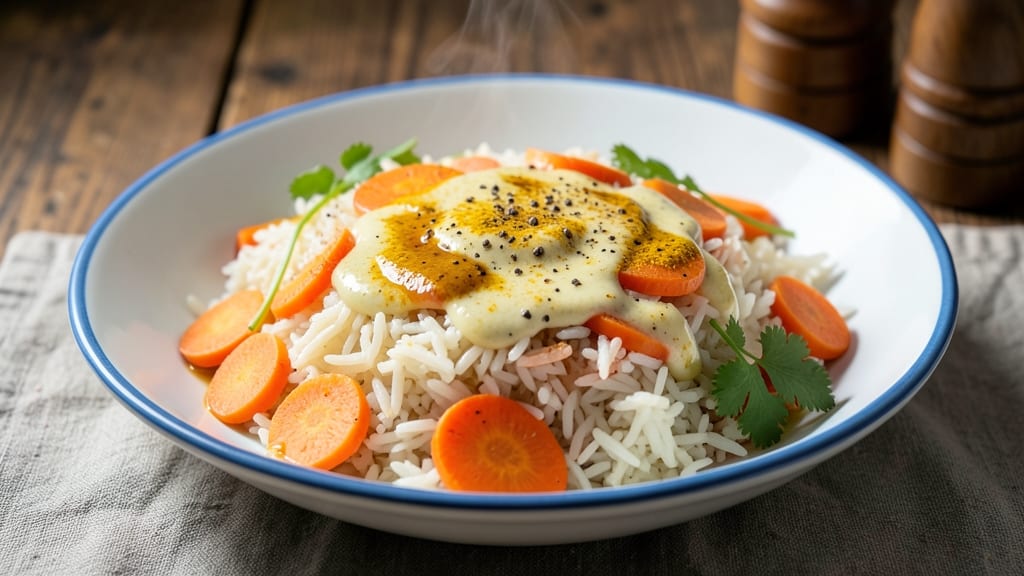
This carrot rice recipe in Tamil brings the soul of South Indian cuisine to your plate with its fragrant turmeric and coconut essence. 🌟 The secret lies in perfectly balanced spices and the gentle sweetness of carrots that blend seamlessly with fluffy rice, creating a dish that's both comforting and nutritious.
Traditional Tamil techniques like tempering and pressure cooking ensure every bite is packed with authentic flavor.
What makes this recipe special is the harmony of textures—soft, fluffy rice paired with tender carrots that soak up the aromatic spices. The tempering with mustard seeds, curry leaves, and coconut adds that signature Tamil touch, making this dish a staple for any meal.
Ready in about 45 minutes, it's perfect for weeknight dinners or festive gatherings.
Ingredients for carrot rice recipe in tamil
Authentic Tamil flavors meet wholesome nutrition in this fragrant carrot rice fusion.
| Ingredient | Amount | Notes |
|---|---|---|
| Long-Grain White Rice 🍚 | 1 cup | Uncooked, rinsed thoroughly |
| Medium Carrots 🥕 | 1 ½ lb | Peeled, cut into even rounds |
| Fresh Coconut Milk 🥥 | ½ cup | Full-fat for richness |
| Ghee or Vegetable Oil 🫒 | 3 tbsp | For tempering and cooking |
| Yellow Turmeric Powder 🌿 | 1 tsp | Freshly ground preferred |
| Ground Black Pepper 🌶️ | ½ tsp | Freshly cracked for aroma |
| Mustard Seeds 🌱 | 1 tsp | Whole, light brown preferred |
| Curry Leaves 🌿 | ¼ cup | Fresh, torn from sprigs |
| Dried Fenugreek Leaves 🌿 | ½ tsp | Methi, crushed lightly |
| Asafoetida Powder 🌶️ | ⅛ tsp | Hing, for authentic flavor |
| Salt 🧂 | 1 tsp | Diamond Crystal preferred |
| Fresh Coriander Leaves 🌿 | ¼ cup | Chopped, for garnish |
| Water 💧 | 2 ½ cups | Filtered for best results |
The curry leaves and mustard seeds are non-negotiable for that signature Tamil aroma—grab them fresh at an Indian grocery store like Bharat Bazaar or Patel Brothers. For turmeric, look for vibrant yellow powder (not orange) at specialty stores, as it retains its potency longer. The carrots should be medium-sized and firm; organic varieties from Whole Foods tend to have better flavor. Fresh coconut milk adds a luxurious texture—avoid canned versions with additives. If you can't find fresh, opt for full-fat canned coconut milk from Thai Kitchen brand, which mimics the authentic taste closely.
No curry leaves? Dried curry powder at half the amount works in a pinch, though it lacks the true depth. Substitute fenugreek with dried methi leaves (soaked and crushed), but fresh is ideal. For a nutty undertone, swap asafoetida with garlic powder (1/4 tsp)—though it won’t replicate the umami kick. The carrots can be steamed ahead to save time, but raw rounds blend better into the rice. If your rice turns out too dry, add 2 tbsp water while cooking—traditional Tamil rice is moist but not mushy.
Store cooked carrot rice in an airtight glass container for up to 4 days in the fridge—it reheats beautifully with a splash of water. For longer storage, freeze portions for 3 months; thaw overnight in the fridge. The tempering spices lose potency after 2 weeks, so reheat the dish with a fresh tempering of mustard seeds and curry leaves for that restaurant-quality finish. Garnish with fresh coriander just before serving to preserve its vibrant color.
Why You'll Love This Recipe
- One-Pot Magic: I swear by this recipe when I’m too tired to wash pots—just sauté the rice with ghee, toss in the julienned carrots, add coconut milk and turmeric, and let it simmer. The rice absorbs all that creamy, spiced goodness without a single extra dish.
- Golden Creamy Rich: That first bite of tender rice with caramelized carrots swimming in coconut milk? It’s like a hug for your taste buds. The turmeric gives it that sunny glow and warmth, while the ghee adds a toasty depth that makes it taste like you spent hours cooking.
- Lunchbox Hero: Between us, this is my go-to for packed lunches—stays warm for hours, doesn’t sog down, and my kids actually eat it. (Yes, even on a Tuesday.) Plus, it’s the perfect side for curries, grilled fish, or just as-is with a sprinkle of black pepper.
- Pantry Staple Savings: I buy rice in bulk, carrots last forever, and coconut milk is cheaper than takeout. A single batch stretches into three lunches, and the leftovers? Even better reheated—just add a splash of water and a pat of ghee to keep it luscious. Budget-friendly doesn’t get much better than this.
Step-by-step instructions for carrot rice with Tamil flavors
Here's how to create restaurant-quality carrot rice with aromatic spices and perfect texture.
🍳 Step 1: Temper the Spices in Ghee
Heat 2 tablespoons of the ghee or vegetable oil in a heavy-bottomed pot over medium heat. Add the 1 tsp mustard seeds and let them sizzle until they pop and turn golden—this should take about 30 seconds. Here's the thing: don't walk away. Mustard seeds burn quickly if unattended.
Next, add the 0.25 cup curry leaves and 0.5 tsp dried fenugreek leaves. Stir gently for 10 seconds until the curry leaves darken slightly and release their fragrant aroma. Immediately add the 0.125 tsp asafoetida powder—this is the secret ingredient that gives authentic Tamil flavor. The mixture should smell intensely aromatic at this point.
👨🍳 Step 2: Cook the Carrots and Season the Rice
Add the 1.5 lb peeled, even carrot rounds to the pot and stir to coat in the spiced oil. Cook for 5 minutes until the carrots soften slightly but remain vibrant. You'll see their edges turn translucent—that's your signal they're ready for the next step.
Increase heat to medium-high and add the 1 cup long-grain white rice, stirring to separate the grains and coat them evenly. Sprinkle the 1 tsp yellow turmeric powder, 0.5 tsp ground black pepper, and 1 tsp salt over the rice. Stir vigorously for 30 seconds to distribute the spices evenly. The rice should look uniformly coated with the golden turmeric.
🍳 Step 3: Add Water and Simmer
Pour in the 2.5 cups water and bring to a gentle boil. Once boiling, reduce heat to low and cover the pot with a tight-fitting lid. Let it simmer undisturbed for 15 minutes. Real talk: this is where patience pays off. Don't peek or stir—the rice needs to steam evenly.
After 15 minutes, check the rice. You'll want it to be 80% cooked—the grains should still have a slight bite but be mostly tender. If there's still liquid at the bottom, cover and cook for another 2-3 minutes. The rice should be tender but not mushy, with the carrots softened but still holding their shape.
🥘 Step 4: Finish with Coconut Milk and Rest
Remove the pot from heat and stir in the 0.5 cup fresh coconut milk. The coconut will immediately melt into the rice, creating a creamy texture. Let the mixture sit covered for 5 minutes—this resting period allows the flavors to meld and the rice to absorb any remaining liquid.
I know it seems weird, but trust me—this step prevents the rice from being dry. After resting, fluff the rice gently with a fork, being careful not to mash the carrots. The final texture should be light and fluffy with tender carrots interspersed throughout. Garnish with the 0.25 cup chopped fresh coriander leaves just before serving.
Pro Tips For Making Carrot Rice Recipe In Tamil
- Soak Rice 20 Minutes: I learned this the hard way—skipping the soak makes your rice turn mushy when you add coconut milk later. Just rinse the rice once, then let it sit in water for 20 minutes before cooking. The starches soften just enough to handle the extra moisture without falling apart.
- Slice Carrots Thin: Medium carrots? Cut them into ¼-inch thick rounds—thinner than you’d think. Thick slices stay crunchy while the rice cooks, and you’ll end up with even carrot distribution in every bite. (Yes, even if it looks like a lot of chopping.)
- Simmer Coconut Milk Low: After adding coconut milk, drop the heat to a bare simmer. I used to rush this and end up with split rice or a curdled coconut flavor. Low heat keeps the milk creamy and the rice fluffy—no need to babysit the pot.
- Bloom Turmeric in Ghee: Heat the ghee until it shimmers, then add the turmeric powder and stir for 10 seconds. This step makes a real difference—the spice releases its aroma and colors the rice evenly. Skip it, and you’ll just be left with bland yellow flecks.
Common mistakes when making this recipe
Skipping the Tempering
This is the biggest mistake I see—skipping the tempering step with mustard seeds, curry leaves, and asafoetida. These spices are the soul of Tamil cooking! 🌟 Without them, your dish loses that signature aroma and depth.
Always heat the oil until smoking slightly before adding mustard seeds—they should pop audibly. If you rush this step, the flavors will be flat and underwhelming.
Overcooking the Carrots
Carrots should be tender but still hold their shape—not mushy. I’ve seen people cook them for too long, turning them into a puree. Cook them for only 5 minutes before adding rice, and check their texture frequently during simmering.
The edges should soften while the centers stay slightly firm. Overcooked carrots make the dish look unappetizing and change the texture.
Using Low-Quality Rice
Not all rice is created equal! Long-grain white rice is essential here—it absorbs flavors beautifully and stays separate. Basmati or jasmine rice won’t give the same fluffy texture. Rinse the rice thoroughly before cooking to remove excess starch, which can make the dish gummy.
I always use Diamond Crystal salt for seasoning—it dissolves perfectly and enhances flavor.
Ignoring the Resting Time
After cooking, letting the rice rest for 5 minutes is crucial—it allows the grains to absorb any remaining liquid and develop a better texture. Skipping this step often results in dry, separate grains.
The coconut milk also needs time to meld into the rice, creating that creamy, cohesive finish. Trust the process—patience here makes all the difference!
Incorrect Water Ratio
The 2.5 cups water to 1 cup rice ratio is precise for this recipe. Too much water will turn the rice mushy, while too little leaves it dry. If your rice is still firm after simmering, add 2 tbsp water and cook for another 2 minutes.
Always use a heavy-bottomed pot to distribute heat evenly—this prevents burning and ensures consistent cooking.
Adding Coconut Milk Too Early
Stirring in the coconut milk before the rice is fully cooked can make it gummy. Wait until the rice is 80% done (grains still slightly firm) before adding it. The coconut milk should be incorporated in the final 5 minutes of cooking or during the resting phase.
This ensures the rice absorbs the creaminess without becoming soggy or losing its fluffy texture.
Nutrition facts
Frequently asked questions
Can I make this carrot rice without coconut milk?
The coconut milk adds a rich, creamy texture that's traditional in Tamil cuisine, but you can substitute it with 0.5 cup full-fat Greek yogurt or 0.25 cup heavy cream for a similar effect. For a lighter option, use 0.5 cup water plus 1 tbsp coconut cream powder—though the flavor won't be identical. If avoiding dairy entirely, add an extra 0.25 cup water during cooking to compensate for the missing creaminess.
How do I adjust this recipe for a pressure cooker?
For a 3-quart pressure cooker, use 0.5 cup rice and 1 cup water (1:2 ratio). Cook the carrots separately for 3 minutes on high pressure, then add rice, turmeric, and salt. Seal and cook on low pressure for 4 minutes. Release pressure naturally, then stir in coconut milk. The cooking time is half of stovetop methods, but the flavor remains authentic!
What's the best way to store leftover carrot rice?
Transfer to an airtight glass container and refrigerate for up to 4 days. For reheating, sprinkle 1 tsp water per cup of rice, cover, and microwave for 2 minutes on medium. For longer storage, freeze in single portions for 3 months. When reheating frozen portions, add 2 tbsp water per cup and microwave for 3 minutes—this prevents dryness.
Can I use baby carrots instead of regular carrots?
Baby carrots work, but their smaller size means they'll cook faster and may turn mushy. For best results, halve them lengthwise before cooking. If using whole baby carrots, reduce cooking time to 3 minutes (instead of 5) when sautéing with spices. The texture will be slightly different but still delicious—just avoid overcooking!
Is this carrot rice gluten-free?
Yes, this recipe is naturally gluten-free as long as you use certified gluten-free spices and coconut milk. Always check labels on packaged ingredients like turmeric powder and asafoetida. The traditional Tamil preparation doesn't include gluten, making this a safe option for gluten-sensitive diets. Just avoid cross-contamination if preparing alongside other dishes with gluten.