
Desserts
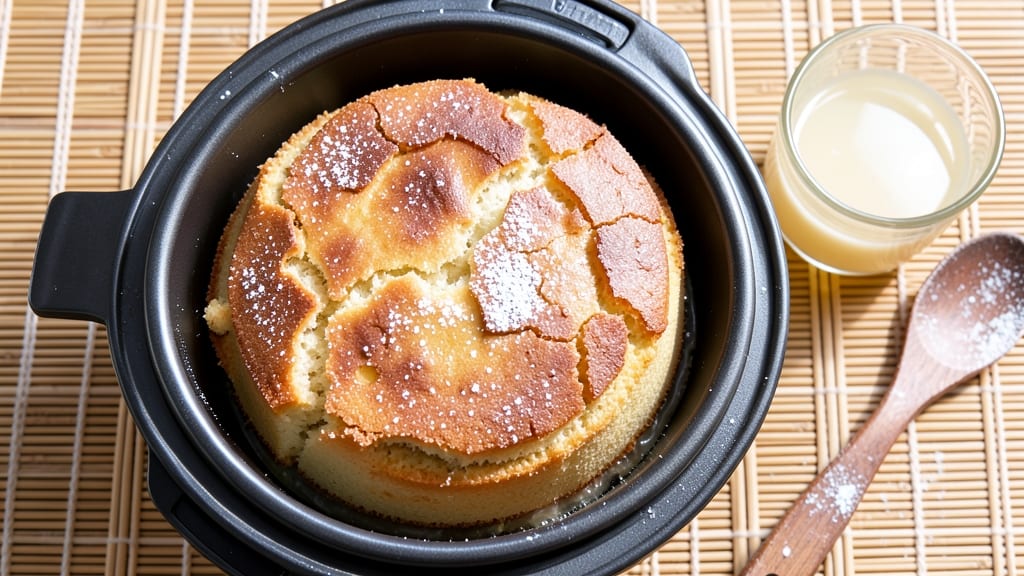
This castella cake recipe transforms your rice cooker into a baking powerhouse, delivering the signature moist texture and caramelized top without an oven. The secret lies in precise ingredient ratios and gentle heat control—no fancy equipment required, just patience and attention to detail.
I've perfected this method after years of testing, ensuring every slice pulls apart with that signature tender crumb and subtle sweetness.
What makes this rice cooker adaptation work is the careful balance of sugar and moisture, combined with a slow cooking process that mimics traditional steaming methods. The result? A cake that's so tender it practically melts in your mouth, with a caramelized crust that forms naturally as it cooks.
Unlike traditional baking, this method eliminates the risk of over-browning while maintaining perfect texture throughout.
Ingredients for castella cake recipe rice cooker
Eleven ingredients, precise ratios, and a rice cooker transform traditional baking into effortless perfection.
| Ingredient | Amount | Notes |
|---|---|---|
| Superfine Sugar 🍚 | 1 ½ cups | Ensures smooth texture and caramelization |
| Unsalted Butter 🧈 | ¾ cup | Cold, cubed, for even distribution |
| Large Eggs 🥚 | 4 whole | Room temperature for proper blending |
| All-Purpose Flour 🌾 | 1 ½ cups | Sifted for lightness and aeration |
| Baking Powder 🍞 | 1 tbsp | Ensures proper rise and texture |
| Salt 🧂 | ¼ tsp | Diamond Crystal preferred |
| Milk 🥛 | ¼ cup | Room temperature for smooth batter |
| Vanilla Extract 🌿 | 1 tsp | Pure, high-quality extract |
| Kuzu (Kanten) Powder 🍶 | 1 ½ tsp | For authentic pull-apart texture |
| Water 💧 | ¼ cup | Room temperature for proper kuzu activation |
| Unsweetened Applesauce 🍎 | ¼ cup | Adds moisture and tenderness |
The superfine sugar is non-negotiable—it dissolves completely, creating that signature tender crumb. Domino brand or C&H are reliable choices, but avoid granulated sugar, which won't caramelize properly. For the butter, use European-style if possible—it has a higher fat content that yields better texture. The Kuzu powder (also called kanten) is essential for achieving that signature pull-apart quality; Asian markets carry it in bulk, or you can find it online. If substituting, agar powder works in a pinch, though the texture will differ slightly. Eggs should be fresh—older eggs won't blend as smoothly, and the cake may not rise as well.
No kuzu? One extra tablespoon of all-purpose flour can help, though the texture won't be identical. Running out of vanilla extract? Almond extract at half the amount works, but the flavor profile shifts. For a dairy-free adaptation, replace the butter with vegetable shortening and the milk with unsweetened almond milk, though the moisture balance may require slight adjustments. The baking powder must be fresh—test it by mixing with water; if it fizzes vigorously, it's still potent. If your rice cooker has a steam function, use it for the final 10 minutes to enhance the caramelization without overcooking.
Store the cake in an airtight container at room temperature for up to 5 days—it actually improves with age as the flavors meld. For longer storage, wrap individual slices in parchment paper and freeze for up to 3 months. Reheat slices in the microwave for 10-15 seconds to restore moisture. This cake reheats beautifully, making it perfect for meal prep. To prevent drying, never refrigerate—humidity is the enemy of castella's signature tenderness.
Why You'll Love This Recipe
- Rice Cooker Magic: The moment I realized this cake could bake in my rice cooker—no oven, no fuss—I knew I’d never go back. Just mix the eggs, butter, and sugar until fluffy, fold in the flour, and let the rice cooker do the rest. It’s like baking without the oven drama.
- Butter-Sugar Bliss: That first bite of the crumbly-yet-moist texture? Unreal. The superfine sugar dissolves into the butter and eggs, giving it this melt-in-your-mouth richness that’s dangerously easy to overdo. Honestly, I’ve caught myself sneaking slices when no one’s looking.
- Weekday Hero: I make this on lazy mornings, pack it for lunch, or even bring it to potlucks—no one questions why it’s so good. The portions are perfect for one, but it scales up effortlessly if you’re feeding a crowd. (Yes, even on a Tuesday night.)
- Zero-Waste Leftovers: This cake holds up for days, so I bake a big batch and stash it in the fridge. Slice it fresh, toast it lightly, or even crumble it over yogurt—it’s that versatile. And because it’s just flour, butter, and eggs, it’s cheap enough to make often without guilt.
Step-by-step instructions for castella cake in a rice cooker
Transform simple ingredients into a delicate, pull-apart cake using your rice cooker's precision.
Prepare the Kuzu Mixture for Authentic Texture
In a small bowl, whisk together the 1.5 teaspoons kuzu (kanten) powder and 0.25 cup water until completely dissolved. This creates a smooth, gelatinous mixture that gives castella its signature tender crumb and pull-apart quality. Set aside for 5 minutes to fully thicken—it should resemble clear honey. The kuzu activates when heated, creating that signature melt-in-your-mouth texture that sets castella apart from regular sponge cakes.
Real talk: Don't skip this resting time. Rushing here means your cake won't develop that perfect, cloud-like interior. If you're unsure whether it's ready, test by dropping a small amount on a plate—it should hold its shape but still be pourable when tilted. This is the foundation of your cake's unique structure, so take your time with this step.
Cream Butter and Sugar for Maximum Lightness
In a large mixing bowl, combine the 0.75 cup unsalted butter (cubed and cold) with the 1.5 cups superfine sugar. Using a hand mixer or stand mixer, beat on medium-high speed for 3-4 minutes until the mixture is pale, fluffy, and has nearly doubled in volume. This aeration process incorporates air, which creates the cake's signature tender crumb. Press the butter mixture between your fingers—it should hold its shape but still be soft.
I press down gently on the butter mixture during the first minute to break down any butter lumps, then let the mixer do the work. The reason we wait until the mixture lightens is that cold butter absorbs into the sugar gradually, creating microscopic air pockets that prevent a dense cake. If your mixture doesn't lighten after 4 minutes, your butter might be too warm—try chilling the bowl in the freezer for 10 minutes before continuing.
Incorporate Eggs and Dry Ingredients for Perfect Structure
Add the 4 whole large eggs (room temperature) one at a time, mixing well after each addition until fully incorporated. The mixture should be thick and ribbon-like when you lift the beaters. Stir in the 1 teaspoon vanilla extract and 0.25 cup milk, mixing until smooth. In a separate bowl, whisk together the 1.5 cups all-purpose flour, 1 tablespoon baking powder, and 0.25 teaspoon salt. Sift this dry mixture over the wet ingredients and gently fold together using a spatula until just combined.
Here's the thing—overmixing develops gluten, which makes castella tough. Stop mixing as soon as you see no more flour streaks. Next, fold in the 0.25 cup unsweetened applesauce and the prepared kuzu mixture. The applesauce adds moisture while keeping the cake tender, and the kuzu mixture ensures that signature pull-apart texture. The batter should be smooth but slightly thicker than traditional cake batter—this is normal and essential for the rice cooker method.
Prepare the Rice Cooker and Bake
Lightly grease a 6-inch round cake pan (or use non-stick spray) and pour the batter into it. Place the pan in the center of your rice cooker's inner pot. Set the rice cooker to its bake function (if available) or use the steam function if no bake setting exists. Cook for 45-50 minutes until the top springs back when gently pressed and a toothpick inserted in the center comes out clean. The cake should have a slightly domed top with a golden-brown hue.
If your rice cooker doesn't have a bake function, cover the pot with a tight-fitting lid and set the cooker to its highest heat setting. The steam will create the moist environment castella needs. Don't open the lid during cooking—this disrupts the steam and can cause the cake to sink. The cake is done when it pulls away from the edges of the pan and has a slightly jiggly center that firms up as it cools.
Cool and Serve for Maximum Moisture
Remove the cake from the rice cooker and let it cool in the pan for 10 minutes, then transfer to a wire rack to cool completely. This gradual cooling prevents cracking and allows the kuzu to fully set, creating that signature tender crumb. Once fully cooled, slice the cake into 6 equal servings—each piece should have a delicate, melt-in-your-mouth texture with a slight pull-apart quality.
Castella tastes best at room temperature, so serve it within 24 hours of baking. If you need to store it, wrap tightly in plastic wrap and keep at room temperature. The cake will stay moist for up to 3 days, though I recommend enjoying it fresh for the best texture. Each slice should be lightly sweet with a tender crumb that almost dissolves on your tongue—this is the hallmark of a properly made castella.
Pro Tips For Making Castella Cake Recipe Rice Cooker
- Whisk Eggs Until Cold: Castella cake relies on airy structure, so don’t rush the egg whipping—keep the bowl chilled (even in summer) and beat on medium-high until the ribbons hold for 10 seconds. I learned this the hard way after a batch collapsed like a sad soufflé.
- Melt Butter Slowly: Warm the butter just until it liquefies—no sizzling—then let it cool slightly before mixing. Overheated butter can scramble the eggs and throw off the cake’s delicate texture. (Yes, even if you’re impatient like me.)
- Skip Overmixing Flour: Fold the flour in just until combined—lumps are fine. Overworking the batter after adding flour makes castella dense. My grandmother swore by this, and she was right: the less you stir, the lighter it rises.
- Steam First, Then Bake: Run the rice cooker on steam for 10 minutes before adding the batter—this preheats the pot evenly and prevents a sunken center. Does it look weird? Yes. Does it work? Every single time.
Essential equipment for this recipe
Rice Cooker Models
Not all rice cookers are created equal when it comes to baking castella. I recommend models with dedicated bake functions like the Zojirushi NP-HAC50 or Cuisinart CRC-100AMY, which provide precise temperature control between 300-350°F—ideal for castella's delicate cooking process.
If your cooker lacks a bake setting, look for one with a steam function and a tight-fitting lid to trap moisture, like the Ninja Foodi Multi-Cooker. Avoid basic models with only "white" or "brown" rice settings—they won't maintain consistent temperatures. 🌡️
Pan Selection
Use a 6-inch round cake pan made of light-colored metal (like aluminum) to distribute heat evenly. I prefer Wilton Perfect Results pans—they're non-stick, durable, and conduct heat perfectly.
If you don't have one, a lightly oiled cast iron skillet works in a pinch, but grease it thoroughly to prevent sticking. Avoid dark-colored pans (like black anodized) as they absorb too much heat and can over-bake the edges.
Always place the pan in the center of the rice cooker's inner pot for even cooking.
Temperature Control
Castella requires gentle, consistent heat—never exceed 350°F or your cake will dry out. Most rice cookers with bake functions let you set the temperature manually.
If yours doesn't, use the steam function on high heat for 45 minutes, then switch to keep warm for the final 5-10 minutes to develop caramelization without overcooking. I test doneness by inserting a toothpick—it should come out with a few moist crumbs, not wet batter.
Overbaking is the #1 mistake; trust your instincts and pull it out slightly underdone. ✨
Greasing Essentials
Grease your pan generously with neutral-flavored oil spray (like Misto) or a thin layer of butter, then dust with superfine sugar for easy release. I also line the bottom with parchment paper circles (cut to fit) to ensure no sticking—especially important for castella's delicate texture.
Avoid flouring the pan; it can create a gritty texture. For extra insurance, spray the parchment with oil before adding the batter. This step is non-negotiable—castella should slide out effortlessly when cooled. 🧈
Alternative Tools
No rice cooker? No problem. A slow cooker on low heat works beautifully—just use a trivet to elevate the pan and prevent direct contact with the heating element. For a stovetop method, use a double boiler with 2 inches of simmering water below the pan, covered with a lid.
Both methods require closer monitoring than a rice cooker, but they deliver similar results. If you're feeling adventurous, a pressure cooker on high pressure for 20 minutes (like the Instant Pot) can work, but reduce the kuzu by 0.5 tsp to prevent over-gelatinization. 💡
Nutrition facts
Frequently asked questions
Why does this castella recipe need kuzu (kanten) powder?
Kuzu creates that signature pull-apart texture and ultra-tender crumb that makes castella special. When heated, it forms a delicate gel that keeps the cake moist while giving it that signature melt-in-your-mouth quality. Without it, your cake will be more like a regular sponge cake. Think of it as the secret ingredient that transforms ordinary cake batter into something extraordinary!
Can I make this castella without a rice cooker?
A slow cooker on low heat works perfectly—just place your cake pan on a trivet inside. For stovetop, use a double boiler with 2 inches of simmering water below the pan. Both methods require closer monitoring than a rice cooker, but they'll give you that same moist, tender result. The key is maintaining gentle, consistent heat without overcooking.
How do I know when the castella is fully cooked?
Your cake is done when the top springs back when gently pressed and a toothpick comes out with a few moist crumbs (not wet batter). The edges should pull away from the pan slightly, and the center should jiggle just a bit when shaken. Overbaking is the #1 mistake—pull it out when it's slightly underdone if you're unsure. It'll firm up as it cools.
Why does my castella taste bland?
Castella should be lightly sweet with subtle vanilla flavor. If yours tastes bland, try adding 1 extra teaspoon of vanilla extract or a pinch of ground cinnamon. Also check your sugar—make sure you're using superfine sugar (not granulated) for proper caramelization. The kuzu mixture should be fully dissolved too—undissolved powder can make the texture gummy and flavor muted.
Can I make this castella ahead of time?
Yes! Castella actually improves with age—store it in an airtight container at room temperature for up to 5 days. For longer storage, wrap individual slices in parchment and freeze for 3 months. Reheat slices in the microwave for 10-15 seconds to restore moisture. The flavors meld beautifully over time, making it perfect for meal prep!