
Side Dishes
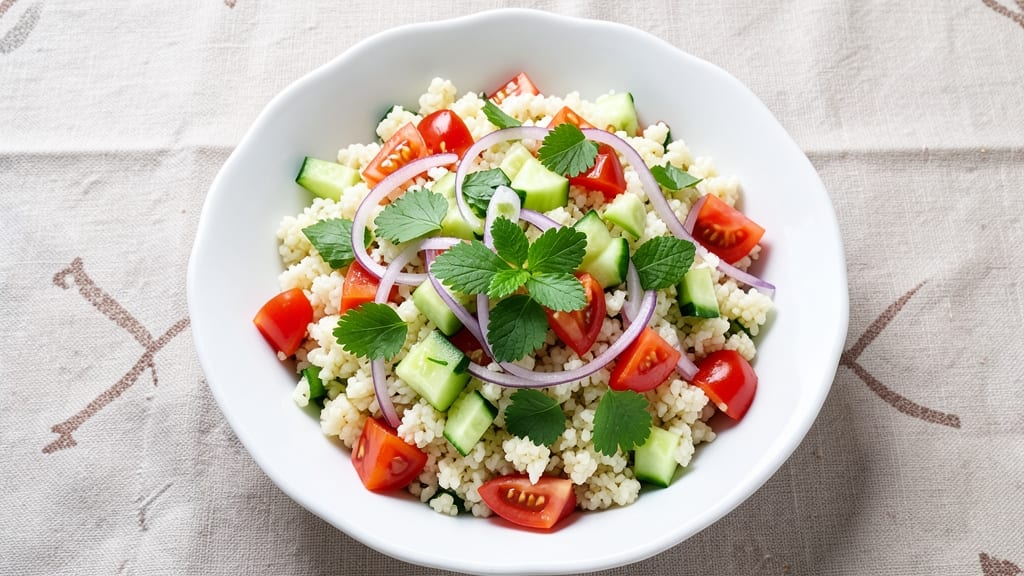
This cauliflower rice tabbouleh recipe transforms a classic Middle Eastern dish into a low-carb, herb-packed side that’s as vibrant as it is nutritious. The secret lies in perfectly rinsing the cauliflower rice to remove bitterness, then tossing it with finely chopped parsley, mint, tomatoes, and a bright lemon-olive oil dressing.
It’s the ideal lighter alternative to traditional bulgur tabbouleh, with all the fresh, zesty flavors intact.
What sets this dish apart is its versatility—it’s ready in just 20 minutes, packed with fresh herbs and vegetables, and easily adaptable for vegan diets by omitting yogurt or using a plant-based alternative.
The texture is bright and refreshing, with each bite delivering a perfect balance of tangy, herby, and slightly sweet notes. Serve it alongside grilled meats, fish, or as a standalone salad for a meal that’s both satisfying and light.
Ingredients for cauliflower rice tabbouleh
Fresh herbs, vibrant vegetables, and a bright lemon dressing make this low-carb tabbouleh a standout side.
| Ingredient | Amount | Notes |
|---|---|---|
| Fresh Cauliflower Rice 🥬 | 4 cups | Rinsed thoroughly to remove bitterness |
| Fresh Flat-Leaf Parsley 🌿 | 1 cup | Finely chopped, stems removed |
| Fresh Mint Leaves 🌿 | ½ cup | Finely chopped, preferred fresh |
| English Cucumber 🥒 | 1 medium | Seeded and finely diced |
| Roma Tomatoes 🍅 | 2 medium | Diced into small pieces |
| Red Onion 🧅 | ½ small | Finely diced, preferred red |
| Extra-Virgin Olive Oil 🫒 | ⅓ cup | High-quality, fruity variety |
| Fresh Lemon Juice 🍋 | ¼ cup | Freshly squeezed, strained |
| Plain Greek Yogurt 🥛 | ¼ cup | Full-fat preferred, optional |
| Diamond Crystal Kosher Salt 🧂 | ½ tsp | Adjust to taste |
| Freshly Ground Black Pepper 🌶️ | ¼ tsp | Freshly cracked for best flavor |
| Garlic Cloves 🧄 | 2 cloves | Minced for dressing |
The cauliflower rice is the foundation—look for fresh, organic heads at stores like Whole Foods or Trader Joe's for the best texture. Rinse it thoroughly in a colander under cold water to remove any bitterness, then pat dry completely. Fresh herbs are non-negotiable here; parsley and mint should be bright green with no wilting. For the cucumber and tomatoes, opt for vine-ripened varieties—they're sweeter and more flavorful. If you can't find Roma tomatoes, heirloom varieties work beautifully too.
No Greek yogurt? Substitute vegan yogurt or leave it out entirely—this dish still shines without it. For a tangier dressing, add an extra tablespoon of lemon juice. The olive oil should be extra-virgin with a fruity, peppery finish—California Olive Ranch or Colavita are excellent choices. If you're short on time, pre-chopped herbs from the store work in a pinch, but fresh is always superior. For extra crunch, toss in toasted pine nuts or sunflower seeds at the end.
This tabbouleh keeps well in the fridge for 3-4 days, though the texture softens over time. Store it in an airtight container with a paper towel pressed against the herbs to absorb excess moisture. For a make-ahead option, prepare the dressing and chop all vegetables separately, then combine just before serving. The flavors actually improve after sitting for 30 minutes, allowing everything to meld together perfectly.
Why You'll Love This Recipe
- No Rice, No Problem: I swear by this when I forget rice—or when I just want to cut carbs. The cauliflower rice soaks up the lemon and olive oil like a dream, giving you that same tabbouleh texture without the bulk.
- Herb-Packed Punch: Between the parsley and mint, this dish tastes like a Mediterranean vacation. Honestly, the bright, zesty flavors make it way more exciting than your average salad—especially when you toss in those juicy Roma tomatoes.
- Meal Prep MVP: This keeps beautifully for days in the fridge, so I make a big batch on Sundays. The cucumbers stay crisp, the herbs stay fresh, and I’ve got a grab-and-go lunch ready for when I’m too tired to cook.
- Budget Brightener: Fresh herbs and veggies can feel pricey, but this recipe stretches them far. A single cucumber and handful of tomatoes go a long way, and the cauliflower rice is my go-to for stretching meals without breaking the bank.
Step-by-step instructions for cauliflower rice tabbouleh
This herb-forward dish delivers all the bright flavors of traditional tabbouleh with a low-carb twist.
Prepare the Vegetable Base
Begin by dicing the 1 medium English cucumber into small, uniform pieces—about ¼-inch cubes. Remove the seeds and discard them to prevent excess moisture. In a separate bowl, finely dice the 2 medium Roma tomatoes and 0.5 small red onion. The goal is to create a texture that mimics traditional tabbouleh while maintaining crispness.
Transfer all diced vegetables to a large mixing bowl. Add the 4 cups fresh cauliflower rice and gently toss with your hands or a wooden spoon. The cauliflower should be thoroughly rinsed beforehand to eliminate any bitterness, so it absorbs the dressing beautifully. Set this mixture aside while you prepare the herbs.
Chop and Combine Fresh Herbs
Finely chop the 1 cup fresh flat-leaf parsley and 0.5 cup fresh mint leaves, removing stems as you go. The herbs should be as finely minced as possible—almost like a paste—to ensure they distribute evenly throughout the dish. Add these to the vegetable mixture and toss gently to combine.
Here's the thing—fresh herbs make all the difference. If using dried herbs, you'd need about ⅓ cup, but fresh delivers that vibrant, bright flavor that's essential for authentic tabbouleh. The parsley provides a classic earthy note while the mint adds a refreshing, slightly sweet contrast.
Make the Dressing
In a small bowl, whisk together the 0.33 cup extra-virgin olive oil, 0.25 cup fresh lemon juice, 0.25 cup plain Greek yogurt, 2 minced garlic cloves, 0.5 teaspoon Diamond Crystal kosher salt, and 0.25 teaspoon freshly ground black pepper. The dressing should be smooth and well-emulsified—this ensures it coats every component evenly.
I like to taste the dressing before adding it to the salad. It should be tangy from the lemon, slightly creamy from the yogurt, and aromatic from the garlic. The olive oil should provide a luxurious finish. If the dressing seems too thick, add 1-2 tablespoons of water to achieve a pourable consistency.
Assemble and Marinate
Pour the dressing over the herb and vegetable mixture in the large bowl. Using your hands or a wooden spoon, gently fold everything together until the cauliflower rice and vegetables are fully coated. The goal is to distribute the dressing evenly without crushing the delicate herbs or vegetables.
Let the tabbouleh sit at room temperature for 10-15 minutes before serving. This resting period allows the flavors to meld and the cauliflower rice to absorb the dressing completely. The dish should be vibrant green with visible herbs and vegetables, not a muddy brown—this indicates proper preparation.
Serve Freshly
Transfer the tabbouleh to a serving platter or individual bowls. The dish should be served immediately to preserve its crisp texture and vibrant colors. Garnish with additional chopped herbs if desired, but I find the existing herbs provide enough visual appeal.
This cauliflower rice tabbouleh serves 4 as a light lunch or side dish. The bright flavors and refreshing texture make it perfect for warm weather or as a low-carb alternative to traditional tabbouleh. Enjoy it with grilled meats or as a standalone salad with warm pita bread on the side.
Pro Tips For Making Cauliflower Rice Tabbouleh
- SALT THE CAULIFLOWER RICE: Fresh cauliflower rice releases moisture like a sponge—toss it with ½ teaspoon salt and let it sit for 5 minutes before mixing with other ingredients. This drains excess water and keeps your tabbouleh from turning soggy later.
- CHOP CUCUMBER LIKE A PRO: Use a mandoline for even slices, but if you’re doing it by hand, cut the cucumber lengthwise into quarters first, then slice thinly against the grain. This prevents a slimy texture and makes the texture more like traditional tabbouleh.
- DON’T OVERMIX THE HERBS: Tear parsley and mint by hand instead of chopping finely—this keeps the dish bright and fresh-tasting. Over-chopping turns herbs into mush, and you’ll end up with a sad, muddy salad.
- LEAVE TOMATOES WHOLE: Skip the chopping for Roma tomatoes—just slice them into thick wedges or leave them in halves. This keeps the tabbouleh from breaking down too fast, and the texture stays crisp instead of turning to pulp.
Serving suggestions for leftovers
Plating Like a Pro
Serve your cauliflower rice tabbouleh in wide, shallow bowls to showcase its vibrant colors—this creates visual appeal while keeping the texture intact. I like using ceramic or glassware to enhance the dish’s natural hues.
For a restaurant-style presentation, mound the tabbouleh slightly in the center and garnish with a sprig of fresh mint or a drizzle of extra-virgin olive oil just before serving. 🌿
Pairing with Proteins
This dish pairs beautifully with grilled chicken, lamb chops, or shrimp skewers—the herby brightness cuts through rich flavors. For a vegetarian spread, serve alongside hummus, falafel, and warm pita.
I often pair it with Mediterranean grilled vegetables like zucchini and bell peppers for a complete meal. The contrast of textures and temperatures makes every bite exciting.
Bread and Dipping
Keep a warm platter of crusty bread or pita wedges on the side for scooping up the dressing. I recommend olive oil-drizzled naan or garlic focaccia—the crispy crust soaks up the herby goodness perfectly.
For extra flair, serve with a small bowl of tahini sauce on the side for dipping. This adds another layer of flavor without overwhelming the dish. 🥖
Dessert Pairings
Balance the meal with a light, citrusy dessert like lemon sorbet or baklava to complement the bright herbs. For a refreshing finish, I sometimes serve chilled mint tea or sparkling pomegranate juice—the effervescence cleanses the palate beautifully. Avoid heavy desserts that might clash with the salad’s freshness.
Make-Ahead Serving
If prepping ahead, store the dressing and vegetables separately in airtight containers until ready to serve. Combine just before eating to keep the cauliflower rice crisp. For a party platter, arrange the tabbouleh in a large glass bowl surrounded by edible flowers or lemon slices for a stunning centerpiece.
This keeps the dish looking fresh while allowing guests to serve themselves. 💫
Nutrition facts
Frequently asked questions
Can I use pre-riced cauliflower for this recipe?
Yes, but fresh is always better! Pre-riced cauliflower works in a pinch, but it often contains more moisture and may not have the same texture. If using it, squeeze out excess water thoroughly with a clean kitchen towel before adding to the salad. For the freshest results, use a box grater or food processor to make your own cauliflower rice right before cooking.
How do I make this vegan?
Simply omit the Greek yogurt or substitute it with ¼ cup vegan yogurt or coconut yogurt. For extra creaminess, add 1 tablespoon tahini to the dressing. The dish will still be bright and flavorful without dairy. Just ensure your vegan yogurt has a similar tangy profile to maintain the authentic tabbouleh taste.
Can I prepare this ahead of time?
Store the dressing and chopped vegetables separately in airtight containers in the fridge for up to 2 days. Combine them just before serving to keep the cauliflower rice crisp. If making a day ahead, add the herbs last minute—they'll stay fresher longer. For best flavor, let it sit for 30 minutes before eating to allow the ingredients to meld.
Why does my tabbouleh look brown instead of green?
This happens when the herbs oxidize or when the cauliflower rice isn't fresh. To prevent it, keep everything chilled until ready to serve, and add lemon juice immediately after combining. Use the freshest herbs possible—wilted parsley or mint will turn brown quickly. Also, make sure your cauliflower rice is bright white before rinsing, not yellow or gray.
What's the best way to store leftovers?
Transfer leftovers to an airtight container with a paper towel pressed against the herbs to absorb moisture. Store in the fridge for up to 3 days. When reheating, add a splash of water or lemon juice to revive the texture. For longer storage, freeze the dressing separately and mix with fresh herbs when ready to eat.