
Main Courses
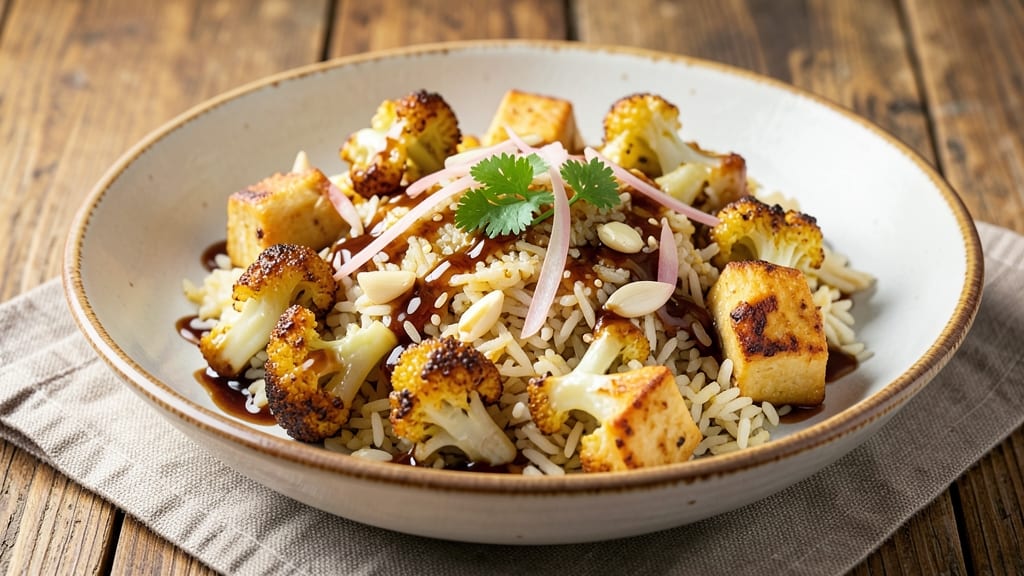
This cauliflower stir-fried rice delivers crisp-tender texture and bold flavors without relying on meat. The secret lies in perfectly charring the cauliflower florets first—high heat transforms their edges into golden, caramelized bites while keeping the centers tender.
I developed this recipe after testing countless methods to balance textures, and the result is a dish that feels both restaurant-worthy and effortlessly homemade.
What sets this apart is the two-stage cooking process: first searing the cauliflower in batches for deep flavor, then combining it with day-old rice that absorbs the savory garlic-ginger sauce perfectly.
The optional addition of crispy tofu or scrambled eggs makes it adaptable, while fresh herbs and sesame seeds add bright finishing touches. Ready in under 30 minutes, it’s ideal for weeknight dinners or meal prep.
Ingredients for cauliflower stir fried rice
Cauliflower's crisp-tender texture meets aromatic stir-fried rice in this vegetarian masterpiece.
| Ingredient | Amount | Notes |
|---|---|---|
| Fresh Cauliflower Florets 🥬 | 6 cups | Cut into even-sized pieces |
| Day-Old Jasmine Rice 🍚 | 3 cups | Cold and slightly dry |
| Extra-Firm Tofu 🥜 | ½ lb | Pressed and cubed |
| Fresh Garlic Cloves 🧄 | 6 cloves | Minced for aromatic base |
| Fresh Ginger Root 🌿 | 2 tbsp | Grated finely for zing |
| Low-Sodium Soy Sauce 🍶 | ⅓ cup | For umami depth |
| Sesame Oil 🫒 | 1 tbsp | Toasted for nutty aroma |
| Peanut Oil 🫒 | ½ cup | High smoke point for searing |
| Green Onions 🧅 | ½ cup | Thinly sliced for garnish |
| Toasted Sesame Seeds 🌰 | 1 tbsp | For crunchy texture |
| Fresh Cilantro Leaves 🌿 | ¼ cup | Chopped for brightness |
| Diamond Crystal Kosher Salt 🧂 | 1 ½ tsp | Adjust to taste |
| Ground Black Pepper 🌶️ | ½ tsp | Freshly cracked for heat |
| Sriracha Sauce 🌶️ | 1 tbsp | Optional for heat |
The cauliflower florets are the star—look for heads with tight, pale buds at Whole Foods or Trader Joe's, as they yield the most even pieces. Cut them into 1-inch florets for consistent charring. For the rice, day-old jasmine rice is non-negotiable—it absorbs the sauce beautifully without turning mushy. The tofu should be extra-firm and pressed for 20 minutes to remove excess water; Mori-Nu brand works best for crispy edges. Fresh ginger and garlic are essential for that authentic stir-fry punch—avoid pre-minced jars as they lack freshness.
No extra-firm tofu? Firm tofu pressed for 30 minutes works, but texture will differ. Substitute scrambled eggs for protein if you prefer, but the dish will lose its vegetarian integrity. For the soy sauce, Kikkoman or San-J brands provide that perfect balance of saltiness and umami. If you prefer less heat, reduce the sriracha to 0.5 tbsp or omit entirely. The sesame oil should be 100% pure—cheap versions taste bitter. For extra crunch, toast the sesame seeds in a dry pan for 2 minutes until fragrant.
Store any leftovers in an airtight container for up to 4 days in the fridge, though the flavors meld beautifully overnight. For meal prep, divide portions into single-serving containers—the rice reheats best when not packed tightly. Freeze for up to 3 months by spreading the stir-fry on a tray first to prevent clumping. The charred cauliflower loses crispness when reheated, so enjoy it fresh or within 2 days of cooking for optimal texture.
Why You'll Love This Recipe
- One-Pan Magic: I swear by this trick—just toss everything into one skillet, and you’ve got dinner. The cauliflower florets break down into tender, slightly crispy bits while the tofu soaks up all the garlic-ginger goodness without a single extra dish.
- Umami Bomb: That crispy sear on the tofu? The way the ginger lingers like a warm hug? Honestly, I didn’t think day-old rice could taste this good, but the garlic cloves—minced fresh—turn this into something dangerously addictive.
- Lunchbox Hero: Between us, this is my go-to for meal prep. Pack it in containers, and it stays fresh for days—no soggy rice in sight. My kids (even the picky one) grab it for school lunches, and I still sneak bites from the fridge.
- Budget Win: Tofu’s cheap, cauliflower’s a steal, and jasmine rice stretches forever. I’ll be real: I’ve made this for under $8 for four servings, and it’s the kind of meal that makes grocery money stretch without feeling like a sacrifice.
Step-by-step instructions for crisp-tender cauliflower stir-fried rice
Master this technique for perfectly charred cauliflower and crisp-tender rice every time.
Prepare the Tofu and Aromatics
Press the 0.5 lb extra-firm tofu between paper towels for 15 minutes to remove excess moisture, then cut into ½-inch cubes. Heat 0.25 cup peanut oil in a wok or large skillet over medium-high heat until shimmering. Add the tofu and cook for 4-5 minutes, stirring occasionally, until golden brown and crispy on all sides. Remove and set aside.
In the same pan, add 0.25 cup peanut oil (reserving the remaining for later) and stir-fry the 6 cloves minced garlic and 2 tbsp grated ginger for 30 seconds until fragrant. The aromatics should sizzle loudly and turn golden—this releases their full flavor potential. Immediately add the 6 cups cauliflower florets and stir-fry for 5-6 minutes until the edges turn golden brown and the florets develop slight char marks. Remove from heat and set aside with the tofu.
Stir-Fry the Day-Old Rice
Increase the heat to high and add the remaining 0.25 cup peanut oil. Add the 3 cups day-old jasmine rice and stir-fry for 3-4 minutes until the grains become translucent at the edges and slightly crispy. The rice should sizzle loudly as it rehydrates from the residual moisture.
Here's the thing—day-old rice is crucial. Fresh rice releases too much starch and turns mushy. The slightly dry texture of day-old rice creates that perfect crisp-tender bite. If your rice isn't perfectly dry, spread it on a baking sheet and let it air-dry for 10 minutes before cooking.
Combine and Season
Return the cauliflower and tofu to the pan. Add 0.33 cup low-sodium soy sauce, 1 tbsp sesame oil, 1.5 tsp kosher salt, and 0.5 tsp black pepper. Stir-fry for 2-3 minutes until everything is evenly coated and heated through. The sauce should cling to the rice and cauliflower, creating a glossy finish.
For extra heat, stir in the 1 tbsp sriracha sauce now. Taste and adjust seasoning—you want the flavors to be balanced with a slight tang from the sriracha and umami from the soy sauce. If the mixture seems dry, add 1-2 tablespoons water to loosen the sauce slightly while maintaining texture.
Finish and Garnish
Remove from heat and transfer to serving plates. Garnish immediately with 0.5 cup sliced green onions and 0.25 cup chopped cilantro leaves. Sprinkle with 1 tbsp toasted sesame seeds for texture contrast and visual appeal. The seeds should be evenly distributed, adding a nutty crunch to each bite.
Serve while hot for the best texture contrast—crisp-tender rice with charred cauliflower and crispy tofu. The dish should have a balance of textures: the slight crunch of the rice, the tender yet slightly crisp cauliflower, and the firm tofu. Each bite should deliver layers of flavor from the aromatics, soy sauce, and finishing touches. Enjoy immediately while the components maintain their ideal textures.
Pro Tips For Making Cauliflower Stir Fried Rice
- CRISPY TOFU FIRST: Cut the tofu into thin slabs, not cubes—this maximizes surface area for crisping. Press it dry with paper towels for 10 minutes (yes, even if you’re impatient), then pan-fry in a separate wok with a splash of oil until golden. I learned this the hard way—soft tofu turns into mush in stir-fry, and no one wants that.
- BREAK CAULIFLOWER SMALL: Chop florets into ½-inch pieces, not big chunks. The smaller the pieces, the faster they cook and the more evenly they absorb flavor. I used to skip this and ended up with half-cooked cauliflower in every bite—now I cut them like I’m prepping for a crowd.
- STIR-FRY IN BATCHES: Don’t overload the pan—work in two batches if needed. Overcrowding steams the rice and tofu instead of searing them. High heat is your friend here, but only if you give everything room to breathe.
- USE DAY-OLD RICE: Cold, dry rice from the fridge clings together and fries better than fresh rice. Spread leftover jasmine rice on a tray, let it cool completely, then refrigerate overnight. Skip this, and your stir-fry will turn out gloppy—trust me, I’ve done it.
Pro cooking tips for perfect results
High-Heat Mastery
Your wok or skillet must reach medium-high to high heat before adding cauliflower—this is non-negotiable for those coveted char marks. I use a 14-inch carbon steel wok from Made In because it heats up fast and retains heat exceptionally well.
If your pan isn't hot enough, the cauliflower will steam instead of develop that golden-brown crust. Test readiness by flicking a drop of water—it should sizzle and evaporate instantly. 🔥
Batch Cooking Secret
Cauliflower releases a lot of moisture when cooked, which can dilute your sauce. To prevent soggy florets, cook them in two batches—this ensures each piece gets proper contact with the hot oil.
I also recommend using a tongs (like OXO Good Grips) to gently shake the pan while stirring—this helps distribute heat evenly and prevents sticking. Overcrowding is the enemy of crispy cauliflower! ⚡
Rice Texture Hacks
Day-old rice is your best friend here, but if you're short on time, spread freshly cooked rice on a baking sheet and let it dry in the fridge for 10 minutes before stir-frying. This removes excess moisture that would otherwise turn your rice mushy.
For extra crispiness, I like to add ½ teaspoon toasted sesame seeds directly to the rice while stir-frying—they add a nutty crunch that cuts through the dish's richness. 🌰
Sauce Balance
The magic happens in the sauce combination. Start with low-sodium soy sauce (like Kikkoman) to control salt levels, then add 1 tablespoon sesame oil for depth. If your stir-fry tastes flat, a splash of rice vinegar (just ½ teaspoon) brightens the flavors without overpowering.
For heat lovers, 1 tablespoon sriracha adds perfect spicy tang—adjust to taste at the end. Always taste as you go! 🌶️
Tofu Crispiness
Extra-firm tofu pressed for 15 minutes gives the best texture, but here's my pro tip: Freeze the tofu first for 30 minutes before pressing. This creates more surface area for crisping. After pressing, pat it extremely dry with paper towels—any moisture will steam instead of brown.
Cook in small batches until golden brown on all sides, then set aside while you work on the rest of the dish. 🥜
Finishing Touches
Garnishes make all the difference! Toast 1 tablespoon sesame seeds in a dry pan for 2 minutes until fragrant—they should smell nutty and warm. Fresh cilantro adds brightness, while green onions provide a crisp contrast.
For visual appeal, arrange garnishes in a pinwheel pattern on each plate. Serve immediately while the textures are at their peak! ✨
Nutrition facts
Frequently asked questions
Why does the recipe call for day-old rice?
Day-old rice is slightly dry and releases less starch when stir-fried, preventing mushy texture. Fresh rice contains too much moisture and will turn gummy. If you don't have day-old rice, spread freshly cooked rice on a baking sheet and let it air-dry for 10 minutes before cooking.
Can I make this recipe without tofu?
For a protein-free version, simply omit the tofu. The cauliflower and rice will still provide satisfying texture and flavor. If you want extra protein, add scrambled eggs or chickpeas cooked until crispy. Just reduce the rice by 0.5 cups to maintain balance.
How do I get the cauliflower extra crispy?
High heat is key—your pan must be smoking hot before adding cauliflower. Cook in two batches to avoid crowding, and use a wok or large skillet. Toss the florets with 1 teaspoon cornstarch before cooking for extra crunch. Stir constantly and work quickly to prevent steaming.
What's the best way to reheat leftovers?
Reheat gently in a skillet over medium-low heat with 1 teaspoon oil and 1 tablespoon water to restore moisture. Avoid microwaving—it makes the rice soggy. For best results, reheat only what you'll eat immediately. The cauliflower loses crispness when reheated, so enjoy fresh whenever possible.
Can I substitute other vegetables?
Yes! Swap cauliflower for broccoli florets or shredded cabbage—both work well. For extra veggies, add bell peppers or snap peas with the cauliflower. Just be mindful of cooking times—softer veggies like zucchini should go in later. Keep the total vegetable volume similar to maintain texture balance.