
Main Courses
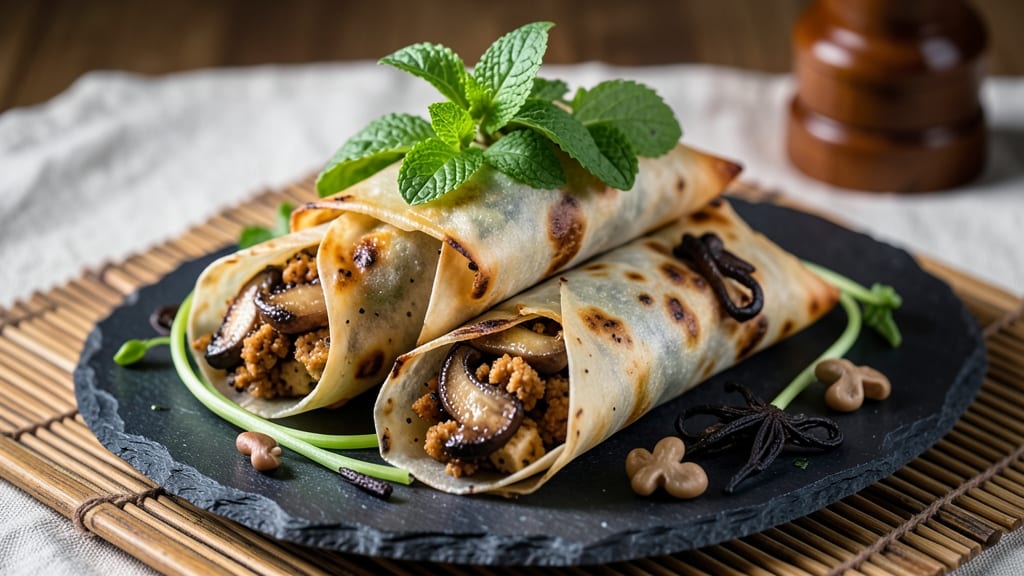
This cha giò recipe with rice paper delivers the perfect balance of crispy texture and fragrant flavors—without needing pork. The secret lies in the filling: tender tofu, mushrooms, and fresh herbs wrapped in delicate rice paper, then fried to golden perfection.
I’ve perfected this vegetarian version after testing countless combinations, ensuring every bite stays crispy while the filling remains juicy and aromatic.
What sets this recipe apart is the frying technique—maintaining the right oil temperature (350°F) guarantees a shatteringly crisp exterior without soggy centers. The dipping sauce, a tangy nuoc cham, cuts through the richness while enhancing the rolls’ natural flavors.
Whether you’re serving these as an appetizer or a main dish, they’ll disappear faster than you can say "chả giò."
Ingredients for cha gio recipe rice paper
Fourteen ingredients transform into crispy, fragrant vegetarian cha giò—no pork needed.
| Ingredient | Amount | Notes |
|---|---|---|
| Extra-Firm Tofu 🧇 | 14 oz | Pressed, crumbled into fine pieces |
| Shiitake Mushrooms 🍄 | 8 oz | Stems removed, finely chopped |
| Fresh Mint Leaves 🌿 | ½ cup | Finely chopped, stems removed |
| Green Onions 🧅 | 4 whole | White and green parts, thinly sliced |
| Wood Ear Mushrooms 🍄 | 2 oz | Rehydrated, finely chopped |
| Rice Paper Wrappers 🍱 | 12 pieces | 6-inch diameter, store-bought |
| All-Purpose Flour 🌾 | ½ cup | For dusting work surface |
| Vegetable Oil 🫒 | 3 cups | For frying, 350°F |
| Salt 🧂 | ½ tsp | Diamond Crystal preferred |
| Black Pepper 🌶️ | ¼ tsp | Freshly ground |
| Fish Sauce 🍶 | 1 tbsp | Vegan fish sauce substitute |
| Lime Juice 🍋 | 2 tbsp | Freshly squeezed |
| Sugar 🍚 | 1 tbsp | White granulated |
| Water 💧 | ½ cup | For dipping sauce |
The tofu and mushrooms form the heart of this filling. Extra-firm tofu holds its shape best after pressing—wrap it in a towel and place a heavy pan on top for 20 minutes. For mushrooms, shiitake and wood ear provide the umami depth traditionally found in pork-based recipes. Wood ear mushrooms must be rehydrated first—soak them in warm water for 15 minutes before chopping. Fresh mint is non-negotiable here; the grocery store variety often lacks the vibrant aroma of Asian markets' mint, but it works in a pinch. Look for bright green leaves with no yellowing—those are your best bet for maximum flavor.
No fish sauce? Soy sauce or vegan fish sauce works equally well, though the flavor profile will differ slightly. The dipping sauce components can be adjusted to taste—more lime for tang, extra sugar for sweetness, or a splash of rice vinegar for complexity. For the rice paper, 6-inch wrappers are standard, but 7-inch will work if that's what you find. Always soak them in warm water for 10-15 seconds until pliable—don't over-soak or they'll tear. The filling should be packed tightly but not overstuffed; one-quarter cup per roll is ideal for perfect proportions.
Freshly fried cha giò stays crispy for 2-3 hours at room temperature, but best served immediately. Store leftovers in an airtight container with parchment paper between layers to maintain crispness for up to 2 days. The dipping sauce keeps in the fridge for 5 days, though it's best used within 3 days for optimal flavor. For freezing, fry the rolls completely first, then freeze on a tray before transferring to a bag—this prevents sticking. Reheat in a 375°F oven for 5-7 minutes to restore crispiness.
Why You'll Love This Recipe
- No-Fuss Assembly: I swear by this recipe because the filling comes together while you’re still boiling water. Tofu crumbles, mushrooms soften, and wood ear mushrooms just need a quick soak—no fancy prep, no stress.
- Umami Bomb: That combo of shiitake and wood ear mushrooms? It’s like a flavor explosion in every bite. The mint and green onions brighten it up so much, you’ll forget it’s vegetarian.
- Lunchbox Hero: Between us, these are my go-to for packed lunches. They hold up perfectly—no soggy wrappers—and the crispy rice paper edge makes them feel special even when you’re eating at your desk.
- Budget Stretch: Honestly, this recipe feeds four for the cost of one takeout order. Tofu and dried mushrooms last forever, and fresh herbs add freshness without breaking the bank. Win-win.
Step-by-step instructions for cha gio with rice paper wrappers
Here's how to craft delicate, golden-brown Vietnamese spring rolls with a fragrant tofu-mushroom filling.
Prepare the Filling with Crispy Tofu and Aromatics
Begin by pressing the 14 oz extra-firm tofu for 15 minutes between two paper towels, weighted down. Crumble it into fine, pea-sized pieces—this texture mimics ground pork and absorbs flavors beautifully. In a non-stick skillet over medium-high heat, add the crumbled tofu with 0.25 tsp black pepper and cook for 8-10 minutes, stirring occasionally, until golden brown and crispy. Set aside.
In the same skillet, add 8 oz finely chopped shiitake mushrooms and 2 oz rehydrated wood ear mushrooms (chopped). Cook for 5 minutes until all moisture evaporates and the mushrooms soften. Add 4 whole green onions (thinly sliced) and 0.5 cup finely chopped fresh mint leaves, stirring for 1 minute to release their aromatic oils. Remove from heat and let cool slightly.
Combine Filling Ingredients for Maximum Flavor
In a large bowl, gently mix the crispy tofu with the mushroom mixture. Add 1 tbsp fish sauce, 1 tbsp sugar, and 0.5 tsp salt, tossing until evenly distributed. The filling should look vibrant green from the mint and hold together when pressed—this ensures the rolls maintain their shape during frying. For best results, let the mixture sit at room temperature for 10 minutes while you prepare the dipping sauce.
In a small bowl, whisk together 0.5 cup water, 2 tbsp lime juice, 1 tbsp fish sauce, and 1 tbsp sugar until the sugar dissolves completely. Taste and adjust seasoning—it should balance sweet, tangy, and umami notes. Cover and refrigerate until ready to serve.
Assemble the Cha Gio with Precision
Fill a shallow dish with 0.5 cup all-purpose flour and dust a clean work surface lightly. Dip one rice paper wrapper at a time into warm water for 5-8 seconds until pliable but still firm (over-soaking makes them tear). Lay it flat on the floured surface and place 1 heaping tablespoon of filling near the bottom edge, about 1 inch from the edge.
Fold the bottom edge over the filling, then fold in the sides like an envelope. Press gently to seal, then roll tightly toward you, tucking the ends as you go. The roll should be compact but not bursting—this ensures even frying. Work quickly to maintain wrapper pliability, and keep unused wrappers covered with a damp towel.
Fry to Crispy Perfection
Heat 3 cups vegetable oil in a deep skillet or Dutch oven to 350°F. Fry 2-3 rolls at a time (don't overcrowd) for 2-3 minutes per side until deep golden brown and crispy. The oil should sizzle gently but not smoke excessively—adjust heat as needed. Drain on a wire rack or paper towels, keeping them warm in a 200°F oven while frying the remaining rolls.
Here's the key: the rolls are done when they float in the oil and develop a hard, shiny crust. If they brown too quickly, reduce heat to 325°F for gentler cooking. Serve immediately with the prepared dipping sauce for maximum crispiness and flavor contrast.
Pro Tips For Making Cha Gio Recipe Rice Paper
- SOAK WOOD EARS LONGER: I learned this the hard way—those dried wood ear mushrooms need at least 30 minutes in warm water to soften properly. Skip this, and you’ll end up chewing on tough, rubbery bits that ruin the texture. Drain and rinse them twice afterward to cut down on the funky aftertaste.
- SALT TOFU BEFORE CUBING: Sprinkle a teaspoon of salt over the extra-firm tofu and let it sit for 10 minutes before pressing. This draws out moisture so it doesn’t turn to mush when fried. I used to skip this, and my cha gio filling always felt damp—now it holds together perfectly.
- STEAM SHIITAKES FIRST: Give those shiitake mushrooms a quick steam for 3-4 minutes before chopping. They’ll soften just enough to break down faster in the filling, but won’t turn to paste. Pro move: Toss them in a splash of fish sauce while warm—they’ll soak up the flavor like a sponge.
- WRAP TIGHT, SEAL FAST: Wet your fingers and press firmly along the edges of each rice paper wrapper as you roll. The goal is to trap as little air as possible—otherwise, your cha gio will unravel when frying. I used to rush this, and half my rolls would split open. Now I take 10 seconds extra per wrapper, and they stay intact.
Pro cooking tips for great cha gio recipe rice paper
Oil Temperature Control
Maintaining a consistent 350°F oil temperature is the single most critical factor for perfect cha giò. Invest in a deep-fry thermometer—I recommend the Thermoworks Thermapen—to monitor temperature precisely. Oil below 340°F yields greasy, soggy rolls, while oil above 360°F burns the exterior before the interior cooks.
Keep a small bowl of ice water nearby to test doneness: drop a cooked roll in—if it floats immediately, it's ready. 🌡️
Wrapper Handling Secrets
Rice paper wrappers are delicate but forgiving if handled correctly. Soak each wrapper for exactly 5-8 seconds in warm water—any longer and they'll tear. Work on a lightly floured surface (use ½ cup all-purpose flour) to prevent sticking.
Keep unused wrappers covered with a damp kitchen towel to maintain pliability. Pro tip: Use a small offset spatula to gently press seams while rolling for airtight seals.
Filling Packing Technique
The key to even cooking lies in packing the filling precisely. Use 1 heaping tablespoon per roll, placing it 1 inch from the bottom edge—this prevents overfilling that causes bursting. Press the filling firmly but gently to create a compact rectangle.
When rolling, keep tension even: start with the bottom fold, then sides, and finish with a tight roll toward you. The roll should feel snug but not rigid—this ensures even crispiness during frying.
Double-Fry Method
For restaurant-quality texture, try this pro technique: fry the rolls at 350°F for 2 minutes per side to cook through, then increase oil to 375°F and fry for an additional 30 seconds per side.
This creates an extra-crisp outer layer while keeping the interior tender. Work in batches—never overcrowd the fryer. A wire cooling rack placed over a baking sheet keeps rolls crispy while draining.
Air Fryer Adaptation
For a lighter version, use an air fryer at 375°F for 6-8 minutes, flipping halfway. Spray lightly with oil before cooking and avoid overcrowding. While not as crispy as deep-frying, this method reduces oil by 75% while still delivering satisfying texture.
I recommend the Ninja Foodi 6-in-1 for even heat distribution. Serve immediately—air-fried rolls lose crispness faster than fried ones.
Dipping Sauce Timing
The dipping sauce should be served at room temperature for optimal flavor balance. Prepare it 10 minutes before serving to let the sugar fully dissolve and flavors meld.
Taste and adjust seasoning right before serving—sometimes the lime needs an extra ½ tsp or the sugar could use ¼ tsp more. Keep sauce chilled until serving to maintain its refreshing quality. For extra vibrancy, garnish with thin lime wheels and fresh cilantro leaves** right before serving. 💫
Nutrition facts
Frequently asked questions
Can I make vegetarian cha gio without tofu?
For a meat-free alternative, try finely chopped tempeh or seitan instead of tofu. Both hold their shape well when cooked and absorb flavors beautifully. For extra texture, add crispy fried shallots or crumbled fried breadcrumbs to mimic the bite of traditional pork-based fillings.
Why did my rice paper wrappers tear when rolling?
This usually happens from either over-soaking (more than 8 seconds) or not enough flour on your work surface. Keep wrappers covered with a damp towel between uses, and use a light dusting of flour for each roll. Work quickly while the wrapper is still pliable but firm. For extra strength, try larger 7-inch wrappers—they're slightly more forgiving.
How do I prevent soggy cha gio?
Soggy rolls happen from undercooked oil or steam buildup during frying. Always maintain 350°F oil temperature and fry in small batches (2-3 rolls at a time). Drain on a wire rack instead of paper towels to allow air circulation. For extra insurance, try the double-fry method—first fry at 350°F, then briefly at 375°F for maximum crispiness.
Can I bake cha gio instead of frying?
Yes, but the texture will be different. Brush assembled rolls with neutral oil and bake at 400°F for 15-18 minutes on a wire rack until golden. For better results, bake in a convection oven with a wire rack to allow air circulation. While not as crispy, baked rolls are lighter and still delicious. For extra crunch, broil for 1-2 minutes at the end.
What's the best way to store leftover cha gio?
Store fried rolls in an airtight container with parchment paper between layers to maintain crispness for 2-3 days at room temperature. For longer storage, freeze completely cooked rolls (don't freeze raw ones) for up to 1 month. Reheat in a 375°F oven for 5-7 minutes or air fry at 375°F for 3-4 minutes to restore crispiness.