
Main Courses
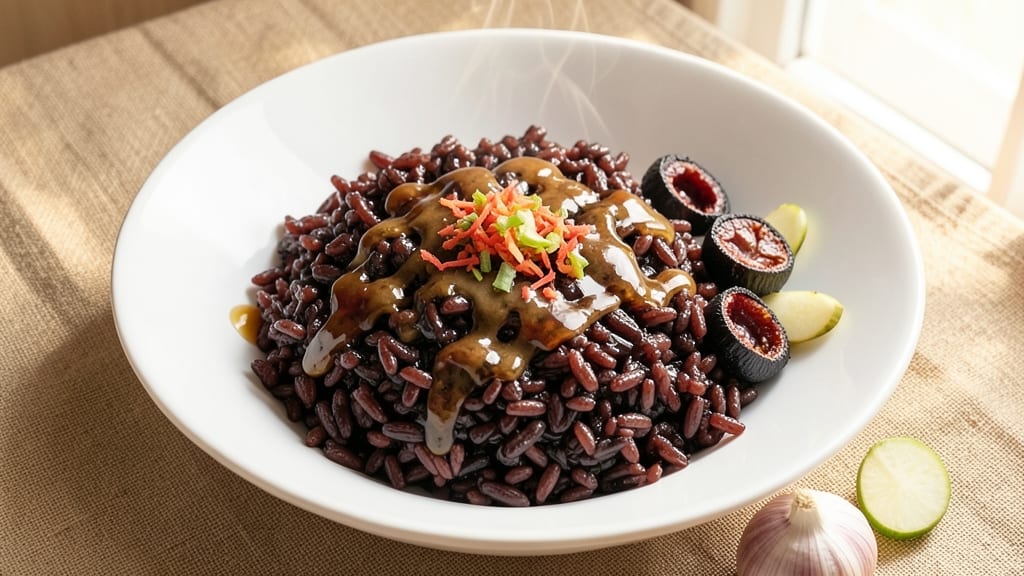
This black garlic rice recipe transforms ordinary grains into a dish with deep umami richness and velvety texture. The star ingredient—black garlic—develops a sweet, molasses-like depth when fermented, elevating simple rice into something extraordinary. Just one pot and 30 minutes of hands-off cooking deliver restaurant-quality results at home.
Perfectly balanced with a touch of soy sauce, sesame oil, and fresh ginger, this dish highlights black garlic’s unique flavor without overpowering the rice. The technique is simple: soak the black garlic to intensify its sweetness, then simmer it with rice and aromatics until tender.
Every bite delivers a harmonious blend of savory, sweet, and aromatic notes.
Ingredients for black garlic rice
Transform simple rice into a luxurious umami masterpiece with these twelve essential ingredients.
| Ingredient | Amount | Notes |
|---|---|---|
| Jasmine Rice 🍚 | 1 ½ cups | Uncooked, long-grain preferred |
| Black Garlic 🧄 | ½ cup | Fermented, chopped into small pieces |
| Low-Sodium Soy Sauce 🍶 | 2 tbsp | For umami depth |
| Toasted Sesame Oil 🫒 | 1 tbsp | For aromatic richness |
| Fresh Ginger 🧅 | 1 tbsp | Grated, finely minced |
| Garlic Cloves 🧄 | 3 cloves | Minced, aromatic base |
| Green Onions 🧅 | 3 whole | Sliced, for garnish |
| Vegetable Oil 🫒 | 1 tbsp | High smoke point |
| Water 💧 | 2 ½ cups | Room temperature |
| Sesame Seeds 🌾 | 1 tsp | Toasted, for garnish |
| Diamond Crystal Kosher Salt 🧂 | ½ tsp | Adjusts seasoning |
| White Pepper 🌶️ | ¼ tsp | Freshly ground |
Black garlic is the centerpiece here—look for deep purple-black cloves at specialty stores like Whole Foods or Asian markets. The longer it ferments, the sweeter and more complex it becomes. If you can't find it pre-fermented, age your own by wrapping garlic cloves in a damp cloth for 3-4 weeks. Jasmine rice is non-negotiable; its floral notes complement black garlic's molasses depth. For the ginger, fresh is essential—dried lacks the bright zing needed to balance the dish's richness. Toast your sesame seeds in a dry pan for 30 seconds until fragrant; this elevates the dish's aromatic profile.
No black garlic? Double the regular garlic and add 1 tbsp molasses for sweetness. Substitute soy sauce with coconut aminos at 1:1 ratio, though the umami won't be identical. Fresh ginger unavailable? Ground ginger at half the amount works, but the texture will differ. For sesame oil, toasted is non-negotiable—regular oil lacks the nutty depth. The green onions can be swapped for scallions or chives, though green onion's mild sharpness is ideal. If your rice is short-grain, reduce water by 0.25 cups to prevent mushiness.
Black garlic keeps 3 months refrigerated once opened, but its flavor peaks after 2 weeks. Store unopened cloves in the freezer for up to 6 months to preserve potency. Cooked rice reheats beautifully—steam with a splash of water for 2 minutes to restore texture. Portion into containers with a layer of sesame oil on top to maintain freshness for 4 days. For meal prep, make a double batch—black garlic rice freezes exceptionally well for 3 months, though texture may soften slightly upon thawing.
Why You'll Love This Recipe
- I’ll be real: black garlic isn’t cheap, but a little goes a long way. A single bulb stretches across multiple meals, and the rest of the ingredients? Basic. You’re spending smart, not splurging—just pure, satisfying flavor for less.
- One-Pot Magic: Honestly, this dish is that easy—just rice, garlic, and a few pantry staples tossed together. No chopping, no fuss, and honestly, I’ve made it while scrolling through my phone. The black garlic does all the flavor work for you.
- Umami Bomb: That first bite? Sweet, deep, and savory—the black garlic caramelizes into a molasses-like richness while the ginger and soy sauce cut through with a bright, salty punch. It’s the kind of flavor that makes you pause mid-bite, like, “Wait, is this actually that good?”
- Lunchbox Hero: Between us, this rice keeps perfectly for days in the fridge. Pack it cold for work or reheat it gently—it’s my go-to for busy mornings. (Yes, even on a Tuesday night when I’m too tired to think.)
Step-by-step instructions for black garlic rice
Master this one-pot technique for restaurant-quality umami depth in every grain.
Prepare the Black Garlic and Aromatics
In a small bowl, finely chop the 0.5 cup Black Garlic into small, even pieces—this ensures even distribution and maximum flavor infusion. Set aside. In the same bowl, combine the 1 tbsp Fresh Ginger and 3 cloves Garlic Cloves, then mince them together until you achieve a fine paste. The ginger should be so finely minced that you can barely see the individual strands.
This preparation creates a concentrated flavor base that will permeate every grain of rice. I like to press the ginger and garlic against the side of the bowl with the back of a spoon to break down the fibers completely. This step is where the deep umami character begins to develop—don't rush it.
Sauté the Aromatics in Vegetable Oil
Heat the 1 tbsp Vegetable Oil in a heavy-bottomed pot over medium heat until shimmering but not smoking. Add the ginger-garlic paste and cook for 1-2 minutes until fragrant—you should smell a complex aroma of garlic, ginger, and the distinctive sweetness of black garlic. This is your signal that the aromatics are properly activated.
Be careful not to let the mixture brown at this stage. The goal is to develop flavor without creating bitterness. If the mixture starts to darken too quickly, reduce the heat slightly. Once the aromatics are fragrant, add the chopped black garlic and continue cooking for another 1-2 minutes until it softens slightly and releases its deep, molasses-like flavor.
Toast the Rice and Build the Flavor Base
Add the 1.5 cups Jasmine Rice to the pot and stir to coat the grains evenly in the aromatic oil. Toast the rice for 2-3 minutes, stirring frequently, until the grains become translucent at the edges and you can smell the nutty aroma of the rice developing. This toasting step is crucial—it prevents the rice from becoming mushy and builds a rich, toasted flavor foundation.
Watch the rice carefully during this process. You want to see the edges turning just slightly opaque, but not brown. If you notice the rice starting to stick to the bottom, add a few drops of water to deglaze and keep everything moving. Once properly toasted, the rice should release easily from the pot when you give it a gentle shake.
Season and Simmer to Perfection
Pour in the 2.5 cups Water and bring the mixture to a boil over high heat. Once boiling, reduce the heat to low, then add the 2 tbsp Low-Sodium Soy Sauce, 0.5 tsp Diamond Crystal Kosher Salt, and 0.25 tsp White Pepper. Stir gently to combine, then immediately cover the pot with a tight-fitting lid.
Let the rice simmer undisturbed for 15 minutes. This is where the magic happens—the rice absorbs the liquid and the black garlic's deep umami flavor infuses throughout. After 15 minutes, remove the lid and check the rice. It should be tender but still slightly firm in the center. If it's not quite done, cover and cook for another 2-3 minutes. The rice should be perfectly tender with a slight bite—this is the hallmark of properly cooked jasmine rice.
Finish with Sesame Oil and Garnish
Once the rice is perfectly cooked, turn off the heat and let it sit covered for 5 minutes. This resting period allows the rice to absorb any remaining liquid and develop a more cohesive texture. After resting, drizzle the 1 tbsp Toasted Sesame Oil evenly over the surface of the rice. Use a fork to gently toss the rice, ensuring the oil coats every grain.
Finally, slice the 3 whole Green Onions into thin rounds and sprinkle them evenly over the rice. Add the 1 tsp Sesame Seeds on top and give everything a final gentle toss. The sesame oil adds a nutty aroma and the green onions provide a fresh contrast to the deep umami flavors. Serve immediately while the rice is still steaming hot, as this is when the flavors are at their peak.
Pro Tips For Making Black Garlic Rice
- Rinse Rice Twice: Jasmine rice clumps like a toddler’s glue if you don’t rinse it properly. Swirl it in cold water twice—first until the water runs clear, then again after letting it sit for 30 minutes. The starch will settle, and your rice won’t turn into a gluey brick when you mix in that sweet black garlic paste.
- Mince Ginger Like You Mean It: I used to throw in a few slices and call it a day—big mistake. Finely mince the ginger (or pulse it in a food processor) so it dissolves into the rice. You want it to disappear completely, not sit as chewy little surprises. Trust me, your mouth will notice the difference.
- Cook Rice Low and Slow: After the initial boil, drop the heat to the lowest setting you can tolerate and let that rice simmer uncovered. Too much heat = mushy rice. Too little = undercooked grains. Aim for a gentle, steady bubble—like a lazy Sunday morning, not a pressure cooker explosion.
- Toast Sesame Oil Last: Black garlic and ginger are delicate—add their aromatics first, then toss in that toasted sesame oil at the very end. If you heat it too early, the oil will burn and turn bitter, ruining the dish before it even starts. A few drops at the finish? That’s where the magic happens.
Dietary considerations for these flavors
Gluten-Free Adaptation
Black garlic rice is naturally gluten-free, but always verify labels on soy sauce and sesame oil to ensure they're certified gluten-free. I recommend San-J Tamari gluten-free soy sauce for the same umami depth without gluten.
The rest of the ingredients—jasmine rice, black garlic, ginger, and sesame seeds—are inherently gluten-free. Just double-check your vegetable oil brand to confirm it's processed in a gluten-free facility. 🌱
Low-Sodium Options
For a lower-sodium version, reduce the soy sauce to 1 tbsp and add ½ tsp Diamond Crystal Kosher Salt instead. You can also use coconut aminos (like Coconut Secret) at a 1:1 ratio, though the flavor will be slightly different.
Taste as you go and adjust with extra salt or a pinch of white pepper to maintain depth. This approach keeps the dish flavorful while cutting sodium by nearly half.
Vegetarian and Vegan
This recipe is already vegetarian and easily vegan—no animal products are involved! The black garlic, ginger, and sesame oil provide all the umami and richness. For extra protein, serve with tofu or edamame.
I like pairing it with steamed bok choy or a miso-glazed tofu bowl for a complete plant-based meal. The dish's natural sweetness and depth make it satisfying without meat. 🥗
Allergen-Friendly
If you have sesame allergies, omit the sesame oil and seeds, and use avocado oil instead. For soy allergies, replace the soy sauce with tamari (if gluten isn't a concern) or a gluten-free coconut aminos alternative.
Always check labels on Diamond Crystal Kosher Salt for cross-contamination warnings. The rice, black garlic, and ginger remain safe for most common allergies. 💛
Keto-Friendly Adjustments
While rice isn't keto-friendly, you can transform this into a keto dish by replacing jasmine rice with cauliflower rice (about 3 cups) and adding 1 tbsp xanthan gum to bind it. Reduce the water to 1.5 cups and cook for 10 minutes instead of 15.
The black garlic, soy sauce, and sesame oil will still shine, creating a low-carb, umami-rich side dish. Pair it with grilled chicken or shrimp for a complete keto meal. 🥦
Nutrition facts
Frequently asked questions
What makes black garlic different from regular garlic?
Black garlic undergoes a 3-4 week fermentation process at high humidity and temperature, transforming it into a deep purple-black color with a sweet, molasses-like flavor. Unlike regular garlic, it has no pungent bite—just rich umami and caramelized depth. This unique profile makes it perfect for rice dishes where you want sweetness without sharpness.
Can I use brown rice or other varieties instead of jasmine?
While jasmine rice is ideal for its floral notes that complement black garlic, you can use brown rice or basmati with adjustments. For brown rice, increase water by 0.25 cups and simmer 30-40 minutes instead of 15. Basmati works well but may lack the same aromatic punch. The texture will differ—jasmine's slight stickiness helps bind the black garlic's flavors.
How do I store leftover black garlic rice?
Store in an airtight container in the fridge for 4-5 days. To reheat, add 1 tbsp water per cup of rice to a pot, cover, and steam over low heat for 3-4 minutes. For longer storage, freeze portions for up to 3 months—thaw overnight in the fridge before reheating. The sesame oil may separate slightly when cold, so toss it back in when reheating.
Is this dish spicy? Can I make it milder?
This recipe is naturally not spicy—the heat comes only from the white pepper (which you can omit). For extra mildness, skip the ginger's sharpness by reducing it to ½ tbsp or using ground ginger instead. The black garlic's sweetness dominates, so the dish remains gentle yet flavorful. If you love heat, add ½ tsp chili flakes or a dash of sriracha at the end.
What's the best way to serve this rice?
This dish shines as a main course paired with grilled fish, tofu, or shrimp. For a complete meal, top with soft-boiled eggs or quick-pickled veggies for contrast. It also works as a side dish for roasted meats or as a bowl base with avocado and edamame. The black garlic's richness makes it versatile—try it cold in rice salads too!