
Main Courses
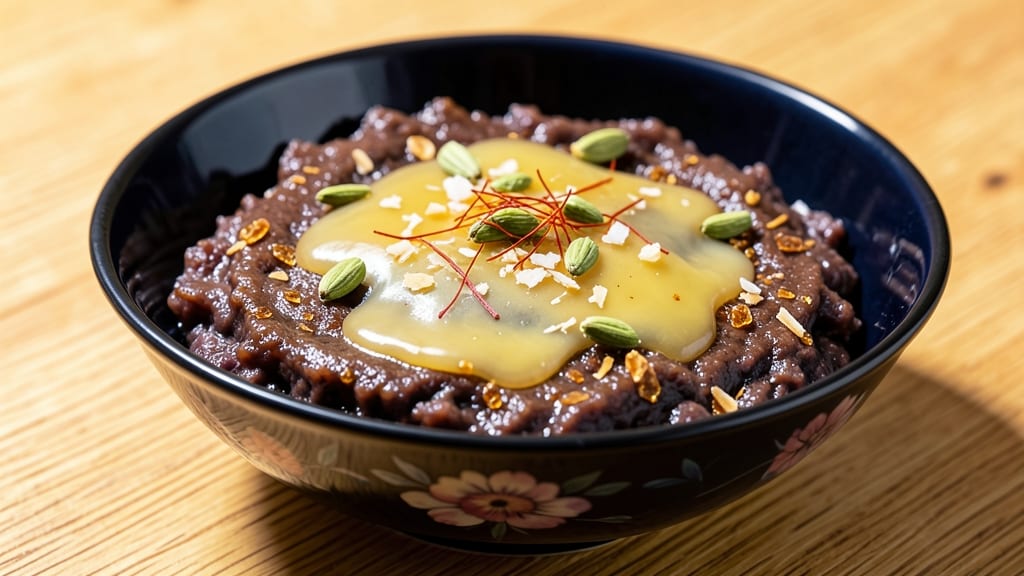
This black rice halwa recipe transforms deep purple forbidden rice into a velvety, cardamom-infused dessert that balances earthy sweetness with creamy richness.
The secret lies in slow-cooking the rice with milk and sugar until it dissolves into a silky, golden-brown pudding, then finishing it with warm ghee and crushed nuts for texture.
What makes this halwa special isn't just its striking color—it's the way the nutty rice absorbs the aromatic spices, creating a dessert that's both comforting and sophisticated.
The process begins with soaking the black rice overnight to soften its firm texture, then simmering it with milk and sugar until thickened into a luxe consistency. Cardamom and saffron infuse the mixture with floral warmth, while ghee adds a luxurious sheen.
The final touch—crushed pistachios or almonds—provides a satisfying crunch that contrasts beautifully with the creamy base. This halwa isn't just a dessert; it's a celebration of texture and tradition, perfect for festive occasions or as a decadent treat after a meal.
What sets this recipe apart is its foolproof technique for achieving that signature halwa texture without graininess. The slow simmering ensures the rice breaks down completely, while the ghee finish adds depth and richness.
Whether you're serving it warm in small bowls or chilled as a refreshing dessert, the aroma alone will draw everyone to the table. The result is a dessert that's as visually stunning as it is delicious—deep purple layers of flavor with every bite.
For those who love customization, you can adjust the sweetness to taste or add rose water for an extra floral note. This halwa pairs beautifully with mint chutney or a dollop of whipped cream, making it versatile enough for both everyday indulgence and special gatherings.
Ready to create a dessert that's as impressive as it is delicious? Let's get started.
Ingredients for black rice halwa
Six servings of velvety purple perfection—where nutty black rice meets cardamom-spiced sweetness.
| Ingredient | Amount | Notes |
|---|---|---|
| Black Rice (Forbidden Rice) 🍚 | 1 ½ cups | Uncooked, soaked overnight |
| Whole Milk 🥛 | 4 cups | Full-fat for richness |
| Granulated Sugar 🍚 | 1 ½ cups | Adjust to taste |
| Ghee (Clarified Butter) 🧈 | ½ cup | For luxurious finish |
| Green Cardamom Pods 🌿 | 10 whole | Lightly crushed |
| Saffron Threads 🌼 | ¼ tsp | High-quality strands |
| Pistachios 🥜 | ½ cup | Crushed, unsalted |
| Almonds 🥜 | ¼ cup | Sliced, toasted |
| Rose Water 🌸 | 1 tsp | Optional floral touch |
| Salt 🧂 | ¼ tsp | Fine sea salt |
| Fresh Mint Leaves 🌿 | ¼ cup | Chopped for garnish |
| Heavy Whipping Cream 🥛 | ½ cup | Optional for serving |
The black rice is the star here. Look for whole-grain forbidden rice at Indian specialty stores or well-stocked supermarkets—they often carry it in bulk bins. Soaking overnight is non-negotiable, as it softens the firm grains and ensures that silky texture. If you can't find black rice, wild rice blends work in a pinch, though the color will be less dramatic. For the spices, Penzeys or Spicewalla carry premium cardamom and saffron, but don't stress if you grab the grocery store versions—just make sure the cardamom pods are green and plump, not dried out. The ghee finish is what elevates this from dessert to showstopper, so use high-quality, grass-fed ghee if possible.
No saffron? Turmeric at half the amount gives a similar golden hue, though it lacks the floral notes. Running low on pistachios? Cashews or walnuts work beautifully for crunch—just toast them first. The rose water is optional, but if you skip it, add a pinch of orange blossom water for a different floral depth. For the milk, whole milk is ideal, but you can use a mix of milk and cream if that's what you have. The sugar can be adjusted to taste—start with the full amount, then reduce if you prefer it less sweet. And if you're feeling fancy, infuse the milk with a cinnamon stick while heating for an extra layer of warmth.
This halwa tastes even better the next day, so make it ahead for parties. Store leftovers in an airtight container in the fridge for up to 5 days, or freeze for 3 months—it reheats beautifully. For serving, I love the contrast of warm halwa with a dollop of chilled whipped cream and a sprinkle of crushed nuts. The purple color fades slightly as it cools, but that just adds to its rustic charm. If you're making this for a crowd, double the nuts—they disappear fast!
Why You'll Love This Recipe
- No Soak, No Stress: I’ll be real—most black rice recipes make you soak it overnight. Not this one. Just rinse the grains, cook them with milk until tender, and you’re done. That deep purple color? Ready in under an hour.
- Velvet Texture Magic: The ghee and sugar caramelize into a glossy, almost jam-like consistency—like a cross between pudding and fudge. Cardamom adds that warm, aromatic punch that makes it taste luxurious, not just sweet.
- Crowd-Pleaser Flex: Serve it warm as dessert after a rich meal, or let it cool and slice it into squares for a snack. Honestly, I’ve packed it in lunchboxes, brought it to potlucks, and even used it to top yogurt. It’s that adaptable.
- Budget Luxury: Black rice might sound fancy, but a small bag goes a long way—this recipe stretches it further than you’d think. And ghee? A little goes far, so you’re not breaking the bank for that restaurant-quality richness. Leftovers? They keep for days in the fridge.
Step-by-step instructions for black rice halwa
Transform those soaked forbidden grains into a velvety, cardamom-kissed halwa that melts in your mouth.
Cook the Black Rice Until Tender
Drain the soaked black rice thoroughly and transfer it to a heavy-bottomed pot. Add the 4 cups whole milk, 1.5 cups granulated sugar, and 0.25 tsp salt. Bring to a gentle boil over medium heat, then immediately reduce to low heat and simmer uncovered for 45-50 minutes.
Stir occasionally to prevent sticking—you'll notice the rice darken to a deep indigo and the mixture thicken dramatically. The halwa is ready when it reaches a pudding-like consistency that coats the back of a spoon. If it's too thin, continue simmering for another 5-10 minutes, adding small amounts of milk if needed to prevent burning.
Infuse with Cardamom and Saffron
Lightly crush the 10 whole green cardamom pods between your palms to release their aroma, then add them to the simmering rice mixture along with the 0.25 tsp saffron threads. Let it steep for 10 minutes on low heat—you'll smell that intoxicating floral-cardamom fragrance filling your kitchen.
Remove from heat and let it rest for 5 minutes to allow the flavors to meld completely. This infusion step is what transforms ordinary rice into this luxurious dessert. Strain through a fine-mesh sieve into a clean pot, pressing gently to extract every last drop of flavor from the cardamom pods.
Finish with Ghee and Rose Water
Return the strained halwa to the pot and stir in the 0.5 cup ghee over low heat until completely melted and incorporated. The ghee adds that rich, nutty depth that makes this halwa truly special. Remove from heat and stir in the 1 tsp rose water—just a whisper of floral notes to complement the cardamom.
Taste and adjust sweetness if needed, adding more granulated sugar if desired. The halwa should be sweet but not cloying, with the cardamom and rose water shining through. Let it cool to room temperature while you prepare the nuts.
Toast and Prepare the Nuts
In a dry skillet over medium heat, toast the 0.5 cup pistachios and 0.25 cup almonds for 3-4 minutes until fragrant and lightly golden. Watch them carefully—they'll burn quickly. Transfer to a cutting board and roughly chop the pistachios while leaving the almonds in slices.
Chop the 0.25 cup fresh mint leaves into fine pieces. These bright green flecks will add a refreshing contrast to the rich halwa when served. The toasted nuts and mint should be ready as the halwa cools to a spreadable consistency—around 60-65°F.
Serve with Whipped Cream and Garnish
Spoon the cooled halwa into serving bowls or glasses. Top with the toasted pistachios and almond slices, then swirl in the chopped mint leaves. For an extra touch of elegance, whip the 0.5 cup heavy whipping cream until soft peaks form and dollop it on top.
Serve immediately while still warm for the perfect balance of textures—creamy halwa, crunchy nuts, and cooling mint. This dessert keeps well in the refrigerator for up to 3 days, though I promise it won't last that long in your home. The contrast of deep purple rice with the vibrant garnishes makes every bite feel like a special occasion.
Pro Tips For Making Black Rice Halwa
- SOAK THE RICE FIRST: Black rice stays stubbornly hard if you skip this—soak it for at least 4 hours (overnight is better) in warm water with a pinch of salt. I learned this the hard way after biting into a chewy, undercooked grain in my first attempt. Trust me, the texture transforms from dense to creamy when cooked.
- LOW AND SLOW COOKS BEST: Start on medium heat until the milk bubbles, then drop it to the lowest setting you can stand. I used to rush it, and the halwa would either burn or turn grainy. Let it simmer for 45-60 minutes, stirring occasionally—patience here makes the difference between a smooth pudding and a lumpy mess.
- CRUSH THE CARDAMOM: Don’t just toss in whole pods—they’ll float and under-flavor. Lightly crush them with the side of your knife or a mortar and pestle before adding. My grandmother swore by this, and she was right: the aroma infuses evenly, giving that warm, spiced depth you want in every bite.
- STIR IN SUGAR GRADUALLY: Dump all the sugar at once, and you’ll end up with a sticky, uneven mess. Instead, add it in batches while stirring constantly, letting each dissolve before adding more. I was skeptical until I tried it—now I never skip this step, because it guarantees a silky, perfectly sweet finish.
Best sauces and condiments for this black rice halwa
Creamy Cardamom Sauce
This halwa pairs beautifully with a cardamom-infused cream sauce made by blending ½ cup heavy whipping cream, 2 tbsp ghee, 1 tsp powdered sugar, and 4 crushed cardamom pods.
Heat gently until smooth—just enough to coat the back of a spoon. Drizzle over warm halwa for a luxurious finish that enhances the nutty rice flavor. 💛
Rosewater Syrup
For a floral twist, simmer ½ cup water, ½ cup sugar, and 1 tsp rose water until dissolved, then cool. Drizzle lightly over halwa or use as a dipping sauce for fruit.
The syrup balances the richness while adding a delicate floral aroma that complements the cardamom. Store leftovers in the fridge for up to 1 week.
Mint Chutney
Blend ½ cup fresh mint leaves, 1 tbsp yogurt, 1 tbsp lemon juice, 1 tbsp sugar, and a pinch of salt for a refreshing contrast. Serve as a side or dollop on top of halwa for a bright, cooling element that cuts through the creamy texture.
This chutney keeps for 2 days in an airtight container.
Ghee Drizzle
Warm 2 tbsp ghee until melted, then drizzle generously over halwa just before serving. The ghee adds a golden sheen and enhances the nutty depth of the black rice. For extra flair, sprinkle with crushed pistachios while the ghee is still warm to create a crispy topping.
This technique is a staple in Indian desserts for its rich, velvety finish. ✨
Coconut Milk Garnish
Lightly toast 2 tbsp shredded coconut in a dry pan until golden, then mix with 2 tbsp coconut milk. Spoon this mixture over halwa for a tropical twist that pairs surprisingly well with the cardamom.
The coconut adds a subtle sweetness and crunchy texture that contrasts beautifully with the creamy base.
Nutrition facts
Frequently asked questions
Why does black rice turn purple when cooked?
Black rice gets its deep purple color from anthocyanins, natural pigments that react to heat and acidity. When soaked and simmered with milk and sugar, these compounds intensify, creating that stunning indigo hue. The longer you cook it, the richer the color becomes—perfect for making your halwa visually striking!
Can I make this halwa without ghee?
Yes, but the flavor will be less rich. Replace the 0.5 cup ghee with an equal amount of butter or coconut oil, though ghee adds that signature nutty depth. For a dairy-free option, use vegetable oil—just know the texture will be slightly lighter. The halwa will still taste delicious, just with a different mouthfeel.
How do I fix grainy halwa?
Graininess usually means the rice wasn't cooked long enough. Return the halwa to low heat and stir continuously for an extra 10-15 minutes, adding 1-2 tbsp milk at a time until completely smooth. If it's still too thick, thin with a splash of warm milk. For next time, simmer uncovered to evaporate excess moisture.
What's the best way to store leftovers?
Transfer cooled halwa to an airtight container and refrigerate for up to 5 days. To reheat, warm gently in a pot over low heat with 1 tbsp milk to restore creaminess. For longer storage, freeze for 3 months—thaw overnight in the fridge before serving. The flavors actually improve after a day or two!
Can I substitute cardamom with another spice?
Cardamom's floral warmth is key, but you can try 1 tsp cinnamon + ½ tsp vanilla extract for a different aroma. For warmth without floral notes, use ½ tsp nutmeg or mace. Just remember—cardamom's unique flavor is what makes this halwa special. If you're adventurous, try ½ tsp orange blossom water for a Middle Eastern twist!