
Main Courses
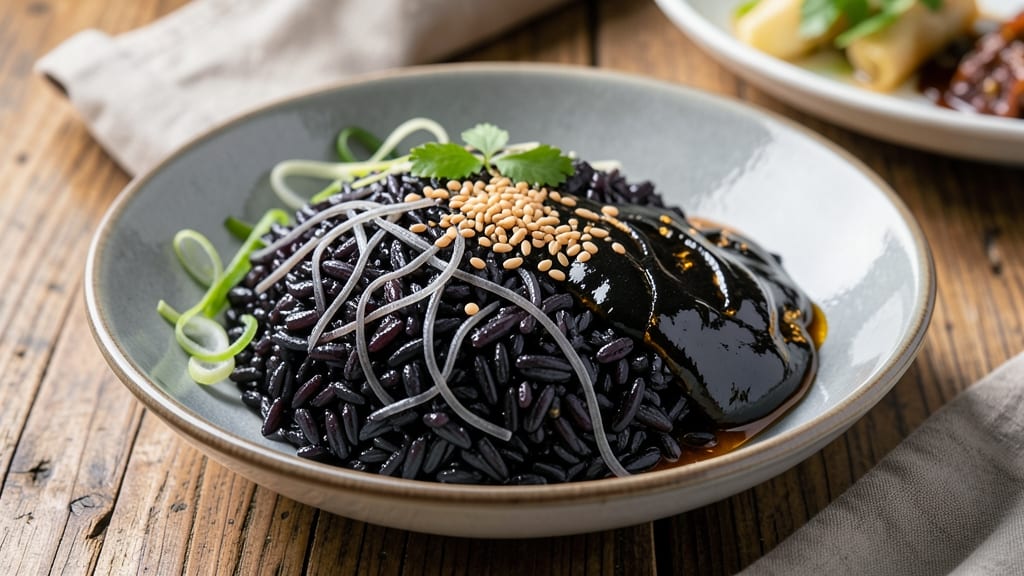
This black rice with squid ink recipe transforms ordinary grains into a visually stunning, restaurant-worthy dish that tastes as dramatic as it looks.
The deep purple hue from squid ink creates an elegant canvas, while the silky texture of the rice absorbs flavors beautifully—perfect for special occasions or when you want to impress. What sets this apart is the balance of earthy rice and briny ink, elevated by simple yet sophisticated techniques.
The secret lies in properly preparing the squid ink—reducing it into a rich, velvety sauce that coats the rice and adds depth without overpowering. Pair it with grilled seafood, tofu, or roasted vegetables for a complete meal that’s both striking and satisfying.
Once you try this, black rice will become a staple in your repertoire, offering a dramatic yet approachable dish for any dinner table.
Ingredients for black rice with squid ink
Pantry staples meet dramatic flavors—just 13 ingredients for restaurant-worthy black rice.
| Ingredient | Amount | Notes |
|---|---|---|
| Black Rice 🍚 | 1 cup | Uncooked, rinsed well |
| Squid Ink 🐙 | 1 oz | Fresh or paste, high quality |
| Water 💧 | 2 cups | Filtered preferred |
| Dashi Stock 🍜 | 1 ½ cups | Homemade or quality store-bought |
| Soy Sauce 🥢 | 2 tbsp | Kosher or tamari for gluten-free |
| Mirin 🍶 | 1 tbsp | Sweet rice wine |
| Rice Vinegar 🍶 | 1 tbsp | White or seasoned |
| Fresh Ginger 🧅 | 1 tbsp | Grated, peeled |
| Sesame Oil 🫒 | 1 tsp | Toasted, for aroma |
| Green Onions 🧅 | 3 whole | Thinly sliced, for garnish |
| Toasted Sesame Seeds 🌾 | 1 tbsp | For crunchy texture |
| Salt 🧂 | ½ tsp | Kosher or sea salt |
| White Pepper 🌶️ | ¼ tsp | Freshly ground |
The squid ink is non-negotiable for that deep purple hue. Trader Joe's and Asian markets usually carry it in paste form—look for brands like Koyo or Matsunoya. Fresh ink is even better if you can find it, but paste works in a pinch. The black rice? Lundberg or 365 by Whole Foods are reliable brands. Soak the rice for 30 minutes first—this cuts cooking time and prevents mushiness. Fresh ginger is a must here; the organic ginger at Sprouts or Costco usually has the best zing.
No squid ink? Blue spirulina powder at a quarter teaspoon gives a milder purple tint—it won't taste the same but works for a pinch. Dashi stock hard to find? Combine 1 cup water with 1 tsp kombu and 1 tsp bonito flakes for a quick DIY version. Short on mirin? Dry sherry plus 1 tsp sugar mimics the flavor. The rice vinegar can be swapped for apple cider vinegar, but it won't be quite as delicate. Toast your sesame seeds in a dry pan for 2 minutes—they'll taste a hundred times better (trust me on this).
This rice keeps beautifully—3 days in the fridge or 3 months frozen. For freezing, spread cooled rice on a tray first to prevent clumping. Reheat gently with a splash of water or broth. I always double the batch; the leftovers make killer rice bowls the next day. Store sesame oil in a cool, dark place—it goes rancid fast once opened. The squid ink paste? Keep it sealed in the fridge for up to 6 months—it's worth the splurge for that showstopping color.
Why You'll Love This Recipe
- One-Pot Magic: I swear by this—just toss the black rice, squid ink, and dashi into one pot, let it simmer. No chopping, no fussing, and the squid ink does all the work staining that rice that dramatic, restaurant-worthy black.
- Umami Bomb: That first bite? The deep, briny richness of the squid ink paired with the nutty black rice—it’s like a flavor explosion in your mouth. Honestly, the soy sauce and dashi make it taste even more luxurious than it sounds.
- Date Night Ready: Between us, this dish looks so impressive you’ll feel like you’re feeding a Michelin-starred chef. The dark, glossy rice with that swirling ink? Instant sophistication, zero pretension.
- Leftovers Win: The rice keeps beautifully for days—reheat it, and it’s just as good as fresh. I’ll be real: I’ve had it cold in salads, warm with a fried egg, even stuffed into sushi rolls. Versatile enough to handle my lazy mornings.
Step-by-step instructions for black rice with squid ink
Here's how to create a stunning dish with deep purple grains and silky ink swirls.
Prepare the Black Rice
Rinse the 1 cup black rice thoroughly under cold water until the water runs clear. This removes excess starch that can make the rice gummy. Place the rinsed rice in a medium saucepan and add the 2 cups water. Bring to a boil over medium-high heat.
Once boiling, reduce heat to low and simmer for 30 minutes without stirring. Cover the pan loosely with a lid to allow steam to escape. You'll know it's done when the rice has absorbed all the water and looks tender but still slightly firm to the bite. The grains should hold their shape and maintain that beautiful deep purple color.
Make the Squid Ink Sauce
In a small saucepan, combine the 1.5 cups dashi stock, 2 tbsp soy sauce, 1 tbsp mirin, 1 tbsp rice vinegar, and 1 tbsp grated fresh ginger. Bring to a gentle simmer over medium heat for 5 minutes to infuse the flavors. Meanwhile, dissolve the 1 oz squid ink in 1 tablespoon of the simmering sauce mixture.
Strain the sauce through a fine-mesh sieve to remove any ginger bits, then return it to the saucepan. Add the dissolved squid ink and stir gently to create swirling patterns. Keep the sauce warm over low heat until ready to use. The ink should create beautiful marbled effects in the final dish.
Combine and Finish
Gently fold the cooked black rice into the warm squid ink sauce using a wooden spoon or spatula. Be careful not to mash the rice—you want to maintain those individual grains. Stir in the 1 tsp sesame oil and let the mixture sit for 2 minutes to allow the flavors to meld.
Season with the 0.5 tsp salt and 0.25 tsp white pepper. The rice should be coated with the ink-infused sauce but still retain its distinct texture. If the sauce appears too thick, add 1-2 tablespoons of hot water to loosen it to your desired consistency.
Garnish and Serve
Transfer the black rice to a serving dish and let it cool slightly for 5 minutes. Garnish with the 3 whole green onions (thinly sliced) and 1 tbsp toasted sesame seeds. The contrast of the green onions against the purple rice and black ink creates a visually stunning presentation.
Serve immediately while the rice is warm. The combination of the nutty black rice, umami-rich dashi sauce, and delicate squid ink creates a dish that's as beautiful as it is delicious. The rice should be tender with a slight bite, perfectly balanced by the silky sauce.
Pro Tips For Making Black Rice With Squid Ink
- RINSE THE BLACK RICE: I learned this the hard way—skipping the rinse leaves your rice bitter and gluey. Swirl it in a fine-mesh strainer under cold water for 30 seconds, then repeat until the water runs clear. The anthocyanins (that’s the fancy name for the deep purple color) are fragile, so handle it gently—no rough scrubbing.
- ADD INK LAST MINUTE: Squid ink is temperamental—heat ruins its vibrancy. Stir it into the simmering broth just as you’re ready to turn off the heat, then fold it in with the rice. If you add it too early, the color fades to a sad muddy brown, and the flavor turns metallic. Trust me, the last 30 seconds matter.
- SIMMER, DON’T BOIL: Black rice needs a whisper of heat to stay tender. Once the water reaches a gentle bubble, drop the heat to low and keep it at a barely there simmer—like a lazy cat’s purr. I used to blast it on high and ended up with mushy rice every time. The dashi and soy sauce will flavor it just fine without the aggression.
- SALT THE DASHI RIGHT: Your dashi stock might already be salty, but soy sauce sneaks up on you. Taste the broth before adding the rice—aim for a light, clean saltiness, not a punch. If it’s bland, a splash of soy sauce now is better than overcorrecting later. (Yes, even if you’re impatient like me.) The rice will soak up the flavor, so don’t skimp.
Essential equipment for perfect results
Must-Have Cookware
Start with a heavy-bottomed stainless steel saucepan (I love my All-Clad) for cooking the black rice—it distributes heat evenly and prevents scorching. The saucepan should have a tight-fitting lid to trap steam while allowing excess to escape.
For the squid ink sauce, a small, shallow saucepan (like a Le Creuset or Calphalon) works best—its wide surface helps create those dramatic swirls when stirring. 🔥
Precision Tools
A fine-mesh strainer (I recommend OXO Good Grips) is essential for straining the ginger-infused sauce before adding squid ink—it removes all bits while preserving the delicate flavors.
For measuring the squid ink, a digital kitchen scale (like the OXO Good Grips) ensures accuracy—ink can vary in consistency, and precision matters for that perfect purple hue. A wooden spoon (avoid metal) prevents discoloration when folding the rice into the sauce.
Garnish Essentials
Toasted sesame seeds need a small, dry skillet (I use a nonstick Lodge) to achieve that perfect crunch. Heat it over medium-low for 2 minutes, stirring constantly, until golden.
For slicing green onions, a sharp chef's knife (I prefer Wüsthof) and a cutting board (like John Boos) make quick work of the task. A microplane (for ginger) and a fine-mesh sieve (for straining) round out the toolkit—these small tools make a big difference in presentation.
Optional Upgrades
For a professional touch, invest in a bamboo steamer basket (like those from Amazon Basics)—it keeps the rice fluffy and allows steam to escape, preventing sogginess. A thermometer (like the Thermoworks Thermapen) helps monitor the sauce's temperature, ensuring it stays just below 180°F for optimal flavor infusion.
If you love plating, a small offset spatula (I use Mercer Culinary) helps create those elegant swirls in the final dish. ✨
Budget-Friendly Swaps
No need for high-end tools—start with a basic stainless steel pot (like Cuisinart) and a wooden spoon from your kitchen. A cheese grater works for ginger if you don’t have a microplane, and a fork can slice green onions in a pinch.
The only non-negotiable is the squid ink—skip the paste if needed, but the visual impact is worth the splurge. Even basic tools can create restaurant-quality results with the right technique.
Nutrition facts
Frequently asked questions
Why does my black rice turn gray instead of deep purple?
The squid ink needs to be properly dissolved and evenly distributed. Use 1 oz of high-quality ink (fresh or paste) and dissolve it in 1 tbsp of warm sauce first, then gently stir it into the rest. Overheating the sauce or using old ink can dull the color. If it's gray, try adding a pinch of blue spirulina powder (¼ tsp) to intensify the hue.
Can I substitute squid ink with another ingredient?
For flavor, squid ink is irreplaceable—but for color, try blue spirulina powder (¼ tsp) or activated charcoal powder (⅛ tsp). Neither will taste the same, but they’ll give a similar visual effect. If you’re avoiding seafood, spirulina is the better choice. The dish will still be stunning, just with a different flavor profile.
How do I prevent the rice from becoming mushy?
Rinse the rice thoroughly to remove excess starch, then soak it for 30 minutes before cooking. Use a 1:2 rice-to-water ratio and simmer over low heat for exactly 30 minutes. Avoid stirring, and let the lid sit loosely to allow steam to escape. Overcooking is the #1 cause of mushiness—test with a fork for tenderness.
What’s the best way to store leftovers?
Transfer cooled rice to an airtight container and refrigerate for up to 3 days. For freezing, spread it on a tray first to prevent clumping, then transfer to a bag for 3 months. Reheat gently with a splash of water or broth—microwaving can make it dry. The squid ink sauce may separate; stir well before reheating.
Can I make this dish vegetarian?
Yes! Replace the dashi stock with a vegetable broth> (use 1.5 cups) and skip the squid ink. Add 1 tsp mushroom powder> or ½ tsp nori powder> for umami depth. The dish will still look stunning with a deep purple hue from the black rice alone.