
Main Courses
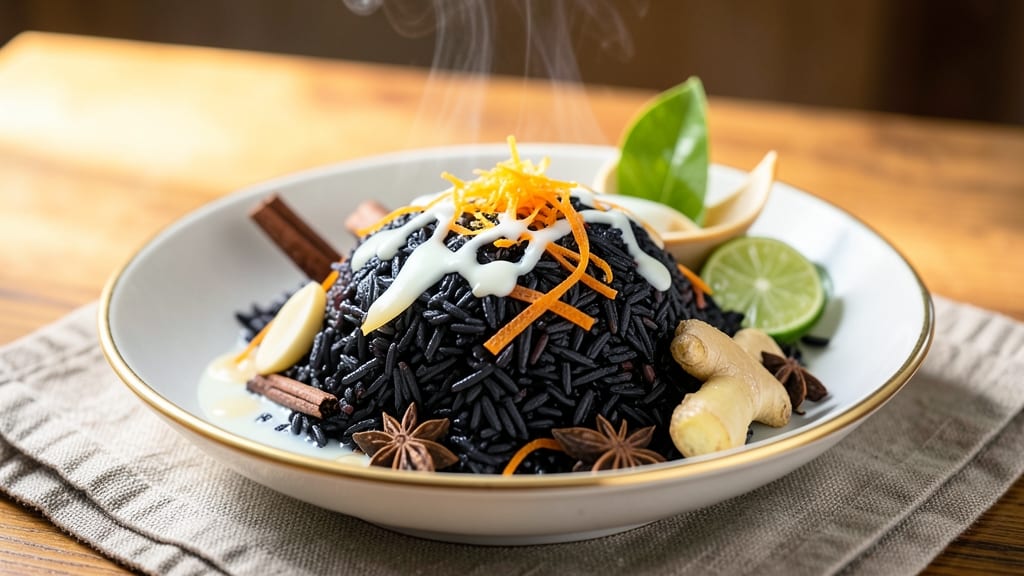
Black Thai rice transforms ordinary sticky rice into a fragrant, smoky masterpiece with deep purple-black hues and layers of coconut-herb flavor. This traditional Thai dish requires patience—soaking the rice for hours unlocks its signature texture and allows the spices to infuse perfectly. The result is a dish that balances sweet, savory, and earthy notes, often served with mango or sesame seeds for contrast.
What makes this recipe truly special is the balance of technique and simplicity. You’ll steam the rice in coconut milk-infused water, creating a subtle smokiness that defines its character. The rice absorbs the spices and aromatics completely, leaving you with a dish that’s as visually striking as it is delicious.
Serve it warm, with toppings like condensed milk or fresh fruit, for an authentic Thai dining experience.
Ingredients for black thai rice
Fragrant spices, rich coconut milk, and hours of soaking create this striking dish.
| Ingredient | Amount | Notes |
|---|---|---|
| Black Thai Jasmine Rice 🌾 | 1 ½ cups | Uncooked, unwashed grains |
| Full-Fat Coconut Milk 🥥 | 13 ½ oz | Canned, for infusion |
| Light Coconut Milk 🥥 | 13 ½ oz | Canned, for cooking |
| Fresh Turmeric Root 🧄 | 2 oz | Peeled, grated |
| Fresh Ginger Root 🧄 | 2 oz | Peeled, grated |
| Garlic Cloves 🧄 | 6 cloves | Peeled, smashed |
| Kaffir Lime Leaves 🍃 | 4 whole | Fresh, stems removed |
| Cinnamon Sticks 🌿 | 2 whole | 2-inch pieces |
| Cardamom Pods 🌿 | 6 whole | Lightly crushed |
| Star Anise Pods 🌶️ | 2 whole | Whole, lightly crushed |
| Salt 🧂 | 1 ½ tsp | Diamond Crystal preferred |
| Condensed Milk 🥛 | ½ cup | For serving |
| Sesame Seeds 🌾 | 2 tbsp | Toasted, for garnish |
| Mango Slices 🍈 | 1 cup | Fresh, for serving |
The rice is everything here—Thai Jasmine is non-negotiable for that sticky texture. Grab a 2-pound bag at Asian markets or the international aisle at Whole Foods—regular grocery stores rarely carry it. For the spices, Penzeys or local Thai markets are your best bets. The turmeric and ginger should be vibrant orange and pale yellow respectively—no green spots. Kaffir lime leaves? Look for them fresh at Trader Joe's or frozen in the Asian foods section. The coconut milk cans should be full-fat—light versions won't give that creamy finish.
No fresh turmeric? 1 tbsp ground turmeric works in a pinch, but fresh is better. Running short on kaffir lime leaves? Double the lime zest and add 1 tsp lime juice. The spices can be toasted first for deeper flavor—just dry-toast in a pan for 30 seconds. For the condensed milk, Nestlé or Carnation are standard, but any brand works. The mango should be ripe but firm—Ataulfo or Tommy Atkins are perfect. If you can't find black rice, substitute regular jasmine rice but skip the soaking—it won't develop the same color.
The rice keeps 3-4 days in the fridge once cooked, but it's best fresh. Store in an airtight container with a damp paper towel to keep it moist. For extra flavor, add a splash of coconut milk before sealing. The spices? Keep them whole in a dark jar for up to 6 months. Toasted sesame seeds lose crunch fast, so store them in the freezer if you're not using them within a week. This dish reheats beautifully—just add a splash of water and steam for 5 minutes.
Why You'll Love This Recipe
- One-Pot Magic: I swear by this recipe after burning three separate batches of rice in my first month of cooking—here, you just simmer everything together. No straining, no extra bowls, just that deep, nutty aroma of black rice and coconut milk filling the kitchen while you do nothing.
- Earthy Creamy Luxe: Between us, the combo of fresh turmeric and ginger with full-fat coconut milk gives this dish a velvety richness that tastes like a spa day. It’s not just rice—it’s a flavor bomb that pairs with everything from grilled fish to a simple egg scramble.
- Meal Prep MVP: Honestly, this keeps for days in the fridge, and the texture actually improves as it sits. I make a big batch on Sundays, portion it with protein, and boom—healthy lunches for the week without the boredom of day-old rice.
- Budget-Friendly Indulgence: Black rice might sound fancy, but it’s cheaper than quinoa and lasts longer. Plus, splitting the cost between light and full-fat coconut milk stretches it into multiple meals. Fancy enough for company, but my wallet doesn’t cry over it.
Step-by-step instructions for black Thai rice with smoky coconut infusion
Here's how to create restaurant-quality black rice where every grain absorbs the aromatic coconut-spice blend perfectly.
Infuse the Coconut Milk with Aromatics
In a medium saucepan, combine the 13.5 oz full-fat coconut milk, 2 oz grated fresh turmeric root, 2 oz grated fresh ginger root, 6 smashed garlic cloves, 4 whole kaffir lime leaves, 2 whole cinnamon sticks, 6 whole cardamom pods, and 2 whole star anise pods. Bring to a gentle simmer over medium heat and let it cook for 15 minutes—this is where the magic happens.
You'll notice the mixture darkens slightly as the spices release their oils and aromas into the coconut milk. The turmeric will give it that signature golden hue, while the ginger and garlic add depth. Don't let it boil vigorously—just maintain a gentle simmer to prevent the spices from burning. After 15 minutes, remove from heat and let it steep for another 10 minutes covered. This infusion creates the complex flavor base that transforms ordinary rice into something extraordinary.
Prepare the Rice and Flavor Base
While the coconut milk infuses, rinse the 1.5 cups black Thai jasmine rice in a fine-mesh strainer under cold water until the water runs clear. This removes excess starch that could make the rice gummy. In a separate bowl, combine the strained rice with the 13.5 oz light coconut milk and 1.5 tsp salt. Stir gently to coat each grain evenly—this ensures the rice absorbs the coconut flavor perfectly.
Here's the thing—black rice benefits from a head start. Transfer the rice mixture to a heavy-bottomed pot and bring to a boil over medium-high heat. Once boiling, immediately reduce heat to low and cover tightly with a lid. Let it cook undisturbed for 10 minutes. This initial cooking step prevents the rice from becoming mushy when we add the infused coconut milk later.
Combine and Simmer to Perfection
After the initial 10 minutes, strain the infused coconut milk through a fine-mesh sieve into the pot with the partially cooked rice. Discard the solids—those spice pieces have done their job. Stir the rice gently to distribute the infused milk evenly. Return to low heat and simmer uncovered for 20 minutes, stirring occasionally with a wide spatula.
The key here is patience. You're looking for the rice to absorb all the coconut milk while developing a slightly sticky texture—this is what gives black Thai rice its signature cling. The rice should be tender but still have a slight bite, with the liquid mostly absorbed but a thin layer remaining on the surface. If it looks dry before the 20 minutes are up, add 1-2 tablespoons of water to prevent burning.
Rest and Garnish for Serving
Once the rice reaches the perfect texture, transfer it to a serving dish and let it rest covered for 5 minutes. This resting period allows the rice to finish absorbing any remaining liquid and develop its final texture. While it rests, toast the 2 tbsp sesame seeds in a dry skillet over medium heat for 1-2 minutes until golden and fragrant—this adds a nutty crunch that contrasts beautifully with the creamy rice.
To serve, gently fluff the rice with a fork and drizzle with the 0.5 cup condensed milk (save a little for garnish). Top with the toasted sesame seeds and arrange the 1 cup fresh mango slices artistically on top. The contrast between the creamy, spiced rice and the bright, juicy mango creates a balance of flavors and textures that's simply irresistible. Each bite should deliver perfectly cooked rice with layers of coconut, ginger, and turmeric complexity.
Pro Tips For Making Black Thai Rice
- Toast the Rice First: Black Thai rice needs a quick dry toast in a pot before adding liquid—just 2-3 minutes on medium-high heat, stirring constantly. I learned this the hard way: skipping it makes the rice gummy and dulls that deep, nutty aroma. (Yes, even if you're impatient like me.)
- Grate, Don’t Mince Ginger: Use a box grater for fresh ginger—no need to chop it fine. The texture stays chunkier, which means it infuses flavor without turning the coconut milk into a paste. I was skeptical until I tried it: the dish tastes fresher, and you avoid that weird mushy consistency.
- Simmer, Don’t Boil: Keep the heat low enough that you see tiny bubbles at the edges, not a rolling boil. Boiling burns the coconut milk and turns the rice gluey. I used to rush this, and the result was always sad—like a watered-down version of what it should be.
- Strain the Coconut Milk: Pour full-fat coconut milk through a fine-mesh sieve into a bowl before using it. This removes the gritty bits that settle at the bottom of the can, which otherwise make the rice taste oddly sandy. (Does it look weird? Yes. Does it work? Every single time.)
Regional styles of black thai rice
Thai Southern Style
In Southern Thailand, this dish often takes on a sweet-savory twist with added palm sugar and pandan leaves. The pandan adds a floral aroma that pairs beautifully with the coconut. I like using ½ cup palm sugar dissolved in the coconut milk infusion for a caramelized depth.
Serve with grilled coconut slices for extra texture—this version is popular in Nakhon Si Thammarat province. 🌿
Northern Thai Variations
Northern Thailand's version leans earthier with wild herbs like lemongrass and galangal. The rice is often steamed in bamboo cylinders for a rustic touch. I substitute 1 stalk lemongrass (bruised) and 1 slice galangal for some of the ginger.
Top with crushed peanuts instead of sesame seeds—this variation is common in Chiang Mai and pairs well with spicy papaya salad.
Isan Regional Adaptation
The Isan region brings chili heat to the dish, using bird's eye chilies in the coconut milk infusion. I add 2-3 fresh chilies (seeds removed) to the simmering coconut milk for a subtle kick.
Serve with pickled mustard greens and sliced shallots for tangy contrast. This version reflects Isan cuisine's love of balance between sweet, sour, and spicy—perfect for those who enjoy heat. 🌶️
Modern Bangkok Fusion
Urban Bangkok chefs often elevate this dish with unexpected toppings like crispy shallots or edible flowers. I've seen versions with black sesame paste swirled into the rice before serving. For a contemporary touch, try adding toasted coconut flakes and a drizzle of honey alongside the condensed milk.
This style keeps the traditional core while adding textural complexity that appeals to modern palates.
Street Food Version
Street vendors in Bangkok simplify the process by parboiling the rice in coconut milk with just turmeric and salt, then finishing with grated coconut and chili powder. I've made this version with instant black rice (found in Asian markets) for quicker prep.
Serve with sweet chili sauce on the side—this is how you'll find it at night markets for under $2. The simplicity makes it perfect for casual eating.
Royal Court Style
For a luxurious presentation, Thai royal cuisine uses gold leaf and saffron-infused coconut milk. I add ½ tsp saffron threads to the infusion for a golden hue.
Garnish with edible silver leaf and serve in handcrafted ceramic bowls. This version is reserved for special occasions and reflects Thailand's deep culinary traditions in royal households. ✨
Nutrition facts
Frequently asked questions
Why does black Thai rice turn purple-black instead of brown?
The deep purple-black color comes from anthocyanins in the rice—natural pigments that react with the turmeric and coconut milk during cooking. The longer soaking time (4-6 hours) enhances this color transformation, creating that signature dramatic hue.
Can I make this recipe without fresh turmeric or ginger?
Yes! Use 1 tbsp ground turmeric and 1 tbsp grated ginger (or ½ tsp ground ginger). For deeper flavor, lightly toast the spices in a dry pan for 30 seconds before adding to the coconut milk. The color will be slightly less vibrant but still delicious.
What's the best way to store leftover black Thai rice?
Keep cooked rice in an airtight container with a damp paper towel to prevent drying. It stays fresh for 3-4 days in the fridge. For longer storage, freeze portions for up to 3 months. Reheat gently with a splash of coconut milk to restore moisture.
How do I adjust this for a sweet version (like Thai dessert rice)?
Add ½ cup palm sugar to the coconut milk infusion and reduce the condensed milk to ¼ cup. Top with toasted coconut flakes and pandan leaves for authentic Southern Thai flavor. The sweetness balances the coconut's richness beautifully.
Why did my rice turn out too dry or mushy?
Too dry? You likely cooked it too long—remove from heat when liquid is mostly absorbed but a thin layer remains. Mushy rice usually means over-soaking or stirring too much. For perfect texture, stir only once after adding the infused coconut milk, then let it sit undisturbed.