
Main Courses
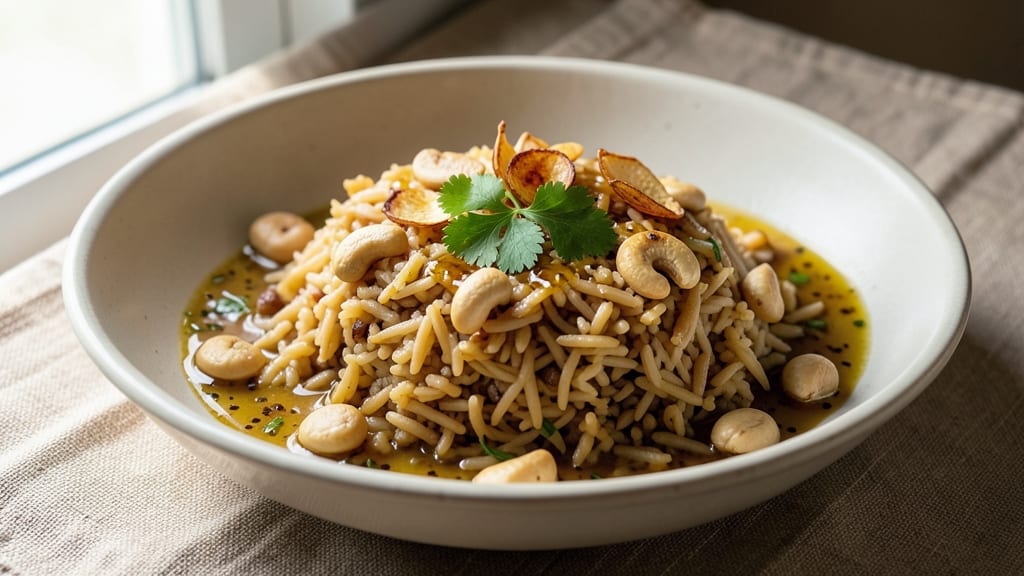
This cashew nut rice recipe delivers restaurant-quality creaminess without dairy, transforming simple basmati into a velvety, nut-infused dish. The secret lies in blending soaked cashews with warm broth, creating a luscious texture that coats every grain.
Perfect for vegans or anyone craving rich, dairy-free comfort food, this recipe proves plant-based meals can be just as satisfying.
The process is straightforward: toast the cashews for nutty depth, then blend them with broth and aromatics until silky smooth. Cook the rice in this infused liquid, letting the cashew mixture meld into a naturally creamy sauce.
Each bite offers tender rice wrapped in velvety cashew goodness, with optional turmeric adding golden color and warmth. A complete dish that pairs beautifully with roasted vegetables or grilled proteins.
Ingredients for cashew nut rice
Simple ingredients transform into velvety, creamy cashew-infused basmati rice—no dairy needed.
| Ingredient | Amount | Notes |
|---|---|---|
| Basmati Rice 🍚 | 1 cup | Uncooked, long-grain preferred |
| Raw Cashews 🥜 | 1 cup | Unsalted, toasted lightly |
| Vegetable Broth 💧 | 2 cups | Low-sodium preferred |
| Garlic Cloves 🧄 | 3 cloves | Peeled, minced finely |
| Fresh Ginger 🌿 | 1 tbsp | Grated, fresh preferred |
| Extra-Virgin Olive Oil 🫒 | 2 tbsp | For toasting cashews |
| Lemon Juice 🍋 | 1 tbsp | Freshly squeezed |
| Ground Turmeric 🌶️ | ½ tsp | Optional for color |
| Sea Salt 🧂 | ½ tsp | To taste, adjust as needed |
| Ground Black Pepper 🌶️ | ¼ tsp | Freshly ground preferred |
| Fresh Cilantro 🌿 | ¼ cup | Chopped, for garnish |
| Water 💧 | 1 ½ cups | For rice cooking |
The cashews are the star here—raw, unsalted for maximum creaminess. Trader Joe's or bulk bins at natural food stores usually carry the best quality at reasonable prices. Toasting them lightly in olive oil deepens their nutty flavor. For the broth, low-sodium options prevent over-salting, and homemade is ideal but store-bought works fine. Fresh ginger and garlic should be vibrant—no limp stems or dull cloves. The turmeric adds that golden hue, but it's optional if you prefer a neutral color. Always buy organic turmeric for better potency.
No cashews? Almonds or macadamias work in a pinch, though texture will differ slightly. Short on broth? Coconut milk adds richness, but reduce the water slightly to balance. Fresh herbs wilt fast—cilantro and basil can be swapped, but keep amounts equal. Pre-grated ginger? Use half the amount—it loses potency quickly. The rice ratio is critical: 1 cup uncooked to 1.5 cups water ensures perfect texture. For extra creaminess, blend the cooked rice with a splash of broth after cooking.
Toasted cashews keep for 1 month in an airtight container, while fresh ginger lasts 2 weeks in the fridge. Store the cooked rice in the fridge for 4-5 days or freeze for 3 months. Reheat gently with a splash of water or broth to restore creaminess. Garnish with cilantro just before serving—it wilts when heated. Double the batch and freeze portions for quick meals; it reheats beautifully and tastes even better the next day.
Why You'll Love This Recipe
- No Chopping Chaos: I swear by this—just toast the cashews and garlic whole, then let the broth do the work. No mincing, no mess, just dump-and-simmer magic while you stir-fry veggies or toss a salad.
- Creamy Without Cream: The raw cashews blend into the broth until it’s velvety smooth, like a hug in a bowl. That ginger-garlic punch cuts through the richness, so it’s never heavy—just ridiculously satisfying.
- Weeknight to Party Fix: Same base recipe, endless options. Serve it with grilled chicken for a quick dinner or pile it high with roasted veggies for a crowd. Even my picky teen clears her plate—(yes, even on a Tuesday night).
- Leftovers That Don’t Suck: This rice actually improves the next day. The cashews soften just enough to get sticky, and the broth reduces to a deeper flavor. Microwave it for lunch or reheat gently for a cozy dinner—no dry grains here.
Step-by-step instructions for creamy cashew nut rice
This method transforms simple basmati rice into a velvety, dairy-free dish with rich texture and vibrant flavor.
Toast the Cashews for Nutty Depth
Heat a dry skillet over medium heat and add the 1 cup raw cashews. Toast them for 3-4 minutes, stirring constantly, until they turn a light golden brown and release their nutty aroma. This step is crucial—it enhances their flavor and prevents them from turning bitter during cooking.
Watch carefully as they toast—they burn quickly. As soon as they're fragrant and just beginning to color, remove them from the skillet and set aside. You'll use these toasted cashews later to create the creamy base for your rice. Their texture will change from hard to soft and velvety as they cook with the rice.
Sauté Aromatics Until Fragrant
In the same skillet, add the 2 tablespoons extra-virgin olive oil and heat over medium heat. Add the 3 cloves minced garlic and 1 tablespoon grated ginger, cooking for 1-2 minutes until the garlic becomes translucent and the mixture smells intensely aromatic.
This is where the foundation of your dish's flavor develops. The garlic should soften but not brown—if it starts to turn golden, reduce the heat slightly. Add the 0.5 teaspoon ground turmeric now and stir for 30 seconds to bloom its earthy flavor. The turmeric will give your rice its signature golden hue.
Cook the Rice with Broth and Cashews
Add the 1 cup basmati rice to the skillet and stir to coat it evenly with the aromatic oil and spices. Pour in the 2 cups vegetable broth and 1.5 cups water, then bring to a gentle boil. Once boiling, reduce heat to low and cover tightly with a lid.
Simmer for 15 minutes without lifting the lid. This allows the rice to absorb the liquid evenly and prevents it from sticking. After 15 minutes, add the toasted cashews and stir gently to distribute them throughout the rice. The cashews will begin to break down, creating that signature creamy texture without needing dairy.
Finish with Acid and Seasoning
After another 5 minutes of simmering, remove the lid and stir in the 1 tablespoon lemon juice, 0.5 teaspoon sea salt, and 0.25 teaspoon ground black pepper. The acidity brightens the flavors while balancing the richness of the cashews. Taste the rice and adjust the seasoning if needed—this is where you can customize it to your preference.
Let the rice sit covered for 5 minutes off the heat. This resting period allows the flavors to meld completely and the rice to reach its ideal creamy consistency. The texture should be tender yet firm, with the cashews fully incorporated into a velvety matrix.
Garnish and Serve Immediately
Fluff the rice gently with a fork, then transfer it to serving dishes. Top each portion with 0.25 cup chopped fresh cilantro for a pop of freshness and vibrant color. The cilantro not only enhances the visual appeal but also adds a bright, herbal note that complements the rich cashew flavor.
Serve immediately while the rice is still warm. The creamy texture comes from the blended cashews, which create a luxurious mouthfeel without any dairy. Each bite should deliver a harmonious blend of nutty richness, aromatic spices, and the bright tang of lemon.
Pro Tips For Making Cashew Nut Rice
- Toast the cashews low: I used to burn them every time—now I keep the heat at medium-low and stir constantly until they’re just golden, about 5-6 minutes. Raw cashews taste bland and gummy; toasted ones add real depth without turning bitter.
- Rinse basmati until clear: Skimping here means gummy rice. Rinse your basmati in a fine-mesh strainer under cold water until the water runs completely clear. The starch washes out, so the grains stay separate and fluffy.
- Simmer broth gently after adding rice: The moment you add rice, drop the heat to the lowest setting that keeps a barely perceptible simmer. Too much heat = mushy rice. Too little = undercooked. A whisper of bubbles is your goal.
- Prep ginger-garlic paste ahead: Sounds weird, but it works: Grate ginger and mince garlic, then mix into a paste with a splash of broth. This distributes flavor evenly and cuts down on burning—no more charred garlic bits ruining the dish.
Troubleshooting perfect results
Rice Too Dry?
If your rice ends up dry, you likely used too much heat or didn't cover it properly. For future batches, maintain a low simmer after boiling and keep the lid tightly sealed—even a small gap lets steam escape.
I've found that adding 2 extra tablespoons of broth (or water) during the final 5 minutes of cooking can rescue undercooked rice. Stir gently and replace the lid to let it absorb the extra liquid. 💧
Cashews Not Creamy?
The key to velvety cashews is soaking them first—skip this step, and they'll stay grainy. Soak the 1 cup raw cashews in hot water for 10 minutes before toasting, then blend the cooked cashews with ½ cup warm broth until completely smooth.
If you prefer whole cashews, add them 5 minutes before the rice is done so they soften but retain texture. For extra creaminess, blend ½ cup of the cooked rice with ¼ cup warm broth and stir it back in. ✨
Broth Too Salty?
If your broth tastes overly salty, dilute it by adding ½ cup extra water and simmering for 5 minutes to balance the flavor. For future batches, use low-sodium broth and taste as you go—adjust with lemon juice (brightens) or a pinch of sugar (balances saltiness).
I keep a small bowl of plain yogurt nearby to stir into the rice if it's too sharp, but this works best with dairy-free versions. 🧂
Rice Sticking Together?
Sticky rice usually means the rice absorbed too much liquid or wasn't fluffed properly. To fix it, spread the rice on a baking sheet and let it cool slightly—this helps separate the grains.
For prevention, use a heavy-bottomed pot (like Lodge cast iron) and stir the rice once after 10 minutes of cooking to break up any clumps. If it's still sticky, fluff with a fork and add 1 tablespoon olive oil to coat the grains. 🍚
Lemon Too Overpowering?
If the lemon juice dominates, reduce it to ½ tablespoon next time or balance it with ½ teaspoon sugar or 1 pinch of salt. For a deeper flavor without acidity, try ½ teaspoon white miso paste instead—it adds umami richness.
I also love adding ½ teaspoon apple cider vinegar for tang without lemon's brightness. Taste as you go and adjust gradually. 🍋
Turmeric Too Strong?
Turmeric's earthy flavor can overpower if used excessively. Cut the amount to ¼ teaspoon or replace it with ½ teaspoon saffron threads (steeped in 2 tbsp warm water for 10 minutes) for a milder, floral note.
If you love turmeric but want subtlety, bloom it in the oil separately for 1 minute before adding the rice—this mellows its intensity. 🌶️
Nutrition facts
Frequently asked questions
Can I use any type of rice for this recipe?
While basmati works best for its long grains and aromatic qualities, jasmine or brown rice can also work. For a creamier texture, use jasmine rice—it absorbs flavors beautifully. Avoid short-grain rice like sushi rice, as it tends to get mushy. If using brown rice, increase cooking time by 10-15 minutes to ensure it's fully tender.
How do I make this recipe without a blender?
Simply omit the blending step and add the toasted cashews directly to the rice during cooking. For extra creaminess, mash ½ cup of the cooked rice with a fork and stir it back in. The texture will be slightly less velvety but still delicious. You can also soak the cashews in warm broth for 15 minutes before adding them to the rice.
Can I prepare this ahead of time?
Yes! Cook the rice as directed, then let it cool completely. Store in an airtight container in the fridge for 4-5 days or freeze for 3 months. To reheat, add 1-2 tablespoons of water or broth per cup of rice and microwave until warm. Stir in fresh cilantro and lemon juice just before serving for the brightest flavor.
What are the best sides to serve with cashew nut rice?
This dish pairs beautifully with roasted vegetables like broccoli or Brussels sprouts, grilled tofu or tempeh, or a fresh mango avocado salad. For a complete meal, add a simple cucumber raita or a quick spicy tomato chutney. The nutty richness of the rice balances well with cool, crisp greens or tangy accompaniments.
Why does my cashew rice taste bland?
Blandness usually comes from insufficient seasoning or stale ingredients. Always use fresh ginger and garlic—they lose potency quickly. Toast your cashews until fragrant, and don't skip the lemon juice (it brightens flavors). For extra depth, add ½ teaspoon smoked paprika or a pinch of asafetida (hing) when sautéing the aromatics. Taste as you go and adjust salt gradually.