
Main Courses
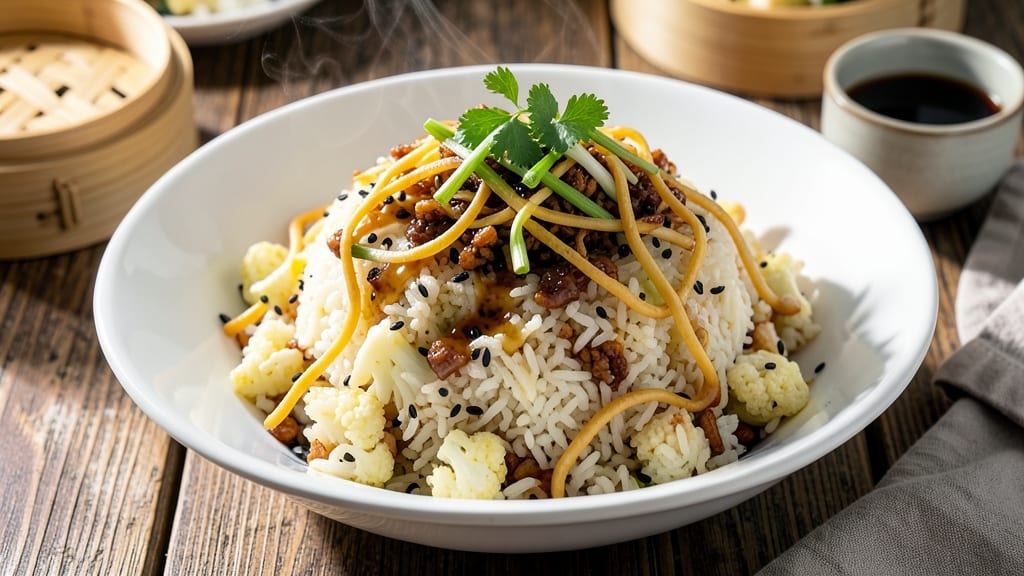
This cauliflower Chinese fried rice recipe transforms a classic comfort dish into a crispy, flavorful vegetarian masterpiece with perfect egg threads and wok-hei aroma. The key lies in riced cauliflower that absorbs seasonings beautifully while maintaining satisfying texture—no soggy bites here.
I've perfected the technique over countless batches, ensuring every grain stays distinct yet tender.
What sets this apart is the balance of textures: crispy edges on the cauliflower rice, silky egg ribbons that melt into each bite, and fresh scallions that add brightness.
Traditional Chinese seasonings—soy sauce, ginger, and garlic—build layers of umami without overpowering the natural flavor. The recipe delivers restaurant-quality results in under 30 minutes with minimal prep.
Ingredients for cauliflower chinese fried rice
Cauliflower's crispy texture and silky egg ribbons create restaurant-quality Chinese fried rice at home.
| Ingredient | Amount | Notes |
|---|---|---|
| Fresh Cauliflower 🥬 | 1 ½ lb | Riced or grated fine (no soggy texture) |
| Large Eggs 🥚 | 4 whole | Room temperature for silky threads |
| Green Onions 🧅 | ½ cup | White and green parts, thinly sliced |
| Vegetable Oil 🫒 | ½ cup | High smoke point for crisping |
| Light Soy Sauce 🍶 | ¼ cup | Low-sodium preferred for balance |
| Dark Soy Sauce 🍶 | 1 tbsp | For deep umami color |
| Sesame Oil 🫒 | 1 tbsp | Toasted, for aroma finish |
| Fresh Ginger 🧄 | 1 tbsp | Finely grated, zesty brightness |
| Garlic Cloves 🧄 | 4 cloves | Minced, aromatic foundation |
| White Rice Vinegar 🍶 | 1 tbsp | Balances saltiness |
| Diamond Crystal Kosher Salt 🧂 | ½ tsp | Fine grain for even seasoning |
| Ground Black Pepper 🌶️ | ¼ tsp | Freshly cracked for heat |
| Vegetable Broth 💧 | ¼ cup | Low-sodium for flavor depth |
| Toasted Sesame Seeds 🌾 | 1 tbsp | Garnish for texture contrast |
The cauliflower is non-negotiable—freshness matters. Look for heads with tight curds and vibrant green florets; Trader Joe's or Whole Foods carry the best quality. Pre-riced cauliflower from the freezer section works in a pinch, but freshly riced yields superior texture. Use a food processor with the grating attachment or pulse in a high-speed blender. The rice should resemble fine grains, not paste. For the eggs, room temperature ensures perfect silky threads—cold eggs scramble instead of ribboning. Buy eggs from pasture-raised hens if possible; their yolks are richer and emulsify better.
No vegetable broth? Water plus a bouillon cube gets you close, but add an extra pinch of salt. Short on sesame oil? Toast the seeds first, then grind into a paste with a pinch of salt for a budget-friendly alternative. The soy sauces are where umami magic happens—Kikkoman light and dark are my go-tos, but any quality brands work. Swap the vinegar for lemon juice if needed, though it'll alter the flavor profile slightly. For the ginger and garlic, fresh is essential—powders lack the bright, aromatic punch. If you must use dried, double the amount and toast the spices in the oil first to revive their flavor. The green onions? Fresh is best, but frozen chopped works in a bind—just drain and pat dry thoroughly.
Prepped ingredients keep for 3 days in the fridge—store the riced cauliflower in a sealed container with a paper towel to absorb excess moisture. The eggs should stay at room temperature until cooking. For longer storage, freeze the cauliflower rice in 1-cup portions—thaw and pat dry before using. This dish reheats beautifully; stir-fry again briefly with a splash of water to restore crispiness. The leftovers? Even better the next day as flavors meld. Portion into meal prep containers with the sesame seeds sprinkled on top—they stay crisp for 24 hours when stored properly.
Why You'll Love This Recipe
- No Chopping Chaos: I swear by this one—just ripping cauliflower into florets and cracking eggs into a hot pan is it. No dice, no julienne, no stress. The florets stay intact enough to soak up that soy sauce while still getting that perfect crispy edge.
- Umami Magic: That light soy sauce? It’s the MVP here. The eggs scramble into fluffy ribbons, the green onions add a sharp bite, and the cauliflower? It actually tastes like something you’d order at a wok station—crisp, savory, and just salty enough to keep you going back for more.
- Lunchbox Hero: Between us, this is my go-to for packed lunches. Cool it down, toss in a handful of peanuts if you’re feeling fancy, and boom—you’ve got a meal that survives the workday without turning into sad, soggy rice. (Yes, even on a Tuesday night.)
- Budget Win: I buy cauliflower in bulk, eggs are cheap, and a bottle of soy sauce lasts forever. For under $5, I feed my family leftovers that still taste fresh three days later. Honestly, it’s the kind of recipe that makes me question why I ever spent $20 on takeout.
Step-by-step instructions for crispy cauliflower Chinese fried rice
Master the art of texture contrast with this method—crispy cauliflower rice and delicate egg threads.
Prepare and Pre-Cook the Cauliflower Rice
Begin by ricing the 1.5 lb fresh cauliflower using a food processor fitted with the shredding disk or a box grater. The rice should be fine and uniform—no larger than ¼-inch pieces. Spread the cauliflower rice on a clean kitchen towel and gently squeeze out any excess moisture. This step is critical for achieving crispy texture later.
Heat 2 tablespoons of the vegetable oil in a large skillet over medium-high heat. Add the cauliflower rice in a single layer and cook undisturbed for 5-6 minutes until the edges begin to brown. Stir occasionally, working quickly to prevent burning. The cauliflower should develop a golden, almost caramelized crust while remaining tender inside. Remove from the pan and set aside—this pre-cooking prevents soggy rice when you combine everything later.
Create Silky Egg Threads
In a small bowl, whisk together the 4 whole large eggs at room temperature until the yolks and whites are fully combined. The eggs should be smooth with no streaks remaining. This preparation ensures silky, wispy threads when cooked properly.
Heat 1 tablespoon of the vegetable oil in a separate nonstick skillet over medium-low heat. The oil should be hot enough to create gentle ripples when the eggs touch it—not smoking. Pour in the eggs and let them sit undisturbed for 10-15 seconds before using a spatula to gently push the cooked edges toward the center. Tilt the pan to let the raw egg flow to the edges, creating thin, delicate strands. Continue this process until all the egg is cooked but still glossy and tender. Remove from heat and set aside.
Build the Flavor Base
In the same skillet used for the cauliflower (no need to clean it—the browned bits add flavor), heat the remaining 3 tablespoons vegetable oil over medium-high heat. Add the 4 cloves minced garlic and 1 tablespoon finely grated fresh ginger, cooking for 30 seconds until fragrant but not browned. Immediately add the 0.5 cup thinly sliced green onions, stirring for 1 minute until softened.
Pour in the 0.25 cup light soy sauce, 1 tablespoon dark soy sauce, and 0.25 cup vegetable broth. Stir to combine, letting the mixture simmer for 2 minutes until slightly reduced. This creates a flavorful, slightly glossy base that will coat the cauliflower rice perfectly. The dark soy sauce adds that signature deep umami color while balancing the light soy's saltiness.
Combine and Finish
Return the pre-cooked cauliflower rice to the skillet and stir vigorously to coat evenly with the sauce. Add the 1 tablespoon white rice vinegar and 0.5 teaspoon kosher salt, tossing continuously for 2-3 minutes until the cauliflower is heated through and the edges are crispy again. The vinegar brightens the dish while cutting through the richness of the soy sauces.
Gently fold in the silky egg threads, being careful not to overmix. The eggs should melt into the cauliflower without breaking. Stir in the 1 tablespoon toasted sesame oil and 0.25 teaspoon ground black pepper, tossing just until combined. The sesame oil adds a nutty aroma that elevates the dish, while the pepper provides a subtle heat. Taste and adjust seasoning if needed—you may want to add a splash more light soy sauce for balance.
Serve Immediately for Maximum Crispiness
Transfer the cauliflower fried rice to serving plates and garnish with the remaining 0.5 cup sliced green onions and 1 tablespoon toasted sesame seeds. The seeds add a delightful textural contrast against the crispy cauliflower and silky eggs. Serve immediately while the cauliflower is still crisp and the eggs maintain their delicate texture.
For best results, eat within 10 minutes of cooking. The dish continues to steam slightly after leaving the heat, which can soften the cauliflower if left sitting. Pair with a simple cucumber salad or steamed bok choy to complement the rich, savory flavors. The key to this recipe lies in the contrast—crispy cauliflower, silky eggs, and vibrant aromatics working together in perfect harmony.
Pro Tips For Making Cauliflower Chinese Fried Rice
- STEAM CAULIFLOWER FIRST: I learned this the hard way—raw cauliflower turns to mush when you stir-fry it. Cut into 1-inch florets, boil for 3 minutes, then drain and steam for 5 minutes until just tender. The texture stays firm enough to hold up to frying, and it absorbs flavors better than if you threw it in raw.
- SCRAMBLE EGGS SEPARATELY: Sounds weird, but it works: scramble the eggs in a clean, dry pan first until just set, then set aside. When you fry the cauliflower, toss in the eggs at the end—they’ll stay soft and creamy instead of drying out from sitting in hot oil too long. (Yes, even if you're impatient like me.)
- DON’T OVERCHOP GREEN ONIONS: Tiny bits of green onion disappear into fried rice and vanish. Cut the white parts into ¼-inch pieces, but leave the greens in 1-inch strips—they add freshness and visual appeal. Also, blanch the whites for 30 seconds first to soften them without wilting the greens.
- USE COLD RICE: Hot rice gets gummy and turns to paste when you stir-fry it. Spread freshly cooked cauliflower rice (or pre-cooked rice) on a tray and refrigerate for 20 minutes before frying. Cold rice toasts up crisp in seconds and soaks up the soy sauce evenly—no soggy mess. (Your future self will thank you.)
Serving suggestions for cauliflower chinese fried rice
Crispy Garnishes
Top your cauliflower fried rice with toasted sesame seeds and thinly sliced green onions for that signature restaurant finish. The sesame seeds add nutty crunch, while the onions bring freshness. For extra flair, sprinkle crushed red pepper flakes if you love heat—just ½ teaspoon adds a subtle kick. 🌶️
Cool Contrasts
Balance the richness with a cucumber salad tossed in rice vinegar and a pinch of sugar. The cool, crisp veggies cut through the savory fried rice beautifully. For a lighter option, serve with steamed bok choy—its mild bitterness complements the dish perfectly. Both pairings keep the meal refreshing.
Protein Add-Ins
Want extra substance? Fold in crispy baked tofu or shredded rotisserie chicken during the final stir. For a vegetarian boost, add sautéed shiitake mushrooms—they mimic the meaty texture of traditional fried rice. Just cook them separately and mix in at the end to keep them tender. 🥜
Dipping Sauces
Serve with sriracha mayo (mix mayonnaise with 1 teaspoon sriracha) for a spicy kick, or a simple soy-ginger dip (whisk 2 tablespoons soy sauce, 1 teaspoon grated ginger, and 1 teaspoon honey). These sauces let everyone customize their heat and sweetness levels.
Meal Pairings
Turn this into a full meal by serving with egg rolls or spring rolls for a takeout-style spread. For a lighter lunch, pair it with miso soup—the umami depth ties everything together.
If you're feeding a crowd, double the recipe and serve family-style with chopsticks for that authentic touch. ✨
Nutrition facts
Frequently asked questions
Can I use pre-riced cauliflower instead of fresh?
Yes, but fresh riced cauliflower gives the best texture. Pre-riced works in a pinch—just pat it completely dry with a paper towel to remove excess moisture before cooking. Frozen riced cauliflower should be thawed first, then squeezed dry to prevent soggy fried rice.
Why does my cauliflower fried rice turn out mushy?
Overcrowding the pan or not pre-cooking the cauliflower causes mushiness. Always cook the cauliflower in batches over medium-high heat until golden, then set aside before combining with other ingredients. High moisture content (from fresh cauliflower) is the #1 culprit—squeeze it dry!
How do I get the perfect egg threads?
Use room-temperature eggs and medium-low heat in a nonstick pan. Pour the eggs in gently, let them set for 10-15 seconds, then tilt the pan to create thin strands. Overcooking or using cold eggs makes them rubbery. The secret is patience—don't rush the process!
Can I make this ahead of time?
Not ideal for crispiness, but you can prep components separately. Cook the cauliflower and eggs ahead, then refrigerate in airtight containers. Reheat in a skillet with fresh oil for 3-4 minutes, adding a splash of water to restore crispiness. The flavors actually improve overnight!
What's the best way to store leftovers?
Keep leftovers in an airtight container for up to 3 days. For longer storage, freeze portions for up to 2 months. Thaw in the fridge overnight, then reheat in a skillet with a little oil to revive the texture. The sesame seeds should be sprinkled fresh after reheating for best flavor.