
Main Courses
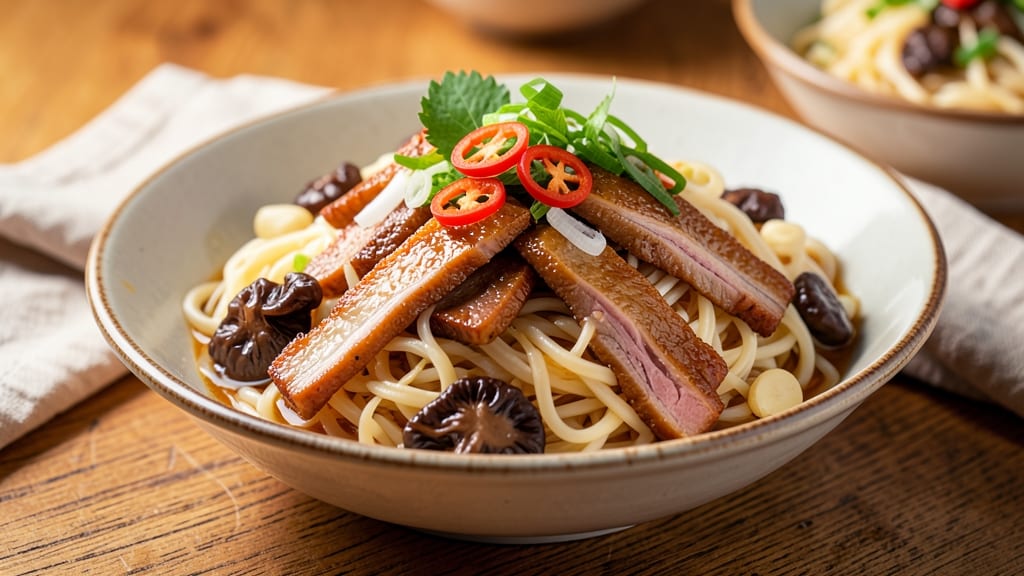
This Cantonese rice noodle recipe delivers the signature silky-slurp texture and wok-heated aroma that makes it a street food legend.
The secret lies in perfectly cooked rice noodles—just tender enough to cling to your chopsticks while maintaining that signature chew, paired with a quick stir-fry that captures the essence of Cantonese wok cooking.
Traditional techniques like high-heat wok searing and proper noodle hydration ensure authentic flavor and texture. Whether you choose classic char siu pork, shrimp, or tofu for a vegetarian version, the dish balances umami-rich sauces with fresh aromatics.
The result? A restaurant-quality bowl that’s ready in under 30 minutes—no shortcuts, just proper technique.
Ingredients for cantonese rice noodle
Authentic Cantonese flavors start with these carefully selected ingredients for silky noodles and wok-heated aroma.
| Ingredient | Amount | Notes |
|---|---|---|
| Rice Noodles (Stir-Fry/Lo Mein Noodles) 🍜 | 8 oz | Fresh or dried, soaked properly |
| Char Siu Pork 🐷 | 1 lb | Thinly sliced, store-bought or homemade |
| Dried Shiitake Mushrooms 🍄 | 4 whole | Rehydrated, sliced for texture |
| Garlic Cloves 🧄 | 6 cloves | Minced for aromatic base |
| Thai Bird's Eye Chilies 🌶️ | 2 whole | Seeds removed for mild heat |
| Green Onions 🧅 | 3 whole | White and green parts separated |
| Light Soy Sauce 🍶 | ¼ cup | Kikkoman preferred for balance |
| Dark Soy Sauce 🍶 | 1 tbsp | For color and depth |
| Sesame Oil 🫒 | 1 tbsp | Toasted, for finishing aroma |
| Neutral Oil (Peanut or Vegetable) 🫒 | ½ cup | High smoke point for searing |
| Oyster Sauce 🍶 | 2 tbsp | Lee Kum Kee for authentic umami |
| Sesame Seeds 🌾 | 1 tsp | Toasted for garnish |
| Cornstarch 🌾 | 1 tbsp | For velveting pork if homemade |
| Sugar 🍬 | 1 tsp | Balances acidity in sauce |
| White Wine (Optional) 🍷 | ¼ cup | Dry, for deglazing |
The rice noodles are non-negotiable—fresh or premium dried brands like Golden Noodle ensure that signature chewy yet tender texture. For the pork, char siu from an Asian market delivers authentic sweet-savory depth, though homemade versions with cornstarch-velveted slices work beautifully. Dried shiitake mushrooms (rehydrated) add umami without overpowering, while Thai chilies provide the subtle heat that defines Cantonese wok cooking. Garlic and green onions should be freshly minced just before cooking to preserve their aromatic oils—never pre-chopped from the store.
No char siu? Substitute with thinly sliced shrimp or firm tofu—both work exceptionally well when marinated in soy sauce and a touch of sugar. Vegetarian oyster sauce (like Lee Kum Kee's plant-based version) maintains umami without animal products. For the chilies, red pepper flakes at half the amount provide a similar kick. White wine can be omitted—simply add an extra splash of soy sauce—but it helps deglaze the wok beautifully for a restaurant-quality finish. Sesame oil should be added at the very end; its nutty aroma fades quickly with heat.
Store dried noodles in a cool, dry place for up to 6 months, while fresh noodles should be refrigerated and used within 3 days. Rehydrated shiitake mushrooms keep for 5 days in the fridge, but their texture degrades over time. Char siu pork can be prepped ahead and stored for 4 days—it actually tastes better the next day as the flavors meld. For leftovers, reheat gently with a splash of water to prevent drying out. The dish freezes well for 3 months, though texture may slightly soften upon thawing.
Why You'll Love This Recipe
- No-Soaking Needed: I swear by the "quick-soak" trick—just a splash of hot water over the noodles for 10 minutes, and they’re ready. No waiting around, no soggy mess, and that perfect chewy texture stays intact.
- Sweet-Spicy Magic: The char siu’s smoky sweetness meets the dried shiitakes’ umami depth, then gets a kick from those Thai chilies—just enough heat to linger. Honestly, the balance is addictive, and I’ve never met a bowl that didn’t get polished off.
- Lunchtime to Leftovers: Pack it for work, reheat it for dinner, or freeze half for when you’re too tired to cook. The flavors actually improve the next day—softer noodles, richer sauce, and zero effort. My go-to for lazy days.
- Budget-Friendly Feast: Char siu and dried shiitakes stretch like crazy, so this feeds four for the price of takeout. Plus, the noodles are cheap, the prep is fast, and you’ll still feel like you’re dining out. (Yes, even on a Tuesday night.)
Step-by-step instructions for Cantonese rice noodle recipe
Master the wok-hei technique to create restaurant-quality Cantonese rice noodles with perfect texture and aroma.
Prepare the Rice Noodles for Maximum Slurp
Soak the 8 oz rice noodles (stir-fry/lo mein noodles) in warm water for 10-15 minutes until pliable but still slightly firm to the bite. The noodles should bend easily when pinched but not be mushy. Drain immediately and rinse under cold water to halt cooking—this prevents them from turning into paste when stir-fried.
I like to divide the drained noodles into 4 equal portions and toss each with ½ teaspoon of neutral oil to prevent sticking. Keep the remaining portions covered with a damp towel until ready to cook. The oil coating creates a subtle barrier that preserves that signature silky-slurp texture even after stir-frying.
Rehydrate and Slice the Shiitake Mushrooms
Place the 4 whole dried shiitake mushrooms in a heatproof bowl and pour 2 cups of hot water over them. Let them soak for 20 minutes until fully rehydrated. Drain, reserving the soaking liquid, and slice the mushrooms into ¼-inch thick strips. The mushrooms should be pliable but not mushy—this ensures they hold their shape during stir-frying.
In a small bowl, combine 1 tablespoon of cornstarch with 2 tablespoons of oyster sauce and 1 teaspoon of sugar. Add the sliced mushrooms and toss to coat evenly. This cornstarch slurry creates a velvety texture that mimics the restaurant technique. Let the mushrooms marinate for 10 minutes while you prepare the remaining ingredients.
Build the Aromatic Base with Char Siu and Aromatics
Heat ½ cup of neutral oil in a wok or large skillet over high heat until shimmering. Add the 1 lb char siu pork and stir-fry for 1-2 minutes until lightly blistered but not fully cooked through. Remove the pork and set aside—we'll finish it later with the sauce.
In the same wok, add 6 cloves of minced garlic and 2 whole Thai bird's eye chilies (seeds removed). Stir-fry for 30 seconds until fragrant—you should smell the garlic's sweetness and a hint of chili heat. Add the white parts of 3 green onions (cut into 1-inch pieces) and cook for another 30 seconds until softened. This aromatic base forms the flavor foundation for the entire dish.
Create the Signature Cantonese Sauce
Pour in ½ cup of the reserved shiitake soaking liquid, scraping up any browned bits from the wok. Add ¼ cup of light soy sauce, 1 tablespoon of dark soy sauce, and the optional ¼ cup of white wine. Bring to a simmer and reduce by half—this concentrates the flavors and creates a glossy, clinging sauce.
Return the char siu pork to the wok along with the coated shiitake mushrooms. Add 2 tablespoons of oyster sauce and 1 teaspoon of sugar, tossing everything together for 1-2 minutes until the pork is heated through and the mushrooms are tender. The sauce should coat the ingredients evenly without being overly watery.
Finish with Wok-Hei and Perfect Texture
Push the pork and mushrooms to one side of the wok. Add 1 portion of the prepared rice noodles and toss vigorously for 1-2 minutes until the noodles are heated through and develop a slight char in spots. This creates the wok-hei (breath of the wok) aroma that defines Cantonese cuisine.
Drizzle with 1 tablespoon of sesame oil and sprinkle with ½ teaspoon of toasted sesame seeds. Garnish with the green parts of the green onions and serve immediately. Repeat with the remaining noodle portions, keeping the wok hot between batches to maintain that signature smoky aroma. Each bite should deliver perfect al dente noodles with tender pork, silky mushrooms, and a glossy sauce that clings beautifully.
Pro Tips For Making Cantonese Rice Noodle
- SOAK NOODLES UNTIL FLEXIBLE: I learned this the hard way—rice noodles turn mushy if you over-soak them, but if they’re still crunchy after cooking, your dish will feel underdone. Test one strand: it should bend slightly but not snap like a twig. For this recipe, 10-15 minutes in warm (not boiling) water usually does the trick.
- SLICE CHAR SIU THINLY: Thick char siu chunks won’t caramelize properly in the stir-fry, leaving you with chewy meat instead of tender, flavorful bites. Cut against the grain into ¼-inch strips—this also makes the pork cook faster and absorb the wok hei better.
- REHYDRATE MUSHROOMS IN HOT WATER: Cold soaking dried shiitake makes them tough and waterlogged. Instead, pour boiling water over them for 10 minutes, then drain. This keeps their texture firm and concentrated flavor, which is crucial when paired with the salty char siu and spicy chilies.
- STIR-FRY IN BATCHES: Crowding the wok steams the noodles instead of searing them, turning your dish into a soggy mess. Cook the garlic, chilies, and mushrooms first, then remove them briefly to make room for the noodles and pork. The extra space guarantees a proper wok hei finish.
Troubleshooting great cantonese rice noodle
Noodles Too Soft
If your rice noodles turn mushy, you likely over-soaked them. Test doneness by pinching—they should bend easily but resist breaking. For 8 oz noodles, 10-15 minutes in warm water is ideal.
Drain immediately and rinse with cold water to stop cooking. If already overcooked, toss with 1 tsp neutral oil and stir-fry for 30 seconds over high heat to firm them up. 💡
Sauce Too Watery
Watery sauce usually means insufficient reduction. When combining ½ cup shiitake soaking liquid, ¼ cup light soy sauce, and 1 tbsp dark soy sauce, simmer until reduced by half—this should take 3-4 minutes.
If still thin, add 1 tsp cornstarch mixed with 1 tbsp water as a slurry. Stir constantly until glossy. For extra umami, add 1 tsp fish sauce (optional).
Protein Overcooked
Char siu pork cooks quickly—1-2 minutes max over high heat. If it turns rubbery, reduce heat to medium-high and add 1 tsp water to steam it through. For shrimp or tofu, cook for 1-2 minutes max—they finish in the sauce.
Always remove protein just before it's fully done and finish with the sauce to retain tenderness. 🍳
Lacking Wok-Hei
Wok-hei (breath of the wok) comes from high heat and proper oil. Use ½ cup neutral oil in a carbon steel wok (or cast iron) over high heat until shimmering. Stir-fry aromatics (garlic, chilies, onions) for 30 seconds max—they should sizzle loudly.
For extra aroma, add ½ tsp dried shrimp (optional) when building the sauce base. Work quickly and keep the wok moving!
Noodles Sticking
Prevent sticking by tossing drained noodles with ½ tsp neutral oil before stir-frying. Divide into 4 portions and keep covered with a damp towel. If they stick during cooking, add 1 tsp water and toss vigorously.
A well-seasoned wok or nonstick skillet helps too. Avoid overcrowding—cook in batches if needed. 🌟
Mushrooms Too Mushy
Over-soaked shiitake mushrooms become mushy. Soak for 20 minutes max in 2 cups hot water—drain immediately. For extra firmness, toss sliced mushrooms with 1 tbsp cornstarch before stir-frying.
Cook for 1-2 minutes over high heat until tender but still holding shape. If using pre-sliced mushrooms, pat them very dry before cooking.
Nutrition facts
Frequently asked questions
What's the difference between chow fun and jook fun?
Both are Cantonese rice noodle dishes, but they differ in texture and preparation. Chow fun uses flat, wide rice noodles (like lo mein) that are stir-fried with a glossy sauce, creating a silky-slurp texture. Jook fun features thick, chewy rice noodles (like vermicelli) served in a lighter broth. This recipe focuses on the chow fun style, perfect for wok-heated stir-frying.
Can I substitute fresh rice noodles for dried?
Yes, but with adjustments! Fresh rice noodles cook in 3-5 minutes in boiling water, while dried need 10-15 minutes of soaking. For this recipe, use 8 oz dried (soaked) or 12 oz fresh (cooked). Fresh noodles are more delicate—handle them gently to avoid breaking. Both work well for that signature chewy texture.
How do I make this vegetarian?
Swap char siu pork for firm tofu or shrimp. Press tofu for 20 minutes, slice thinly, and marinate in 2 tbsp soy sauce + 1 tsp sugar for 15 minutes. For shrimp, toss with 1 tbsp soy sauce + ½ tsp cornstarch before stir-frying. Use vegetarian oyster sauce (like Lee Kum Kee's plant-based version) to maintain umami. The mushrooms and aromatics will keep the dish rich and flavorful.
Why does my sauce keep sticking to the wok?
This happens when the sauce isn't reduced enough or the wok isn't hot enough. Always reduce the sauce by half—simmering ½ cup liquid until it becomes ¼ cup—for a glossy finish. Use a carbon steel wok (or cast iron) over high heat—the sauce should sizzle and coat the ingredients evenly. If it still sticks, add 1 tsp cornstarch slurry (1 tsp cornstarch + 1 tbsp water) to thicken it.
Can I make this ahead of time?
Prepare components separately for best results. Cook the noodles, protein, and sauce ahead, then reheat in the wok for 2-3 minutes—add a splash of water to steam. Store noodles in an airtight container with a damp towel to prevent drying. Reheat protein and sauce separately, then combine just before serving. The wok-hei aroma is best enjoyed fresh, but prepped ingredients save time!