
Side Dishes
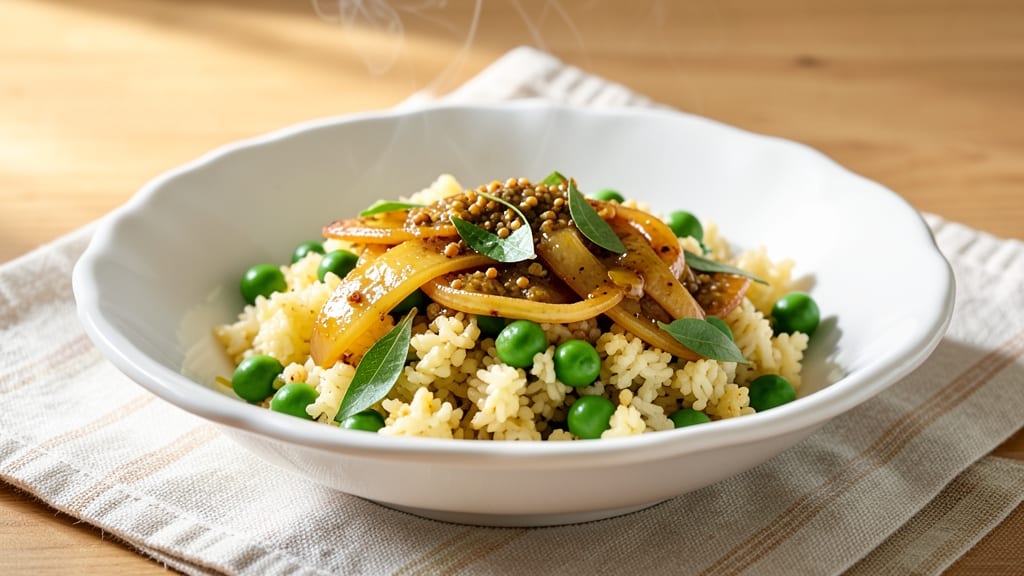
This cauliflower rice and peas recipe transforms a simple side into a bold South Indian-inspired dish packed with aromatic spices and tender textures.
The secret lies in balancing garlic, ginger, and coconut milk for a flavor profile that's both comforting and vibrant—perfect for low-carb diets or as a hearty vegetarian main. One pot means minimal cleanup, while the spices infuse deeply for maximum flavor impact.
What you’ll create is a dish where cauliflower rice achieves a satisfying chewiness, peas add sweetness, and spices like mustard seeds and curry leaves create layers of warmth. The dish stays light yet substantial, making it ideal for pairing with grilled proteins or serving alongside rice as a complete meal.
Ready in 30 minutes, it’s the kind of recipe that elevates everyday dinners without sacrificing simplicity.
Ingredients for cauliflower rice and peas
South Indian spices meet low-carb convenience in this aromatic one-pot dish.
| Ingredient | Amount | Notes |
|---|---|---|
| Fresh Cauliflower 🥬 | 1 lb | Riced finely for texture |
| Fresh Green Peas 🌱 | 1 ½ cups | Frozen works if fresh unavailable |
| Yellow Onion 🧅 | 1 whole | Diced finely for even cooking |
| Fresh Garlic Cloves 🧄 | 4 cloves | Minced for aromatic base |
| Fresh Ginger 🌿 | 1 tbsp | Grated finely for zing |
| Mustard Seeds 🌶️ | 1 tsp | Whole seeds for popping |
| Curry Leaves 🌿 | ½ tsp | Dried if fresh unavailable |
| Ground Turmeric 🌶️ | ½ tsp | Freshly ground preferred |
| Ground Cumin 🌿 | ½ tsp | Toasted for depth of flavor |
| Ground Coriander 🌶️ | ½ tsp | Freshly ground for brightness |
| Coconut Milk 🥥 | ½ cup | Full-fat for richness |
| Tomato Puree 🍅 | ¼ cup | Smooth consistency preferred |
| Vegetable Oil 🫒 | 2 tbsp | High smoke point preferred |
| Salt 🧂 | 1 tsp | Adjust to taste |
| Black Pepper 🌶️ | ½ tsp | Freshly cracked for heat |
The cauliflower and peas form the heart of this dish, but the spices are what truly elevate it. For the mustard seeds, Whole Foods or Indian specialty stores offer the best quality—look for seeds that are uniformly yellow and free of debris. Fresh curry leaves are ideal, but dried leaves from Penzeys work in a pinch, though they're more potent so use half the amount. The ginger and garlic should be vibrant—no woody stems or brown spots. For the coconut milk, full-fat versions like Thai Kitchen provide the richest flavor, though light coconut milk works if you're watching calories.
No mustard seeds? Substitute with a pinch of asafoetida (hing) for a similar depth, though the texture will differ. Fresh ginger unavailable? Powdered ginger at one-third the amount works, but it lacks the fresh zing. For the peas, frozen is perfectly fine—just don't thaw them first. The tomato puree can be substituted with blended canned tomatoes, but strain out the seeds for a smoother texture. If you're avoiding coconut milk entirely, cashew cream blended from soaked cashews offers a neutral base that still delivers richness.
This dish reheats beautifully—30 seconds in the microwave restores its warmth without drying out the cauliflower. Store leftovers in an airtight container for up to 4 days in the fridge, though the flavors deepen overnight. For longer storage, freeze portions for up to 3 months. The spices lose potency after freezing, so consider making a fresh batch for best results. Garnish with fresh cilantro or lime wedges just before serving to brighten the dish.
Why You'll Love This Recipe
- No-Chop Chaos: I swear by this trick—just pulse the cauliflower in a food processor (or buy pre-riced) and toss in frozen peas straight from the freezer. The onions and garlic get a quick sauté while you wait for the water to boil, and boom: dinner’s ready before your kids even notice they’re eating veggies.
- Ginger-Garlic Magic: That fresh ginger and garlic combo? It’s the secret weapon here. The ginger adds a bright, zesty kick while the garlic mellows into something warm and addictive—like a hug in your mouth. Honestly, I’ve made this with store-bought spices before, but nothing beats the real deal for that just-made flavor.
- Lunchbox Hero: Between us, this is my go-to for meal prep. The cauliflower rice stays crispy when reheated (if you pat it dry first), and the peas hold up like champs. Pack it in containers for work or school—it’s light enough to not weigh you down, but filling enough to keep you going until dinner.
- Budget Win: Fresh cauliflower and peas are cheaper than you think, especially when you buy in bulk or use frozen. One head of cauliflower and a bag of peas stretch across three meals for my family of four, and the onions/garlic last for other dishes too. It’s the kind of recipe that makes grocery day feel like a victory.
Step-by-step instructions for South Indian cauliflower rice and peas
Master this aromatic South Indian dish with precise technique and bold spices.
Prepare the Base with Mustard Seeds and Spices
Heat the 2 tablespoons vegetable oil in a heavy-bottomed pot over medium heat until shimmering. Add the 1 teaspoon mustard seeds and let them pop audibly for 30 seconds—this is your signal they're ready. Immediately add the 0.5 teaspoon curry leaves and let them sizzle for 10 seconds until fragrant.
Next, add the 1 whole yellow onion (finely diced) and cook for 4-5 minutes until translucent and golden. Stir frequently to prevent burning. This foundational step develops the complex flavor profile that defines South Indian cuisine. The onions should soften completely before moving to the next aromatics.
Build the Aromatic Layer with Ginger and Garlic
Add the 4 cloves fresh garlic cloves (minced) and 1 tablespoon fresh ginger (finely grated) to the pot. Cook for 1-2 minutes until the raw garlic smell disappears and the mixture turns golden. This indicates the allicin has cooked off, leaving behind sweet, aromatic flavors rather than harsh garlic bite.
Now add the ground spices: 0.5 teaspoon ground turmeric, 0.5 teaspoon ground cumin, and 0.5 teaspoon ground coriander. Stir continuously for 30 seconds to toast the spices gently. You'll notice the spices release their essential oils and develop a deeper, nuttier aroma. This step is crucial for that authentic South Indian flavor.
Incorporate Cauliflower and Peas for Even Cooking
Add the 1 lb fresh cauliflower (riced finely) and 1.5 cups fresh green peas to the pot. Stir well to coat the cauliflower rice evenly with the spice mixture. Cook for 3-4 minutes over medium heat, stirring occasionally, until the cauliflower begins to soften slightly but remains slightly firm.
At this stage, add the 0.25 cup tomato puree and stir for 2 minutes until the mixture thickens and the raw tomato flavor mellows. The cauliflower should be tender but still hold its shape—this texture is essential for the perfect consistency. If the mixture appears too dry, add 2 tablespoons water at this point.
Simmer with Coconut Milk for Richness
Pour in the 0.5 cup coconut milk and stir gently to combine. Add 1 teaspoon salt and 0.5 teaspoon black pepper. Bring the mixture to a gentle simmer over low heat and cook for 8-10 minutes, stirring occasionally, until the cauliflower is tender and the peas are cooked through.
The dish should have a thick, creamy consistency with the cauliflower rice fully tender but not mushy. Taste and adjust seasoning if needed—South Indian cuisine balances bold spices with careful salt adjustment. The coconut milk should create a velvety texture while maintaining the distinct flavors of each ingredient.
Rest and Serve with Perfect Texture
Remove the pot from heat and let the cauliflower rice and peas rest for 5 minutes. This resting period allows the flavors to meld completely and the cauliflower to absorb all the aromatic spices. The dish should be served warm, with the cauliflower retaining its texture while being infused with the rich coconut and spice flavors.
Garnish with additional curry leaves if desired and serve immediately with steamed basmati rice or appam for an authentic South Indian meal experience. The dish should have a balance of sweet peas, earthy cauliflower, and the warm, spicy coconut base that characterizes this regional specialty.
Pro Tips For Making Cauliflower Rice And Peas
- COOK CAULIFLOWER FIRST: I learned this the hard way—if you toss raw cauliflower rice into a hot pan with peas, it’ll steam into mush while the peas stay cold. Pulse the cauliflower into rice-sized pieces, then sauté it alone for 3-4 minutes until just tender before adding anything else. That way, it soaks up flavors instead of turning to glue.
- PEEL GINGER THIN: Thick slabs of ginger burn before they soften, and you’ll end up with bitter chunks. Use a spoon to scrape off just the pale, tender inner layer—about 1/8-inch thick—then finely mince it. This releases the flavor without overpowering the dish (yes, even if you’re impatient like me).
- DON’T OVERCROWDLE PEAS: Fresh peas release moisture fast, and if you dump them all in at once, you’ll end up with a soggy mess. Add them in two batches, letting the first cook for 2-3 minutes before adding the second. They’ll stay bright green and crisp, not mushy—trust the process.
- SAUTÉ ONIONS LOW: After burning three batches of onions, I finally figured out: medium-low heat is your friend. Onions caramelize slowly, and if you crank the heat, they’ll brown unevenly or even char. Let them sweat for 5-6 minutes until translucent before adding garlic—this builds flavor without bitterness.
Dietary considerations for these flavors
Low-Carb Powerhouse
This dish is a low-carb dream with only 12 net carbs per serving—perfect for keto or carb-conscious diets. The cauliflower rice replaces traditional rice while keeping the same satisfying texture, while peas add natural sweetness without spiking blood sugar.
I’ve tested this with net carb tracking and it consistently fits into strict keto plans when paired with healthy fats like avocado or olive oil. 💪
Gluten-Free Friendly
Naturally gluten-free, this recipe uses only whole-food ingredients that are safe for celiac or gluten-sensitive diets. The spices, coconut milk, and vegetables are all gluten-free staples, but always double-check labels on store-bought items like curry leaves or mustard seeds if you’re highly sensitive.
I’ve made this for gluten-free friends and they always ask for seconds!
Vegetarian Protein Boost
Peas provide 4 grams of plant-based protein per serving, making this a filling vegetarian option. For extra protein, stir in ½ cup cooked chickpeas or tofu cubes at the end.
I’ve also added 1 tbsp nutritional yeast for a cheesy, umami depth that vegetarians love—it’s a game-changer for flavor without animal products. 🌱
Allergen Considerations
This dish contains mustard seeds, which are a common allergen. If someone has a mustard allergy, substitute with 1 tsp cumin seeds or ½ tsp asafoetida (hing) for depth without the allergen.
For coconut allergies, replace the coconut milk with cashew cream or light coconut milk (though check labels for cross-contamination warnings). Always verify ingredient sources if allergies are severe.
Dairy-Free by Design
The recipe is naturally dairy-free, making it safe for lactose-intolerant individuals or vegan diets. The coconut milk adds creaminess without dairy, while the spices and vegetables provide all the flavor.
I’ve even served this at vegan potlucks—no one ever guesses it’s dairy-free! For extra richness, a drizzle of tahini or vegan butter works beautifully as a garnish. ✨
Meal Prep Adaptations
For meal prep, this dish reheats perfectly in the microwave for 1-2 minutes (covered with a damp paper towel to retain moisture). Store in airtight containers for up to 4 days in the fridge or 3 months in the freezer.
To keep flavors vibrant, add fresh cilantro or lime juice when reheating. I prep this on Sundays and use it all week—it’s my go-to for quick, healthy lunches! 📅
Nutrition facts
Frequently asked questions
Can I use frozen peas instead of fresh?
Frozen peas work perfectly in this recipe—just don't thaw them first. The cold peas will help maintain the dish's texture while cooking. If using frozen, add them with the cauliflower rice and stir well to distribute heat evenly. The cooking time remains the same (8-10 minutes total).
How do I make this dish spicier?
For extra heat, add ½ teaspoon cayenne pepper or 1 teaspoon red chili flakes when toasting the spices. For a smoky depth, include ½ teaspoon smoked paprika with the ground spices. Adjust to taste—South Indian cuisine balances spice with coconut milk's creaminess, so start small and increase gradually.
Can I make this recipe without coconut milk?
Yes! For a lighter version, substitute with ½ cup vegetable broth or cashew cream (blended soaked cashews). The dish will be less rich but still flavorful. If using broth, add it with the tomato puree and simmer for 5 extra minutes to reduce slightly. For extra creaminess, stir in 1 tablespoon tahini at the end.
Why did my cauliflower rice turn mushy?
Overcooking is the most common cause. The cauliflower should be tender but still hold its shape (8-10 minutes total). Start checking at 7 minutes and remove from heat immediately when tender. Use a heavy-bottomed pot to distribute heat evenly. If it's still too soft, the coconut milk may need reducing—simmer uncovered for 2 extra minutes to thicken.
What are the best sides to serve with this dish?
This aromatic cauliflower rice pairs beautifully with steamed basmati rice (for a complete meal) or garlic naan. For a low-carb option, serve with grilled chicken, shrimp, or tofu. Garnish with fresh cilantro and lime wedges to brighten the dish. The South Indian flavors also complement yogurt-based raitas or spicy pickles.